
 admin
admin
Emilio Estevez: Early Life and Background
Emilio Estevez was born on May 12, 1962, in New York City and grew up in a family deeply connected to entertainment. His father, Martin Sheen, became a celebrated actor, while his siblings also entered show business. Rather than relying entirely on his family name, Estevez developed his own identity through acting, writing, and directing. His childhood experiences around performers and filmmakers helped shape his interest in cinema. Biography.com notes that he became a major screen presence during the 1980s after early roles in films such as Tex and Repo Man.
| Quick Bio | Details |
|---|---|
| Full Name | Emilio Estevez |
| Date of Birth | May 12, 1962 |
| Birthplace | New York City, United States |
| Profession | Actor, Writer, Director |
| Father | Martin Sheen |
| Known For | The Breakfast Club, The Outsiders, The Mighty Ducks |
| Directing Work | Wisdom, Bobby, The Way, The Public |
| Years Active | 1970s–present |
| Children | Two |
| Nationality | American |
Emilio Estevez and His Family Influence
Family played an important role in shaping Emilio Estevez’s understanding of Hollywood. His father Martin Sheen was already establishing a major acting career, while his siblings Charlie Sheen, Ramon Estevez, and Renée Estevez also worked in entertainment. However, he chose to retain the Estevez family surname rather than adopting his father’s professional name. This decision became part of his personal identity and demonstrated his desire to build a career on his own terms. His family connections opened doors, but his performances and filmmaking choices ultimately established his individual reputation in the entertainment industry.
Emilio Estevez and His First Acting Experiences

The early career of Emilio Estevez developed through television, stage work, and small film appearances. He reportedly appeared in Badlands as an uncredited performer before receiving a credited role in Tex in 1982. His early experiences gave him opportunities to understand professional filmmaking from close range. He also worked alongside his father during his younger years, gaining practical knowledge about acting and production. These beginnings prepared him for the rapid rise that followed during the 1980s, when a new generation of young actors began dominating American popular cinema.
Emilio Estevez Breakthrough With The Outsiders
The Outsiders became one of the major stepping stones in Emilio Estevez’s career. Released in 1983 and based on S. E. Hinton’s celebrated novel, the film featured a remarkable young cast and introduced audiences to several future stars. Estevez played Two-Bit Matthews, bringing humor and confidence to the character. The film helped establish him as part of a promising new generation of Hollywood performers. Its continuing popularity has also helped preserve his connection with 1980s youth cinema. The movie remains an important part of his early filmography and a defining moment in his rise to fame.
Emilio Estevez and Repo Man
Repo Man showed a different side of Emilio Estevez. Instead of relying solely on traditional teen drama, the film combined science fiction, punk culture, comedy, and social commentary. Estevez played Otto Maddox, a young man drawn into the strange world of repossessing vehicles. The movie initially developed a strong cult following and later became recognized as an influential independent film. His performance demonstrated an ability to work within unconventional material. Repo Man remains particularly important because it showed that his interests extended beyond mainstream Hollywood projects and included unusual stories with distinctive visual and cultural identities.
Emilio Estevez and The Breakfast Club
One of the most recognizable performances by Emilio Estevez came in John Hughes’s The Breakfast Club. Released in 1985, the film brought together five teenagers from very different social groups who were forced to spend a Saturday in detention. Estevez played Andrew Clark, a popular athlete struggling with expectations and personal pressure. The movie became a defining coming-of-age classic and helped make its young cast internationally recognizable. Estevez’s performance balanced confidence with vulnerability, making Andrew more complicated than a stereotypical school athlete. The film continues to attract new generations and remains central to his popular legacy.
Emilio Estevez and St. Elmo’s Fire
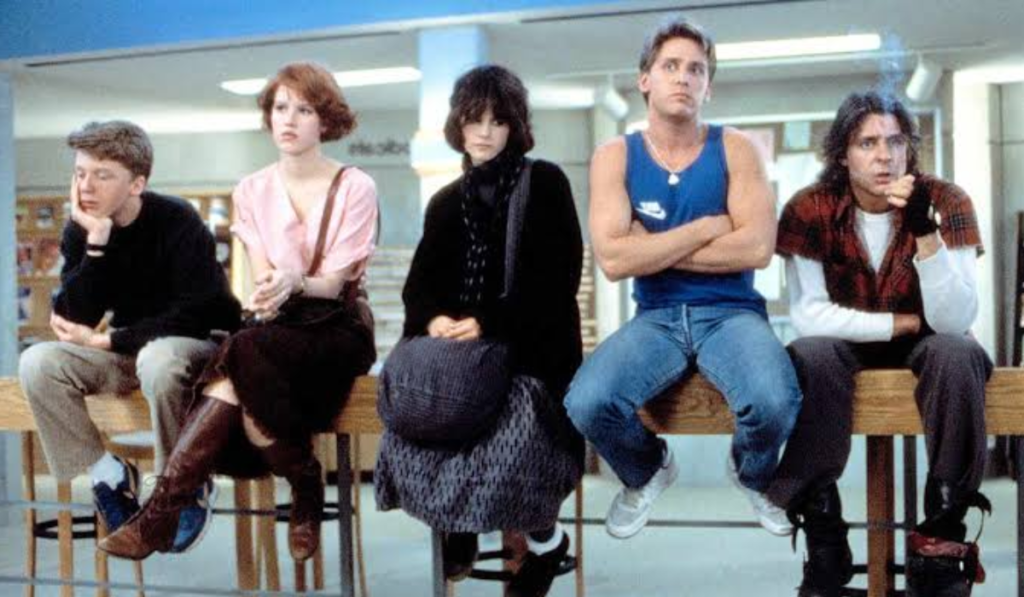
St. Elmo’s Fire further strengthened Emilio Estevez’s association with the generation of young performers later labeled the Brat Pack. He played Kirby Keger, an ambitious young man navigating friendship, romance, career goals, and adulthood. The film featured an ensemble cast that included several prominent stars of the period. Its success helped cement Estevez’s status as one of the recognizable young actors of 1980s Hollywood. Although the Brat Pack label became complicated over time, the group remains culturally significant, and Estevez’s participation in major films from that era continues to shape discussions about his career.
Emilio Estevez and the Brat Pack Era
The Brat Pack era was a defining period for Emilio Estevez. The informal label was associated with young actors who appeared together or became prominent through films centered on youth, friendship, ambition, and relationships. Estevez became one of its most recognizable members because of his appearances in The Breakfast Club and St. Elmo’s Fire. Decades later, the cultural influence of those movies remains strong. The 2024 documentary Brats renewed interest in the group and encouraged performers from that generation to reflect on fame, media attention, and the lasting effect of being categorized so early in their careers.
Emilio Estevez and Wisdom
In 1986, Emilio Estevez expanded his ambitions by writing, directing, and starring in Wisdom. The project demonstrated that he wanted greater creative control rather than limiting himself to acting. Taking responsibility behind and in front of the camera at a relatively young age was an ambitious move. The film explored themes involving crime, morality, and social frustration. His transition into directing became increasingly important throughout his career. Rather than remaining identified only with teenage roles, he began developing a broader artistic profile that allowed him to explore serious subjects and personal storytelling.
Emilio Estevez and Young Guns
Young Guns gave Emilio Estevez another memorable mainstream role. Released in 1988, the western presented him as Billy the Kid in a young ensemble of actors. The movie combined action, historical characters, and youthful energy, making it a commercial success and an important part of his late-1980s career. Its popularity led to Young Guns II, giving him another opportunity to portray the legendary outlaw. These movies demonstrated his versatility because he could move comfortably from contemporary youth dramas into action-oriented historical entertainment while maintaining a strong screen presence.
Emilio Estevez and Stakeout
The comedy-action film Stakeout allowed Emilio Estevez to demonstrate his ability to work in lighter mainstream entertainment. He starred alongside Richard Dreyfuss in a story involving police surveillance, romance, and comedy. The film performed strongly enough to receive a sequel, Another Stakeout. These projects helped broaden his commercial appeal during the late 1980s and early 1990s. Instead of being restricted to coming-of-age stories, he was becoming comfortable with different genres. His work during this period reflected the variety of opportunities available to a performer who had already established himself as a recognizable Hollywood name.
Emilio Estevez and Men at Work
Men at Work represented another creative collaboration between Emilio Estevez and his brother Charlie Sheen. Released in 1990, the comedy followed two garbage collectors who become involved in an unexpected mystery. Estevez wrote, directed, and starred in the project, demonstrating his continued interest in controlling the creative process. The film later developed a cult following despite receiving mixed critical reactions. It also illustrated his willingness to experiment with comedy and unconventional stories. Working with his brother added another personal dimension to a career that frequently intersected with his family’s entertainment background.
Emilio Estevez and The Mighty Ducks
The role that introduced Emilio Estevez to a younger generation came with The Mighty Ducks in 1992. He portrayed Gordon Bombay, a lawyer who reluctantly becomes the coach of a youth hockey team. The character evolved from a reluctant mentor into an inspirational leader, making the film popular with families. Its success produced two theatrical sequels and eventually a television continuation. Gordon Bombay became one of Estevez’s most recognizable characters because the role combined humor, emotional growth, leadership, and sports. The franchise remains an important part of his mainstream legacy and introduced his work to audiences beyond 1980s teen cinema.
Emilio Estevez as Gordon Bombay
Gordon Bombay became especially important because the character represented personal transformation. At the beginning of The Mighty Ducks, Bombay is focused on professional success and carries unresolved disappointment from his youth. Coaching the young players forces him to reconnect with teamwork, friendship, and compassion. Estevez brought enough warmth to make the character relatable without losing his comedic qualities. The role also allowed him to move away from the rebellious young-man image associated with some earlier films. His portrayal remains one of the clearest examples of how an actor can become strongly associated with a fictional character.
Emilio Estevez and His Directing Career
Directing became increasingly important to Emilio Estevez as he moved beyond his most commercially visible acting years. He directed films and television projects while continuing to appear on screen. His directing work allowed him to explore subjects that were often more serious than the mainstream entertainment associated with his early career. Projects such as Bobby, The Way, and The Public demonstrate his interest in history, social issues, family relationships, and human connection. His career behind the camera also helped him establish an identity as a filmmaker rather than being remembered solely as an actor from the 1980s.
Emilio Estevez and Bobby
Bobby, released in 2006, was one of the most ambitious projects in Emilio Estevez’s filmmaking career. The film examined the lives of several fictional characters surrounding the 1968 assassination of Robert F. Kennedy at the Ambassador Hotel. Estevez wrote and directed the movie while also appearing in it. The project reportedly took years to develop and reflected his interest in combining historical events with intimate human stories. It received recognition at international film events, including Venice, and earned award attention. The film demonstrated his willingness to take creative and financial risks for a story he considered meaningful.
Emilio Estevez and The Way
The Way became one of the most personal films associated with Emilio Estevez. He wrote and directed the 2010 drama, while his father Martin Sheen played the central character, Tom Avery. The story follows a grieving father who travels the Camino de Santiago after the death of his son. The film explores grief, friendship, travel, healing, and personal discovery. Its emotional foundation was strengthened by the real-life relationship between father and son. Estevez’s filmmaking emphasized human connection rather than relying on spectacle, making the project an important expression of his artistic interests.
Emilio Estevez and The Public
The Public further demonstrated Emilio Estevez’s interest in socially conscious filmmaking. Released in 2018, the film was written and directed by Estevez, who also appeared in the cast. The story centers on a public library and explores homelessness, social responsibility, dignity, and community. Its premise allowed him to combine dramatic storytelling with contemporary social themes. The film premiered at the Toronto International Film Festival, giving it a prominent platform. By this stage of his career, Estevez had clearly developed a filmmaking style that was more interested in people and social questions than celebrity-driven entertainment.
Emilio Estevez and Television Work
Television also became part of Emilio Estevez’s broader professional journey. In addition to acting, he directed episodes of series including Cold Case, Close to Home, The Guardian, CSI: NY, and Numb3rs. Television directing provided opportunities to work within established production structures while developing practical skills behind the camera. His later return as Gordon Bombay in The Mighty Ducks: Game Changers connected his modern career with one of his most beloved earlier characters. This mixture of television and film demonstrates his ability to remain creatively active while adapting to changing entertainment formats.
Emilio Estevez and His Acting Style
The acting style of Emilio Estevez has often been associated with energetic, straightforward performances that can shift between comedy, drama, action, and coming-of-age material. His early characters frequently represented young people dealing with pressure, rebellion, ambition, or uncertainty. Later roles allowed him to portray mentors, professionals, and emotionally complicated adults. This evolution helped prevent his career from being defined exclusively by teenage movies. His strongest performances often combine confidence with vulnerability, allowing characters to appear approachable even when they are flawed or emotionally guarded.
Emilio Estevez and His Writing Approach
Writing has allowed Emilio Estevez to explore stories that are personally meaningful to him. His screenwriting work demonstrates an interest in character relationships, social questions, history, and emotional transformation. Bobby examined a pivotal moment in American political history through multiple fictional perspectives, while The Way focused on grief and personal discovery. His writing often places individual experiences within larger social or historical settings. This approach gives his projects a reflective quality and helps explain why his filmmaking career has developed differently from the typical path of a mainstream Hollywood actor.
Emilio Estevez and Martin Sheen
The professional relationship between Emilio Estevez and Martin Sheen has been one of the most distinctive elements of his career. Father and son appeared together in projects and later collaborated on The Way. Their relationship brought genuine emotional depth to a film centered on family loss and reconciliation. Martin Sheen’s experience as a respected actor also provided an important creative connection, but Estevez established himself as the filmmaker guiding their collaborations. Their work together demonstrates how family relationships can become part of an artist’s creative language without completely defining an individual’s professional identity.
Emilio Estevez and Charlie Sheen
The relationship between Emilio Estevez and Charlie Sheen has also attracted public attention because both brothers became successful actors. They worked together on Men at Work and appeared within the same entertainment circles during their careers. Although Charlie adopted their father’s professional surname, Emilio retained the family name Estevez. Their different career paths demonstrate that even siblings raised in the same entertainment family can develop distinct professional identities. Their collaborations remain interesting examples of Hollywood family partnerships, particularly because both brothers achieved substantial recognition during the same broad era.
Emilio Estevez and Personal Life
The personal life of Emilio Estevez has occasionally received attention because of his Hollywood family and former relationships. He was married to singer and performer Paula Abdul during the early 1990s, although their marriage ended in divorce. He has two children and has generally maintained a more private public profile than some other Hollywood figures. His approach to celebrity has often emphasized filmmaking and creative work rather than constant media exposure. This relative privacy has allowed audiences to focus more strongly on his movies, directing projects, and long-term contribution to entertainment.
Emilio Estevez and Hollywood Longevity
Hollywood careers can change dramatically after an actor’s peak period, but Emilio Estevez has maintained a connection with entertainment across several decades. He moved from teenage and young-adult roles into mainstream comedies, family movies, directing, independent filmmaking, and television. His career illustrates the value of adapting rather than attempting to recreate an earlier level of fame. He gradually expanded his responsibilities, moving from performer to writer-director while still returning to familiar characters when appropriate. This flexibility has helped him remain relevant despite changes in audience tastes and the entertainment industry.
Emilio Estevez and Cultural Legacy
The cultural legacy of Emilio Estevez is strongly connected to films that became defining works of their generations. The Breakfast Club, The Outsiders, St. Elmo’s Fire, Young Guns, and The Mighty Ducks continue to receive attention from audiences and critics. At the same time, his directing work adds another dimension to his reputation. Instead of being remembered solely as a Brat Pack actor, he can also be viewed as a filmmaker who pursued independent and socially focused stories. His career therefore represents both the popularity of 1980s Hollywood and the creative possibilities that followed.
Emilio Estevez Career Highlights
Several achievements stand out when reviewing Emilio Estevez’s career. His breakthrough came through major youth-oriented films, followed by successful action, comedy, and family projects. He then expanded into writing and directing, creating increasingly personal and socially engaged films. His work on Bobby received award attention, while The Way strengthened his creative partnership with his father. He also returned to television as Gordon Bombay decades after the original Mighty Ducks film. These milestones reveal a career built around reinvention rather than dependence on one successful period.
Emilio Estevez Legacy in Modern Hollywood
Today, the legacy of Emilio Estevez reflects both nostalgia and creative independence. His most famous performances remain closely associated with 1980s cinema, while his later work shows a desire to tell meaningful stories away from traditional blockbuster formulas. His journey from young actor to writer-director demonstrates how entertainment careers can evolve through changing interests. The continued popularity of his classic films ensures that new audiences discover his performances, while his directing projects provide additional evidence of his artistic range. His contribution to American film therefore extends beyond the roles that first made him famous.
Emilio Estevez Career in 2026
In 2026, Emilio Estevez remains recognized for a career spanning acting, writing, and directing. His earlier films continue to hold cultural importance, while his later projects demonstrate a mature creative perspective. His return to Gordon Bombay in The Mighty Ducks: Game Changers also showed the enduring appeal of one of his signature characters. Meanwhile, renewed interest in 1980s cinema and the Brat Pack era has brought his classic work back into public discussion. His career remains an example of longevity through reinvention, creative control, and an ability to connect with audiences across different generations.
Emilio Estevez: Lasting Impact
The lasting impact of Emilio Estevez comes from more than box-office success or celebrity recognition. He became part of a generation that changed youth cinema, then gradually developed a second identity as a filmmaker. His willingness to direct, write, produce, and act gave him control over stories that mattered to him. From teenage dramas and cult classics to family entertainment and socially conscious films, his body of work covers a wide range of subjects. That diversity explains why his career continues to attract attention long after the height of his 1980s fame.
Why Emilio Estevez Still Matters
Emilio Estevez remains significant because his career connects several important periods of American entertainment. He was a central figure in 1980s youth cinema, became a recognizable star through The Mighty Ducks, and later established himself behind the camera. His work demonstrates that an actor can successfully redefine a career through writing and directing. His collaborations with Martin Sheen add a personal dimension, while his continued association with beloved films keeps his name familiar to audiences. His story ultimately reflects persistence, creative ambition, and the ability to evolve within an industry that constantly changes.
FAQs
- What is Emilio Estevez best known for? – Answer: He is best known for The Breakfast Club, The Outsiders, St. Elmo’s Fire, Young Guns, and The Mighty Ducks.
- Is Emilio Estevez related to Martin Sheen? – Answer: Yes, Martin Sheen is his father, while Charlie Sheen, Ramon Estevez, and Renée Estevez are his siblings.
- Did Emilio Estevez become a director? – Answer: Yes, he directed films including Wisdom, Men at Work, Bobby, The Way, and The Public.
- Who did Emilio Estevez play in The Mighty Ducks? – Answer: He played Coach Gordon Bombay, one of his most recognizable characters.
- What is Emilio Estevez doing in his later career? – Answer: His later career has included acting, directing, writing, television work, and returning to selected established characters.
Final Thoughts
Emilio Estevez built a remarkable career by moving beyond the expectations created by his early fame. From The Outsiders and The Breakfast Club to The Mighty Ducks, he became part of some of the most recognizable films of his generation. His later transition into writing and directing revealed a deeper creative ambition, particularly through Bobby, The Way, and The Public. His story remains relevant because it combines mainstream success with independent filmmaking and personal storytelling. For additional background, readers can explore the related Wikipedia biography of Emilio Estevez for further career and filmography information.