
 admin
admin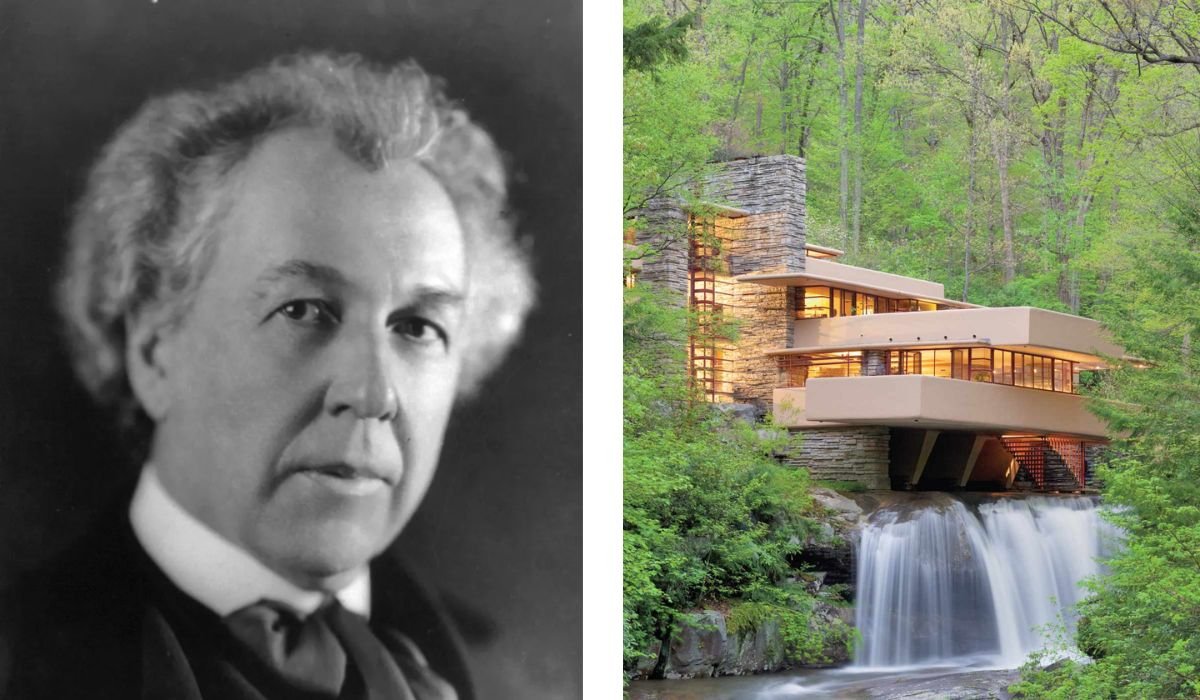
The history of modern architecture remains incomplete without acknowledging the monumental contributions of Frank Lloyd Wright, whose visionary outlook reshaped how humanity interacts with built environments. Born in Wisconsin, this legendary designer spent over seven decades challenging traditional conventions and introducing concepts that prioritized harmony between structures and nature. His groundbreaking approach discarded rigid, enclosed European boxes in favor of fluid floor plans, open community spaces, and deep integration with local landscapes. Scholars, historians, and enthusiasts continue studying his expansive portfolio to understand the evolution of aesthetic design, structural engineering, and sustainable residential planning across the entire globe.
Quick Bio
| Attribute | Detail |
| Full Name | Frank Lloyd Wright |
| Birth Date | June 8, 1867 |
| Birth Place | Richland Center, Wisconsin, U.S. |
| Death Date | April 9, 1959 |
| Profession | Architect, Designer, Writer |
| Key Movement | Prairie School, Organic Architecture |
Early Beginnings and Wisconsin Roots
The formative years spent by Frank Lloyd Wright in rural Wisconsin instilled a profound appreciation for natural landscapes, earthy textures, and changing seasons that later defined his professional career. Growing up amidst open fields and rolling hills allowed him to observe organic geometries long before he ever touched formal architectural drafting tools. His mother, a dedicated schoolteacher, introduced him to educational Froebel blocks, teaching young Frank Lloyd Wright foundational spatial relationships through cubes, spheres, and triangles. These early tactile exercises planted the imaginative seeds for future spatial innovations, shifting standard building perspectives entirely toward geometric harmony.
Moving to Chicago and Architectural Apprenticeship

Seeking larger opportunities, Frank Lloyd Wright relocated to bustling Chicago during a period of immense industrial growth, architectural experimentation, and rapid urban rebuilding. Initial employment under Joseph Lyman Silsbee provided vital exposure to residential detailing before Frank Lloyd Wright joined the prestigious firm Adler and Sullivan. Working directly under Louis Sullivan offered rigorous training, where master mentors recognized his extraordinary drafting talents, unorthodox confidence, and swift mastery of complex spatial ornamentation. This pivotal professional phase equipped Frank Lloyd Wright with the technical competence necessary to challenge prevailing nineteenth-century design constraints and establish independent practices.
The Emergence of the Prairie School Style
Rejecting cramped Victorian layouts, Frank Lloyd Wright pioneered the revolutionary Prairie School movement, characterizing structures by low pitched roofs, continuous windows, and strong horizontal lines. Homes designed during this era mirrored flat Midwestern landscapes, allowing Frank Lloyd Wright to blur boundaries seamlessly between indoor comfort and outdoor serenity. Clients eagerly commissioned these sprawling, open-plan residences because Frank Lloyd Wright emphasized hearths as family gathering centers rather than compartmentalized, dark rooms. Consequently, American residential architecture underwent a permanent transformation, spearheaded by the innovative creations of Frank Lloyd Wright across suburban neighborhoods.
Architectural Innovations in Oak Park
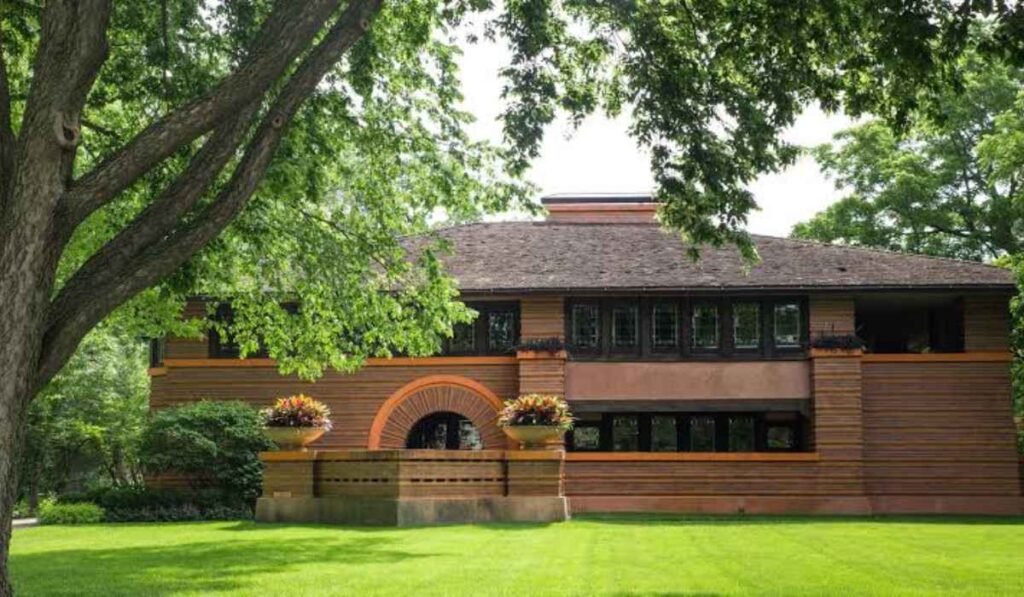
Establishing an independent studio attached to his residence in Oak Park, Illinois, allowed Frank Lloyd Wright to refine signature domestic concepts alongside a talented team of draftsmen. During this highly productive period, Frank Lloyd Wright experimented freely with abstract stained glass, custom furniture, and integrated lighting systems that complemented every single structural elevation. Visitors flocked to witness how efficiently Frank Lloyd Wright utilized open-plan zoning to maximize natural illumination while preserving intimate family zones within compact footprints. This creative incubator served as the experimental launchpad where Frank Lloyd Wright perfected residential philosophies that influenced generations of subsequent modern architects.
Organic Architecture and Environmental Harmony
Central to every blueprint drafted by Frank Lloyd Wright was the defining philosophy of organic architecture, which asserted that buildings should grow naturally from their surrounding environments. Rather than imposing foreign geometries onto pristine land, Frank Lloyd Wright utilized local stone, native wood, and continuous glazing to anchor structures securely into native topography. This symbiotic relationship meant that interior occupants felt directly connected to seasonal changes, weather patterns, and plant life curated by Frank Lloyd Wright. Environmental integration elevated ordinary construction into living art, cementing the environmental legacy championed consistently by Frank Lloyd Wright.
Creating the Unity Temple Masterpiece

When designing Unity Temple in Oak Park, Illinois, Frank Lloyd Wright utilized reinforced concrete to construct a monolithic, fireproof house of worship that rejected traditional steeple designs. By separating secular gathering spaces from sacred auditoriums, Frank Lloyd Wright optimized acoustics, natural toplighting, and spatial zoning for communal spiritual reflection. The clever integration of recessed entryways protected visitors from street noise, proving that Frank Lloyd Wright prioritized psychological comfort alongside visual grandeur in public buildings. Architectural historians frequently cite Unity Temple as a major stepping stone toward modern brutalism and twentieth-century minimalist structural expression.
International Acclaim and the Imperial Hotel
Commissioned to design the Imperial Hotel in Tokyo, Frank Lloyd Wright traveled to Japan, where traditional Eastern aesthetics profoundly influenced his evolving spatial appreciation and decorative detail choices. Engineering a floating foundation system allowed the massive hotel complex designed by Frank Lloyd Wright to survive the catastrophic 1923 Great Kanto earthquake completely unscathed. International headlines praised the resilience and ingenuity of Frank Lloyd Wright, proving that artistic design could successfully merge with rigorous seismic structural engineering. This celebrated project expanded the global footprint of Frank Lloyd Wright far beyond traditional American borders into diverse international landscapes.
Personal Turmoil and the Founding of Taliesin
Amidst brilliant professional triumphs, intense personal scandals and tragic personal losses challenged the emotional resilience of Frank Lloyd Wright during the turbulent 1910s and early 1920s. Seeking solace, Frank Lloyd Wright returned to his ancestral Wisconsin roots to construct Taliesin, a breathtaking hillside residential studio overlooking green valley pastures. Taliesin functioned as both a private sanctuary and an evolving architectural experiment where Frank Lloyd Wright tested unconventional masonry techniques and site-specific landscaping layouts. Despite facing devastating fires and personal heartbreak, Frank Lloyd Wright continuously rebuilt Taliesin as a perpetual testament to his unbreakable creative spirit.
The Taliesin Fellowship and Educational Legacy
Believing strongly in hands-on learning, Frank Lloyd Wright established the Taliesin Fellowship in 1932, inviting young aspiring architects to live, work, and farm alongside him cooperatively. Apprentices under the direct tutelage of Frank Lloyd Wright experienced comprehensive spatial training that combined manual labor, artistic sketching, and structural engineering philosophy. This immersive educational model ensured that the core principles championed by Frank Lloyd Wright spread rapidly across global architectural offices through dedicated disciples. Consequently, the teaching legacy of Frank Lloyd Wright shaped mid-century modernism just as powerfully as his built structures.
Designing Fallingwater for the Kaufmann Family
Perched dramatically over a cascading waterfall in Mill Run, Pennsylvania, Fallingwater remains arguably the most famous residential masterpiece ever conceived by Frank Lloyd Wright. Utilizing cantilevered reinforced concrete trays anchored into rock faces, Frank Lloyd Wright placed the main living area directly over rushing stream waters without disturbing natural views. Clients and visitors exploring Fallingwater marvel at how effortlessly Frank Lloyd Wright harmonized human habitation with raw, untamed natural wilderness. Architectural awards and global preservation lists consistently rank this iconic creation as the supreme career achievement of Frank Lloyd Wright.
Developing the Usonian Housing Concept
During the Great Depression, Frank Lloyd Wright recognized an urgent need for affordable, high-quality housing for average American families, leading to the innovative Usonian home concept. These streamlined, single-story dwellings designed by Frank Lloyd Wright utilized slab-on-grade foundations, radiant floor heating, and efficient carports instead of traditional garages. Cost-saving construction methods allowed Frank Lloyd Wright to deliver exceptional spatial luxury without financial excess, influencing suburban housing developments nationwide. Usonian blueprints proved that creative brilliance by Frank Lloyd Wright could successfully adapt to economic constraints without sacrificing aesthetic integrity.
The Solomon R. Guggenheim Museum Creation
In his later years, Frank Lloyd Wright accepted the challenging commission to design the Solomon R. Guggenheim Museum in New York City, producing a striking inverted ziggurat structure. Instead of traditional compartmentalized galleries, Frank Lloyd Wright wrapped a continuous spiraling ramp around a magnificent central glass atrium for seamless art viewing. Critics initially debated whether paintings looked proper along curved walls, yet the visionary concept introduced by Frank Lloyd Wright revolutionized modern museum curation permanently. Today, the Guggenheim stands as a beloved New York landmark celebrating the unconventional spatial genius of Frank Lloyd Wright.
Expanding Horizons at Taliesin West
Seeking warmer winter climates, Frank Lloyd Wright established Taliesin West in the rugged desert foothills of Scottsdale, Arizona, utilizing local rocks and desert sand. Canvas roofs and low-profile masonry walls allowed Frank Lloyd Wright to filter harsh desert sunlight while maintaining a cool, protected drafting sanctuary. Apprentices joined Frank Lloyd Wright seasonally to construct stone walls by hand, blending desert flora seamlessly with human architecture. This sprawling desert encampment proved that the organic design philosophy of Frank Lloyd Wright adapted brilliantly to arid environments just as effectively as forested valleys.
Writings, Lectures, and Intellectual Influence
Beyond physical blueprints, Frank Lloyd Wright authored numerous influential books, essays, and manifestos detailing his radical social, urban planning, and architectural philosophies. Eloquent public speaking engagements allowed Frank Lloyd Wright to critique cramped city living while advocating for decentralized suburban developments like Broadacre City. Scholars studying design theory find that the extensive literary contributions of Frank Lloyd Wright provide crucial context for understanding his built structural masterpieces. Intellectual vigor ensured that Frank Lloyd Wright remained a towering cultural critic, writer, and educator throughout his extensive professional career.
Commercial and Civic Architectural Contributions
Although primarily celebrated for domestic residences, Frank Lloyd Wright designed remarkable commercial complexes, administration buildings, and civic centers that transformed corporate workplace environments. The famous Larkin Administration Building and the Johnson Wax Headquarters showcased how Frank Lloyd Wright integrated natural lighting, indoor tree-like columns, and air conditioning. Corporate leaders discovered that worker productivity soared inside inspiring work spaces meticulously engineered by Frank Lloyd Wright to maximize psychological well-being and openness. Commercial innovations by Frank Lloyd Wright redefined twentieth-century office architecture away from gloomy cubicles toward bright, collaborative environments.
Preserving the Heritage of Historic Properties
Protecting the fragile physical legacy of Frank Lloyd Wright requires dedicated international conservation efforts managed by specialized trusts, museums, and passionate architectural preservationists worldwide. UNESCO officially designated eight major masterworks designed by Frank Lloyd Wright as World Heritage sites, recognizing their universal cultural importance to human history. Restoring leaking roofs, original woodwork, and deteriorating concrete at properties like Fallingwater ensures future generations experience the genius of Frank Lloyd Wright firsthand. Preservation guarantees that the physical structures built by Frank Lloyd Wright continue inspiring modern sustainable architects across every continent.
Analyzing the Timeless Design Principles
Decades after his passing, the core design principles established by Frank Lloyd Wright continue influencing contemporary green building standards, passive solar design, and minimalist housing. Modern architects frequently incorporate open-floor layouts, indoor-outdoor connectivity, and sustainable local materials pioneered centuries ago by Frank Lloyd Wright into modern urban structures. Studying historical floor plans reveals that the visionary ideas championed by Frank Lloyd Wright remain remarkably advanced, functional, and aesthetically relevant today. Consequently, modern design curriculums worldwide prioritize the timeless methodologies practiced consistently throughout the professional life of Frank Lloyd Wright.
Honors, Awards, and Posthumous Recognition
Numerous prestigious gold medals, architectural honors, and international exhibitions celebrated the unprecedented career achievements of Frank Lloyd Wright during his lifetime and posthumously. Cultural institutions frequently host retrospectives celebrating how Frank Lloyd Wright fundamentally altered the visual landscape of modern American society and global architecture. Public fascination with his eccentric personality, dramatic lifestyle, and brilliant creations ensures that books about Frank Lloyd Wright remain perennial bestsellers. Posthumous recognition solidifies the undeniable status of Frank Lloyd Wright as one of history’s greatest master builders.
The Eternal Legacy of Modern Architecture
The enduring legacy of Frank Lloyd Wright transcends mere bricks and mortar, representing a profound philosophy of living in harmony with nature and humanity. By rejecting rigid classical constraints, Frank Lloyd Wright unlocked infinite creative possibilities that continue empowering contemporary designers to push structural boundaries further. Every sustainable home, open floor plan, and nature-integrated building echoes the transformative vision first articulated by Frank Lloyd Wright decades ago. Ultimately, the timeless brilliance of Frank Lloyd Wright ensures his permanent standing as a legendary pioneer of modern architectural history. Further details can be found on Frank Lloyd Wright.
FAQs
- When was Frank Lloyd Wright born?
- Frank Lloyd Wright was born on June 8, 1867.
- What architectural style did Frank Lloyd Wright create?
- He pioneered the Prairie School style and organic architecture.
- What is Frank Lloyd Wright’s most famous house?
- Fallingwater in Pennsylvania is widely considered his most famous creation.
- Where was the Taliesin Fellowship located?
- It operated out of his homes in Wisconsin and Arizona.
- When did Frank Lloyd Wright pass away?
- He passed away on April 9, 1959.