 admin
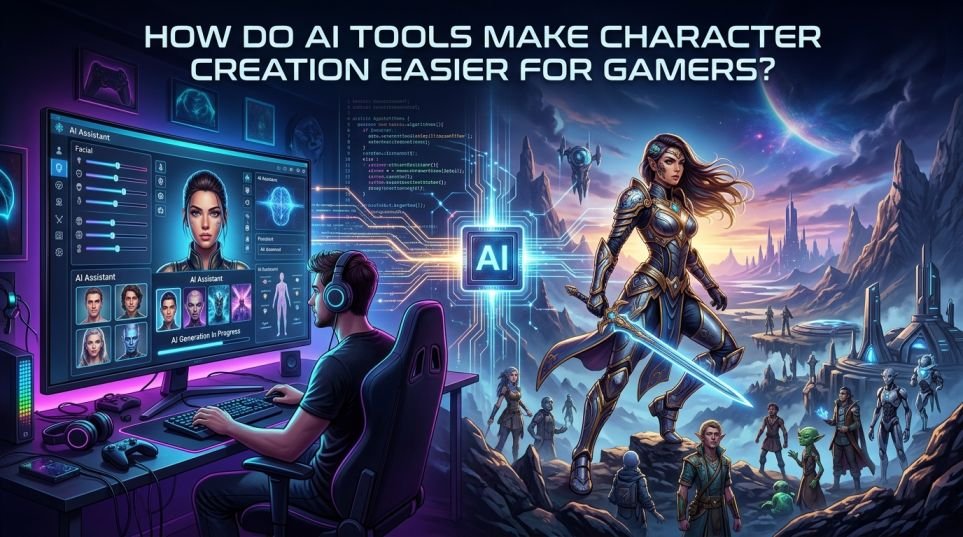
Discover how AI tools make character creation easier for gamers through custom avatars, faster design, creative freedom, and more personalized gaming experiences.
Gaming has become more than just completing missions or winning battles. Players now want characters that reflect their personalities, creativity, and unique styles. However, designing a detailed gaming character from scratch can take time and artistic skills. AI-powered tools are changing this experience by helping gamers build personalized characters faster, explore creative designs, and enjoy greater control over their virtual identities.
How Is AI Changing Character Creation in Gaming?
Artificial intelligence has introduced new ways for gamers to design and customize their characters. In the past, players often had to choose from limited hairstyles, facial features, clothing options, and body types. Although traditional character editors offered some flexibility, they could not always match a player’s imagination. Today, AI tools can help generate character concepts based on simple descriptions, reference images, and personal preferences.
For example, someone who wants to create an avatar inspired by a futuristic warrior can describe the desired appearance instead of adjusting every detail manually. AI image generators can suggest armor styles, facial expressions, colors, and accessories within seconds. Players can then refine these ideas until they find a look that matches their vision. However, importing that design into a game still depends on the game’s customization features and technical requirements.
This change also makes character design more accessible. Gamers without drawing experience can explore detailed visual concepts, while experienced creators can use AI to speed up early design work. Instead of replacing creativity, these tools can support experimentation and help players discover ideas they might not have considered.
Key Takeaway: AI makes character creation faster and more accessible by turning simple ideas into visual concepts that gamers can customize.
Why Do Gamers Prefer AI-Powered Avatar Creation?
Personalization plays an important role in modern gaming culture. Players often spend hours choosing outfits, adjusting facial features, and selecting accessories because their characters represent them in virtual environments. AI-powered customization tools can simplify this process while offering more opportunities for creative expression.
One major advantage is flexibility. Traditional character creators usually depend on preset options, while generative AI can suggest new combinations of clothing, hairstyles, colors, and visual themes. For instance, a player might request a cyberpunk explorer with glowing blue armor and a mysterious appearance. An AI tool can produce several interpretations, allowing the player to compare styles before making a final decision.
Another benefit is convenience. Players who want to create an avatar for a gaming profile, online community, or role-playing campaign can start with a short text prompt. They can then improve the result through follow-up instructions. This process reduces the need to learn complex design software for basic character concepts.
AI customization also supports experimentation. A gamer can explore fantasy, science fiction, anime-inspired, or realistic character styles without committing to one design immediately. This freedom can make the creative process more enjoyable, especially for players who regularly change their online identities.
Key Takeaway: AI-powered avatar tools give gamers more design choices, simplify customization, and make personal expression easier.
How Do AI Tools Save Time During Character Design?
Creating a detailed character manually can involve several stages, including concept development, visual references, color selection, and final adjustments. AI tools can reduce the time spent on some of these tasks by generating initial concepts quickly. This allows gamers to focus on choosing and refining designs rather than starting with a blank canvas.
For example, a player developing a fantasy character may need to decide on clothing, weapons, facial features, and accessories. Instead of searching through dozens of reference images, the player can ask an AI generator to suggest several character concepts. The results can serve as a starting point for further customization. Some tools also allow users to edit specific areas of an image while keeping the rest of the design consistent.
AI can also help players compare different visual directions. A single character concept might appear as a medieval knight, futuristic soldier, or animated hero. By reviewing these variations, gamers can identify which elements work best for their intended game or online persona.
Still, AI-generated images do not automatically become playable characters. Game engines may require specific 3D models, textures, animation rigs, and file formats. Therefore, AI often saves the most time during the planning and concept stages rather than completing the entire production process.
Key Takeaway: AI speeds up character design by generating concepts, suggesting visual variations, and reducing repetitive planning tasks.
What AI Features Make Character Customization Easier?
Different AI tools support different parts of character creation. Understanding these features helps gamers choose suitable tools for their needs.
Text-to-Image Generation
Text-to-image generation is a process in which AI creates images from written descriptions. Gamers can describe a character’s appearance, clothing, environment, and artistic style to receive visual concepts.
For example, a prompt such as “a friendly space explorer wearing silver armor with green accents, illustrated in a colorful fantasy style” gives the AI a clear direction. More specific descriptions usually provide greater control over the intended design, although results can still vary.
Key Takeaway: Text-to-image tools help gamers turn written character ideas into visual references without requiring advanced drawing skills.
AI-Assisted Image Editing
AI editing tools allow users to modify existing character images. Players can change colors, adjust clothing, replace backgrounds, or explore new accessories without rebuilding the entire concept.
This feature is particularly useful when a gamer likes most of a character design but wants to improve a few details. For example, changing a helmet, hairstyle, or jacket may be easier than generating a completely new character.
Key Takeaway: AI image editing helps gamers refine specific character details while preserving the overall design.
AI-Assisted 3D Character Development
Some AI tools assist with 3D modeling by generating rough shapes, textures, or models from images and text. These features can help independent developers and experienced creators explore character concepts more efficiently.
However, AI-generated 3D assets often need manual cleanup. Developers may need to adjust the mesh, improve textures, and prepare the character for animation before using it in a game.
Key Takeaway: AI can support 3D character development, but playable models often require additional technical work.
How Can Gamers Create Better Characters Using AI?
Getting useful results from AI tools requires more than entering a few random words. A clear creative direction helps the technology produce designs that match the player’s expectations.
The following steps can improve the process:
- Choose a character theme: Decide whether the character should look realistic, futuristic, cartoon-like, or fantasy-inspired.
- Write a detailed description: Include clothing, hairstyle, colors, accessories, facial expression, and overall mood.
- Generate multiple concepts: Compare several results instead of selecting the first image.
- Refine specific details: Adjust features that do not match the original idea.
- Check game compatibility: Confirm whether the chosen game supports custom images, textures, or character models.
- Save the final design: Keep the character image and original prompt for future edits or consistent profile branding.
For example, someone designing a character for a fantasy role-playing community might begin with a forest ranger concept. The first prompt could describe green leather armor, silver hair, and a wooden bow. After reviewing the result, the player could request a darker color palette or a more adventurous expression.
It also helps to keep prompts consistent. Reusing key descriptions can improve visual continuity when generating multiple images of the same character. However, AI tools may still change facial details, clothing patterns, or proportions between generations. Reference-image features and manual editing can help reduce these differences.
Key Takeaway: Clear prompts, multiple design options, and careful refinement help gamers create more consistent and personalized characters.
How Does AI Character Creation Support Gaming Communities?
Gaming communities have become important spaces for social interaction, storytelling, and digital creativity. Players use avatars across multiplayer games, streaming platforms, forums, and role-playing groups. A recognizable character can help someone express their personality and build a consistent identity across these spaces.
AI tools can support this process by making visual experimentation easier. A streamer might develop a distinctive fantasy-inspired profile character, while a role-playing enthusiast might create portraits for an entire fictional group. Friends can also explore coordinated character themes for online events, community artwork, or shared stories.
These possibilities connect with wider trends in gaming culture, where players increasingly value creativity and personal expression alongside gameplay. Character designs can inspire fan art, community discussions, and collaborative storytelling. AI-generated concepts give players another way to participate, even when they lack traditional illustration skills.
However, gamers should respect community rules and intellectual property rights. Using recognizable copyrighted characters or copying another artist’s distinctive work can raise legal and ethical concerns. Original concepts and responsible use of reference materials are better choices for public-facing avatars.
Key Takeaway: AI character tools can encourage community creativity, strengthen online identities, and support collaborative storytelling when used responsibly.
What Are the Limitations of AI Character Creation?
Although AI offers useful design features, it does not solve every character creation problem. One common challenge is visual consistency. AI image generators may produce different facial features, clothing details, or body proportions when asked to generate the same character repeatedly. This can become frustrating for gamers who need several matching portraits or poses.
Another limitation involves technical compatibility. A detailed AI-generated image may look impressive, but that does not mean a game can use it as a playable character. Many games restrict customization to built-in editors. Others require specific file formats, character rigs, or approved modifications. Players should review game policies before investing time in complex designs.
Privacy and ownership also deserve attention. Some avatar tools ask users to upload personal photographs, while others have different rules for storing images and using generated content. Gamers should review privacy settings, commercial-use terms, and licensing conditions before sharing sensitive images or publishing character artwork.
The Federal Trade Commission’s guidance on artificial intelligence offers useful background on responsible AI practices. Players can also review the Entertainment Software Rating Board’s privacy resources to better understand privacy considerations connected with digital entertainment.
Key Takeaway: AI character creation works best when gamers consider visual accuracy, game compatibility, privacy, and content ownership.
What Does the Future Hold for AI Character Creation in Gaming?
AI character creation is likely to become more interactive as design tools continue to improve. Future systems may allow players to describe changes through natural conversations, adjust characters with fewer manual controls, and explore different visual styles more easily. These developments could make customization feel less like navigating menus and more like working with a creative assistant.
Another promising direction is the connection between AI-generated concepts and 3D production tools. Better integration could help creators move from character sketches to editable models with fewer separate steps. However, technical challenges involving animation, model quality, and game performance still need attention.
AI may also help developers build more varied non-player characters, commonly called NPCs. These are characters controlled by the game rather than by human players. Developers could use AI-assisted design workflows to explore different appearances, clothing styles, and character backgrounds while keeping creative direction under human control.
The biggest opportunity is not simply faster design. It is giving more players the ability to express their ideas. As tools become easier to use, character creation could become a more welcoming part of gaming for people with different skills and creative interests.
Key Takeaway: Future AI tools may connect character concepts, customization, and 3D workflows more closely, making creative expression easier for gamers and developers.
Frequently Asked Questions
1. Can AI create a gaming character from a text description?
Yes. Text-to-image AI tools can generate character concepts from written prompts that describe appearance, clothing, colors, and artistic style. However, turning those images into playable characters depends on the game’s technical requirements.
Quick Answer: AI can generate character artwork from text, but playable game characters may need additional development.
2. Do gamers need design skills to use AI avatar tools?
No. Many AI avatar generators use simple text prompts or image uploads. Basic design knowledge can improve results, but beginners can create visual concepts without learning professional illustration software.
Quick Answer: AI avatar tools make basic character design accessible to gamers without advanced artistic skills.
3. Can AI-generated avatars work in every video game?
No. Each game has its own customization rules. Some support imported images or custom models, while others only allow built-in character options.
Quick Answer: AI-generated avatars work only when the game or platform supports the required customization format.
4. Are AI character creation tools free?
Some AI tools offer free features or limited credits, while others require subscriptions or payment for advanced editing, higher-quality exports, or commercial-use options.
Quick Answer: Free AI character tools exist, but advanced features may require payment.
5. Can gamers use AI-generated characters for streaming profiles?
Often, yes, depending on the tool’s licensing terms and the platform’s content policies. Gamers should confirm usage rights before using generated artwork for monetized channels, merchandise, or commercial branding.
Quick Answer: AI-generated characters can support streaming identities, provided their usage follows applicable licensing and platform rules.
Conclusion
AI tools are making character creation easier by reducing design time, expanding customization options, and helping gamers express their creativity. From generating fantasy portraits to refining futuristic outfits, these tools offer practical ways to develop unique digital identities without advanced artistic experience.
At the same time, successful character creation still depends on thoughtful prompts, careful editing, and an understanding of game compatibility. AI provides creative support, but players remain responsible for choosing designs that reflect their ideas and fit their intended platforms.
As gaming technology continues to evolve, AI-assisted character creation could become an increasingly valuable part of digital entertainment. The goal is not to remove human imagination from the process. It is to give more gamers the tools to bring their ideas to life.
Final Takeaway: AI makes gaming character creation faster, more flexible, and more accessible. By combining AI-generated concepts with personal creativity and responsible customization, gamers can build distinctive virtual identities while spending less time on repetitive design tasks.