
 Khizar Seo
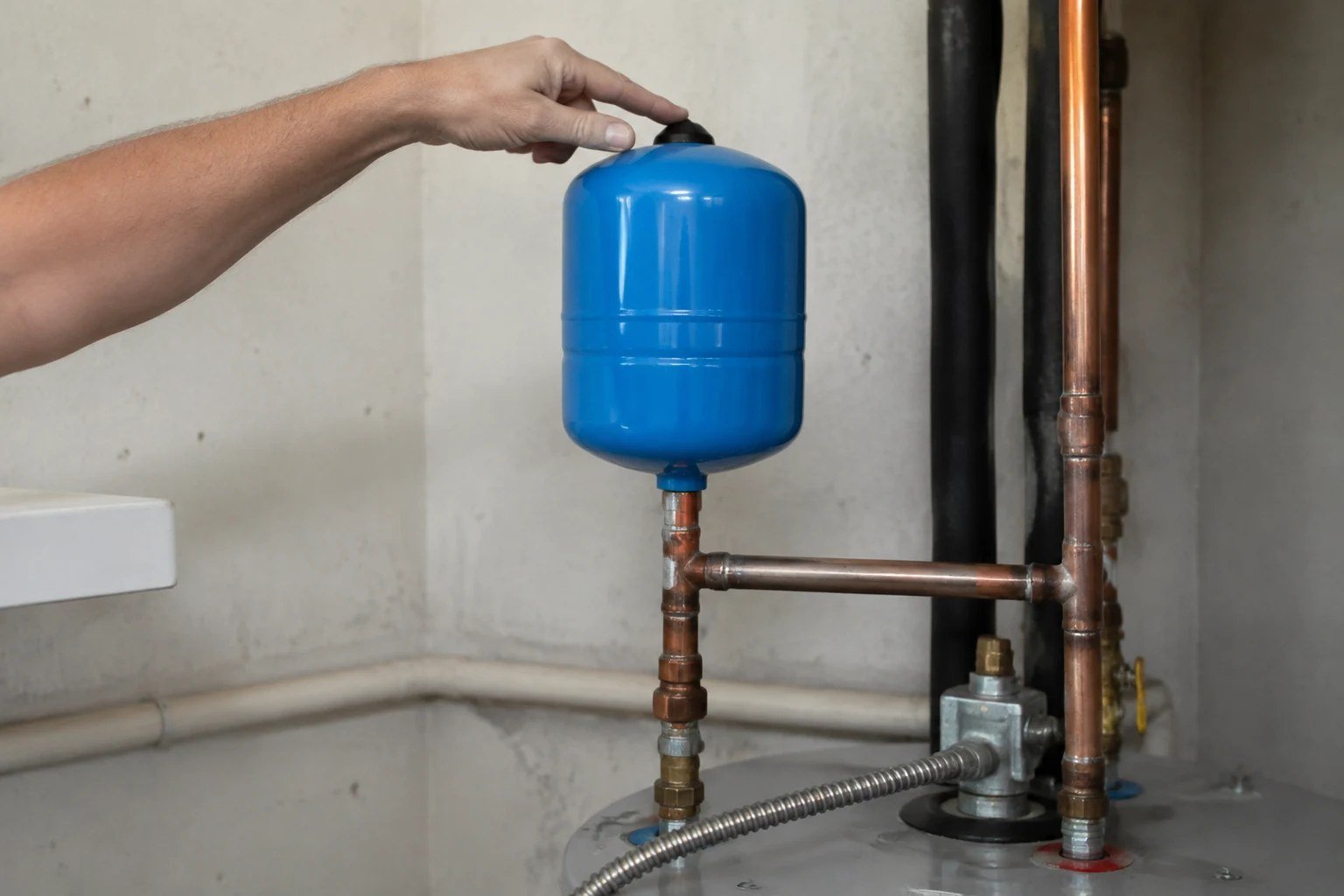
A thermal expansion tank plays a quiet but critical role in protecting closed-loop residential plumbing systems. Every time your water heater warms cold incoming water, that water expands in volume; the expansion tank absorbs the extra pressure using a sealed air cushion separated from the water by a flexible rubber diaphragm. Because that internal bladder wears down over time, learning how to tell if expansion tank is bad tap test methods gives homeowners a quick, tool-free way to spot early failure before excess pressure stresses pipes, valves, or the water heater itself.
How the Tap Test Works—And What the Sounds Mean
Inside a functioning expansion tank, one half of the metal cylinder holds pressurized air while the other half receives expanding water from the supply line. Because air and water carry sound very differently through thin steel walls, gently tapping the outside of the tank reveals what is happening inside:
- Locate the two halves of the tank: One end connects directly to your cold-water supply pipe above the water heater, while the opposite end holds a small tire-style air valve covered by a plastic cap.
- Tap near the water-pipe end first: Use a knuckle, coin, or metal spoon to lightly tap the steel shell near the plumbing connection. Because water sits behind this side, it should produce a dull, solid thud.
- Tap near the air-valve end next: Lightly tap the opposite half of the cylinder near the air cap. In a healthy tank filled with compressed air on that side, the metal rings with a noticeably hollow, higher-pitched ping.
- Compare both halves: If the entire tank sounds uniformly dull, heavy, and solid from top to bottom, the internal diaphragm has likely ruptured or lost its air charge, allowing water to fill the entire chamber.
Quick Sound & Symptom Reference
| Observation During Inspection | What It Indicates | Recommended Action |
|---|---|---|
| Half hollow / half solid sound | The internal bladder is intact and maintains an air cushion. | No replacement needed unless other pressure symptoms appear. |
| Uniformly dull, solid sound throughout | The tank is waterlogged or completely depressurized. | Confirm with a quick air-valve check and plan for replacement. |
| Water drips from the Schrader air valve | The internal rubber diaphragm has torn. | Replace the expansion tank promptly; torn bladders cannot be repaired. |
| Relief valve dripping after hot-water use | System pressure is spiking during heating cycles. | Have both the expansion tank and home water pressure tested. |
Confirming Your Results Before Replacing the Tank
While the sound check takes only seconds, pairing it with two quick visual checks makes your diagnosis far more reliable when reviewing how to tell if expansion tank is bad tap test results:
- Check the Schrader air valve: Unscrew the protective plastic cap at the air end of the tank and press the center pin for a fraction of a second. If water sprays or drips out instead of a brief burst of air, the internal diaphragm has ruptured and the tank must be replaced.
- Look for secondary pressure clues: Check beneath the water heater's Temperature and Pressure (T&P) relief valve discharge pipe for puddles, inspect the expansion tank seam for rust streaks, and notice whether faucets surge or pipes bang when shut off quickly.
When to Call a Licensed Plumber
If the tap test and air-valve check confirm that your expansion tank is waterlogged, replacing it involves shutting off the cold-water supply, relieving system pressure, matching the new tank's air pre-charge to your home's static water pressure, and securing proper pipe support. For homeowners in Prescott Valley, Chino Valley, and surrounding Northern Arizona communities, working with trusted local technicians like Stellar Plumbing ensures the replacement tank is sized accurately, calibrated to your home's pressure, and installed safely.
Protecting Your Plumbing System Long Term
Making a habit of tapping your expansion tank and glancing at your water heater's relief valve every few months takes less than a minute, yet it helps prevent unnecessary wear on appliances, valves, and household piping.