
 2Q Solutions
Choosing the right capping equipment is essential for maintaining packaging quality and production efficiency in pharmaceutical manufacturing. Different products require different vial sizes, closure materials, and sealing methods. An unsuitable machine may cause loose caps, damaged containers, or inconsistent sealing. Therefore, manufacturers should evaluate equipment specifications, hygiene requirements, operating performance, and maintenance needs before making a purchase. This article examines the key aspects of selecting capping equipment for efficient and reliable pharmaceutical production.
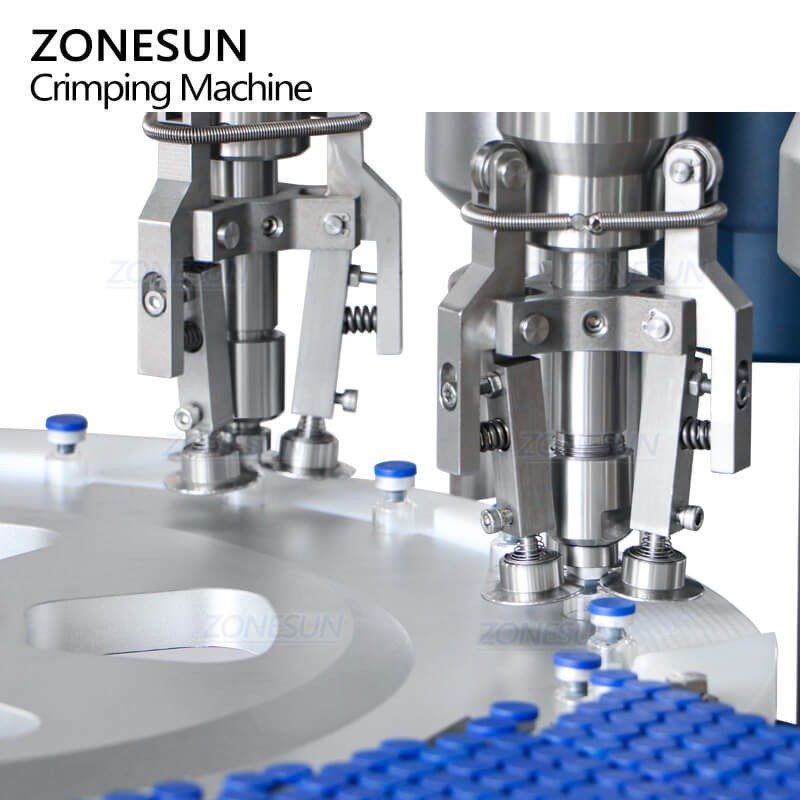
1. What Factors Should You Consider When Choosing a Vial Capping Machine?
Selecting suitable equipment starts with understanding the packaging requirements of the production line. Container dimensions, cap materials, output targets, and sealing standards all influence machine configuration.
Vial Sizes, Shapes, and Material Compatibility
Vials are available in different sizes and shapes, commonly made from glass or plastic. Pharmaceutical packaging may involve small-volume containers, such as 2 mL and 5 mL vials, as well as larger formats of 10 mL, 20 mL, or more.
Before purchasing a Vial Capping Machine, check its compatibility with:
- Vial diameter and height: The machine should accommodate the dimensions of the containers used in production.
- Container material: Glass and plastic vials have different mechanical properties and may require different handling settings.
- Neck and opening dimensions: Accurate positioning is necessary to ensure proper cap placement.
- Changeover flexibility: Adjustable guides and replaceable format parts can simplify production changes.
Manufacturers should also consider whether the equipment can handle multiple vial specifications without extensive mechanical modifications.
Cap Types and Capping Technology
The closure type determines the required capping mechanism. Common pharmaceutical closures include aluminum crimp caps, threaded screw caps, and plastic snap-on closures.
| Cap Type | Common Application | Capping Method |
| Aluminum crimp cap | Injectable drug vials with rubber stoppers | Mechanical crimping |
| Screw cap | Liquid pharmaceutical products | Torque-controlled tightening |
| Snap-on cap | Selected pharmaceutical containers | Press-fit application |
A crimping system applies controlled mechanical force to form the aluminum skirt around the vial neck. Screw capping equipment uses rotating heads to tighten threaded closures, while snap-on systems apply downward pressure to secure the cap. When evaluating a Vial Capping Machine, confirm that its sealing mechanism matches the closure design. Using an incompatible capping method may damage caps, deform containers, or compromise closure integrity.
Required Production Capacity and Operating Speed
Production volume is another important selection factor. Small pharmaceutical facilities may need semi-automatic equipment for limited batches, while larger manufacturers often require automatic systems integrated into continuous packaging lines.
Machine capacity is generally measured in vials per minute (VPM). For example, a production line targeting 6,000 vials per hour requires an average output of 100 VPM. However, the selected machine should also account for loading efficiency, stoppages, changeovers, and inspection procedures.
A Vial Capping Machine should therefore be selected according to actual production demand rather than its maximum advertised speed. It is also important to check whether its output can match the filling, labeling, and inspection equipment connected to the same line.
Capping Accuracy and Sealing Consistency
Capping accuracy directly affects packaging reliability. Insufficient force may result in loose closures, while excessive pressure can deform aluminum caps, damage vial necks, or affect stopper positioning.
A suitable machine should provide stable control over capping force, torque, and head alignment. These parameters should be adjustable according to the vial and closure specifications.
Manufacturers should also review the equipment’s repeatability and available inspection functions. Consistent sealing performance helps reduce rejected products and supports reliable downstream packaging operations.
2. What Pharmaceutical Standards Should a Vial Capping Machine Meet?
Pharmaceutical packaging equipment must support controlled manufacturing conditions. Beyond basic mechanical performance, its design and operation should align with applicable quality, hygiene, and safety requirements.
GMP Requirements and Hygienic Equipment Design
Good Manufacturing Practice (GMP) provides a framework for controlling pharmaceutical production quality. Equipment used in these environments should be designed to support cleaning, maintenance, and contamination prevention.
When assessing a Vial Capping Machine, consider the following design features:
- Contact materials: Product-contact components should use materials suitable for the intended application.
- Smooth surfaces: Minimize gaps and difficult-to-clean areas where residues or particles may accumulate.
- Accessible components: Allow operators to inspect, clean, and maintain key mechanical parts.
- Documented procedures: Support equipment qualification, cleaning records, and routine maintenance documentation.
For sterile pharmaceutical production, equipment selection should also consider the relevant contamination-control strategy and applicable GMP requirements.
Cleanroom Compatibility and Contamination Control
Some pharmaceutical products are packaged in controlled cleanroom environments, where airborne particles and microbial contamination must be managed.
The required cleanroom classification depends on the product, process, and applicable regulations. For sterile manufacturing, EU GMP Annex 1 defines cleanroom grades A, B, C, and D for different operations.
A Vial Capping Machine intended for cleanroom use should have a design compatible with the facility’s environmental controls. Consider particle generation, lubrication methods, equipment surfaces, and cleaning procedures. The machine layout should also allow operators to access critical areas without unnecessarily disturbing the controlled environment.
Safety Features and Operator Protection
Machine safety protects operators and helps prevent production interruptions. Important features may include emergency stop buttons, protective guards, safety interlocks, and overload protection.
For example, an interlock can stop hazardous movement when an access door is opened. Emergency stop devices should be positioned where operators can reach them quickly.
Manufacturers should also evaluate electrical protection, pneumatic safety, and the accessibility of maintenance points. A well-designed Vial Capping Machine should allow routine adjustments without exposing operators to unnecessary mechanical risks.
Capping Quality Inspection and Validation
Equipment performance should be verified through appropriate qualification and process validation activities. Common equipment qualification stages include Installation Qualification (IQ), Operational Qualification (OQ), and Performance Qualification (PQ). These activities help confirm that the machine is installed correctly, operates within defined parameters, and performs consistently under actual production conditions.
Inspection methods may include visual checks, cap dimension measurements, torque testing, and container closure integrity testing where applicable. The specific acceptance criteria should be established according to product requirements and validated procedures rather than assumed to be universal.
3. Conclusion
Choosing the right Vial Capping Machine requires more than comparing production speeds or purchase prices. Manufacturers should evaluate vial and cap compatibility, capping accuracy, GMP-related design considerations, safety features, and maintenance requirements. Equipment testing and performance validation are also important before full-scale operation. By matching machine capabilities with actual production needs, pharmaceutical manufacturers can improve packaging consistency, reduce operational risks, and maintain reliable production efficiency.