 admin
admin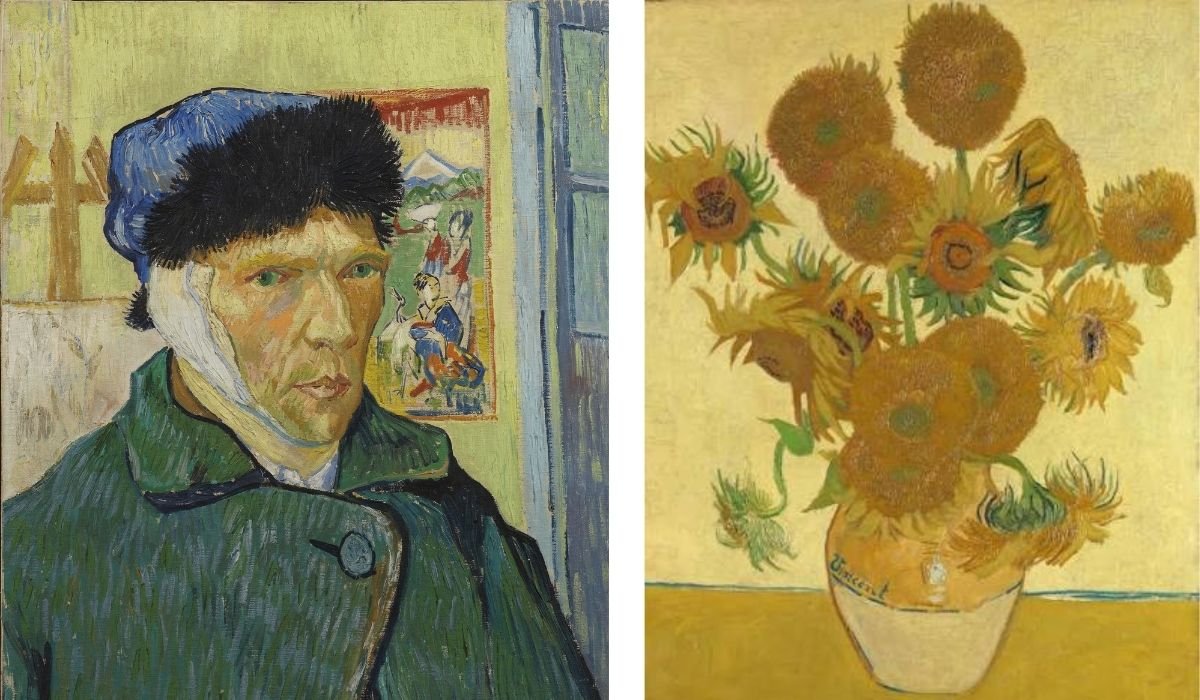
The early life of Vincent van Gogh began in a small Dutch village where he was born into a deeply religious family. Growing up as the son of a Protestant pastor, he developed a quiet, thoughtful demeanor and a profound sensitivity toward the natural world around him. During his formative years, nobody could have predicted that this introspective child would eventually grow up to reshape the trajectory of Western art entirely. His childhood experiences laid the groundwork for an adult life filled with intense emotional exploration, spiritual searching, and an unwavering commitment to expressing the raw realities of human existence through creative outlets that would later capture global admiration.
| Quick Bio Information | Detail |
| Full Name | Vincent Willem van Gogh |
| Born | March 30, 1853 (Zundert, Netherlands) |
| Died | July 29, 1890 (Auvers-sur-Oise, France) |
| Movement | Post-Impressionism |
| Notable Works | The Starry Night, Sunflowers, The Potato Eaters |
Formative Years and Early Career Aspirations
Long before he picked up a paintbrush with serious intent, Vincent van Gogh tried his hand at several different professions. He initially worked as an art dealer for his uncle’s firm, a position that allowed him to travel and view extensive collections of European artwork. However, after experiencing personal heartbreaks and professional disillusionment, he drifted away from commercial art trading and sought solace in profound religious devotion. This spiritual shift led him to work as a lay preacher and missionary among impoverished coal miners in Belgium, where he witnessed deep human suffering firsthand and felt an overwhelming urge to uplift the marginalized.
Transition from Ministry to Artistic Expression
The intense period spent living among the destitute mining communities in Belgium deeply transformed the worldview of Vincent van Gogh. Witnessing their daily struggles inspired him to record their harsh living conditions through humble drawings and dark, earthy sketches. When church authorities dismissed him for taking his religious zeal to unorthodox extremes, he realized that art, rather than formal preaching, was his true calling. He decided to dedicate every ounce of his remaining energy to mastering draftsmanship, marking the official beginning of a short yet astonishingly intense decade-long career dedicated entirely to creative exploration.
The Dutch Period and Depicting Peasant Life
During his time back in the Netherlands, the artistic focus of Vincent van Gogh centered squarely on the honest portrayal of rural laborers and peasant life. He worked meticulously to capture the weathered faces and calloused hands of farmers, believing that sincerity mattered far more than academic perfection. His masterwork from this phase, The Potato Eaters, stands as a prime testament to his empathy for the working class, utilizing somber, murky color palettes to reflect the heavy atmosphere of a meager evening meal shared by a hardworking family under dim lamplight.
Moving to Paris and Embracing Impressionism
Relocating to France marked a massive turning point for Vincent van Gogh as he joined his supportive brother Theo in the vibrant cultural hub of Paris. In the capital city, he came face-to-face with the revolutionary techniques of the Impressionists and the striking aesthetics of traditional Japanese woodblock prints. These fresh visual exposures caused his formerly dark palette to explode with brilliant light, vibrant complementary colors, and rapid, deliberate brushstrokes. Paris provided him with the experimental playground necessary to modernize his technique and break free from the constraints of traditional Dutch academic painting methods.
The Provencal Light of Arles
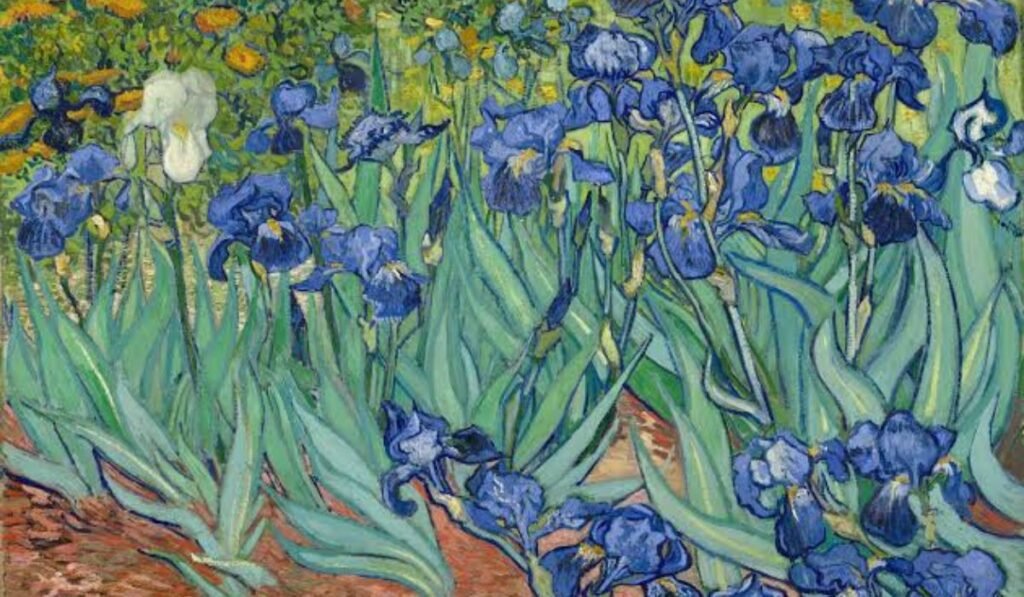
Seeking brighter sunshine and an escape from the frantic pace of city life, Vincent van Gogh journeyed south to the sun-drenched town of Arles. The luminous landscapes of Provence ignited a burst of extreme creative productivity, inspiring some of his most iconic and emotionally resonant compositions. Working at a feverish pace under the intense southern sun, he produced legendary canvases celebrating vibrant yellow sunflowers, blooming orchards, and bustling local street scenes, capturing the physical and spiritual vitality of the southern French countryside with unprecedented intensity and optical dynamism.
Exploring the Night Sky and Cosmic Visions
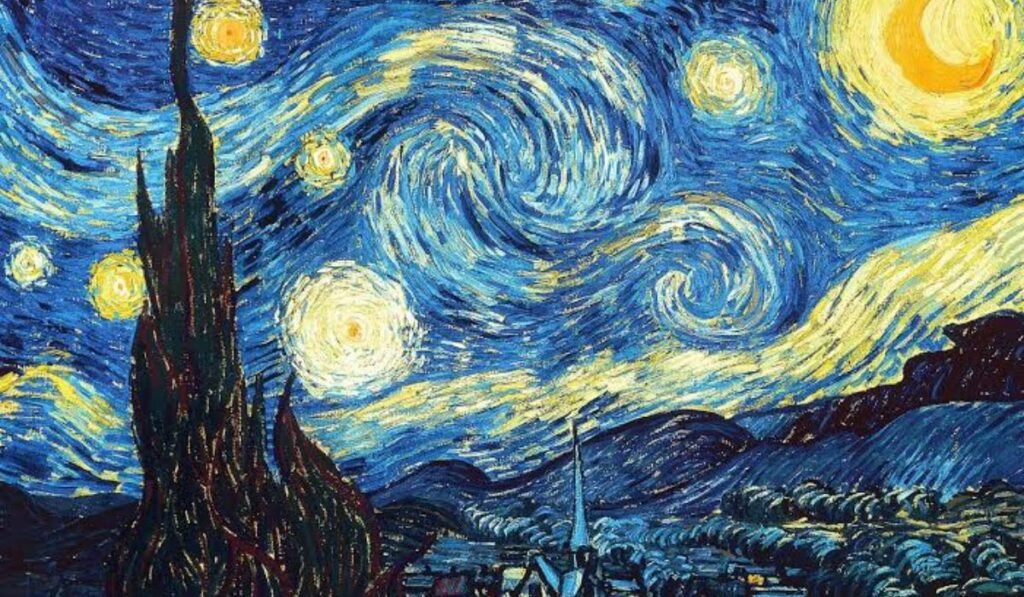
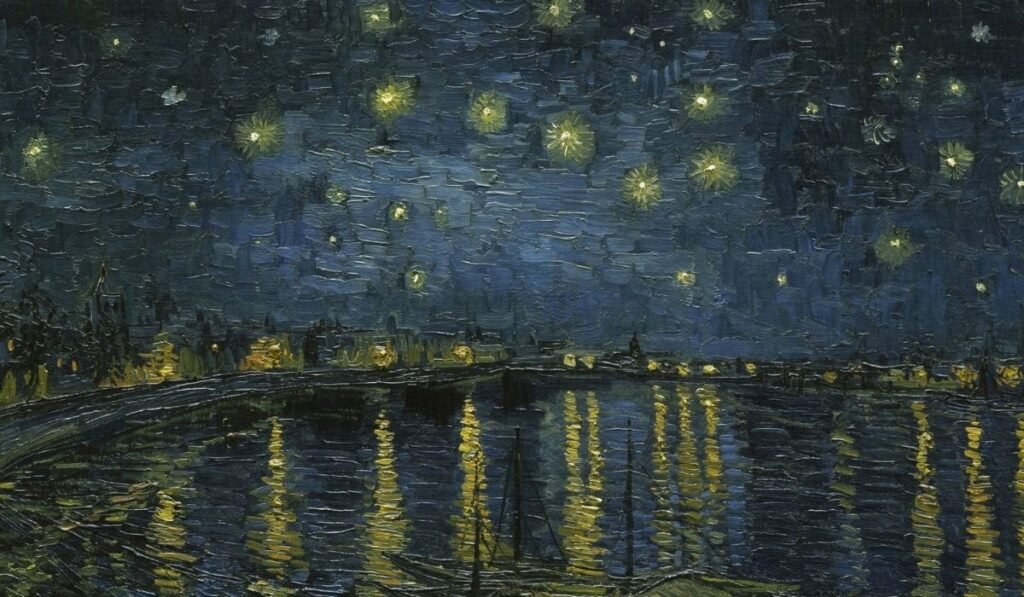
Among his most celebrated creations, Vincent van Gogh captured the nocturnal atmosphere with unmatched emotional resonance in works like Starry Night over the Rhône and his defining masterpiece. Looking out from his window, he transformed swirling clouds, glowing crescent moons, and radiant stars into pulsating vortexes of luminous energy. These nocturnal visions did not merely record topography; rather, they projected his internal psychological turbulence and cosmic awe onto the canvas, proving that paint could convey deep metaphysical dimensions beyond simple visual replication.
The Complex Friendship with Paul Gauguin
Hoping to establish an artist’s cooperative in the south, Vincent van Gogh invited fellow painter Paul Gauguin to share his Yellow House in Arles. Initially, their artistic exchanges yielded brilliant results, but conflicting personalities and intense debates over aesthetic philosophy quickly strained their relationship to a breaking point. The mounting tension culminated in a severe mental breakdown, resulting in a notorious altercation involving a razor and the subsequent self-mutilation of his ear. This tragic event marked the collapse of his dream of a communal artistic brotherhood.
Asylum Years in Saint-Rémy
Following the breakdown in Arles, Vincent van Gogh admitted himself voluntarily to the asylum in Saint-Rémy-de-Provence to stabilize his fragile mental state. Despite experiencing recurring bouts of severe anxiety and hallucinations, he channeled his inner turmoil directly into his work during lucid intervals. Confined largely to the hospital grounds, he painted the surrounding olive groves, wheat fields, and dramatic cypress trees with an astonishing sense of urgency, utilizing rhythmic, undulating brushstrokes that mirrored the restless motion of his own troubled psyche.
The Final Creative Surge in Auvers-sur-Oise
In the final months of his life, Vincent van Gogh relocated closer to Paris to be under the medical supervision of the eccentric art-loving physician Dr. Paul Gachet. Residing in Auvers-sur-Oise, he entered a staggering period of intense productivity, completing dozens of canvases in rapid succession amidst rolling green hills and rustic village cottages. His work during this bittersweet summer reflected both a desperate hope for recovery and a lingering shadow of profound isolation, showcasing expressive textures and haunting emotional weight right up until his final tragic days.
Understanding His Unique Brushwork Technique
The signature painting style of Vincent van Gogh relies heavily on thick layers of impasto applied directly with brushes and palette knives. Rather than blending colors smoothly to create an illusion of flat reality, he left individual strokes visible, giving his surfaces a tangible, sculptural quality that catches light dynamically. This energetic application of pigment allowed him to infuse static objects with vibrant movement, transforming ordinary chairs, bedroom interiors, and landscapes into living, breathing entities charged with his own intense personal energy and passion.
Color Theory and Emotional Expression
For Vincent van Gogh, color served primarily as a vehicle to express intense human emotions rather than merely imitate the natural world. He intentionally paired contrasting hues—such as striking yellows against deep blues or fierce reds against greens—to create visual tension and psychological resonance within his compositions. His letters frequently detailed how specific shades could represent concepts like hope, despair, madness, or tranquility, demonstrating a highly sophisticated, intuitive grasp of color theory that predated and heavily influenced the development of 20th-century Expressionist movements.
The Crucial Support of Theo van Gogh
Throughout his tumultuous life and career, Vincent van Gogh relied entirely on the emotional and financial backing of his devoted younger brother, Theo. Theo worked tirelessly as an art dealer in Paris, sending regular stipends for paints and canvas while offering constant encouragement through an extensive, deeply intimate correspondence. Without this steadfast fraternal lifeline, the artist could never have sustained his frantic pace of creation, making Theo an indispensable co-architect of one of the greatest bodies of work in human history.
The Extensive and Revealing Correspondence
Beyond his physical canvases, Vincent van Gogh left behind an incredible literary treasure trove in the form of hundreds of surviving letters written to his brother and various friends. These documents offer unprecedented insight into his creative processes, artistic theories, daily struggles, and philosophical thoughts on literature and nature. Written with raw eloquence and poetic brilliance, his correspondence functions simultaneously as a heartbreaking personal diary and one of the most profound instructional guides on what it truly means to live completely for the sake of art.
Tragic Demise and Untimely Passing
The life of Vincent van Gogh came to a tragic end in July 1890 when he succumbed to a self-inflicted gunshot wound in the French countryside. Despite showing moments of optimism regarding his recent exhibition interest and improving output, his underlying psychological burdens ultimately proved too heavy to bear. He passed away at the tender age of thirty-seven in the arms of his devoted brother Theo, leaving behind a grieving circle of friends and an art world that remained largely oblivious to the monumental cultural seismic shift he had just engineered.
Posthumous Fame and Global Recognition
During his lifetime, Vincent van Gogh sold very few paintings and remained virtually unknown outside a small circle of avant-garde peers and his family. True public appreciation and critical acclaim arrived only after his death, largely catalyzed by the tireless promotional efforts of his sister-in-law, Jo van Gogh-Bonger, who organized landmark exhibitions of his surviving pieces. As decades passed, his striking imagery, emotional vulnerability, and revolutionary techniques captured the public imagination, transforming him from a struggling outcast into a universally beloved cultural icon whose exhibitions draw millions of visitors worldwide.
Influence on Modern Art Movements
The bold innovations introduced by Vincent van Gogh served as vital foundational stepping stones for the evolution of modern Western art. Early 20th-century movements such as Fauvism, German Expressionism, and abstract art drew direct inspiration from his subjective use of color, distorted perspectives, and emotional brushwork. By demonstrating that art could break free from strict realism to prioritize internal psychological truth, he opened up endless creative pathways for subsequent generations of painters, sculptors, and multimedia artists seeking to push the boundaries of visual expression.
Preservation and Legacy in Museums Worldwide
Today, the extraordinary output of Vincent van Gogh is fiercely protected, studied, and exhibited in premier cultural institutions across the globe. Major repositories like the Van Gogh Museum in Amsterdam and the Museum of Modern Art in New York house hundreds of his priceless paintings and drawings, attracting continuous streams of admirers. These institutions ensure that his vibrant canvases continue to educate, inspire, and move diverse audiences, cementing his permanent status as an immortal titan of human creativity and artistic perseverance.
Commercial Value and Market Impact
In stark contrast to the severe poverty that plagued his everyday existence, works by Vincent van Gogh now command some of the highest prices ever recorded in global art auction history. Masterpieces that once failed to find buyers during his lifetime routinely fetch tens of millions of dollars when changing hands among elite collectors and state institutions. This dramatic financial appreciation highlights the immense market value attached to his cultural footprint, though many art historians argue that his true wealth lies forever in the emotional connection forged between his brush and the human soul.
Enduring Cultural Impact in Popular Culture
Beyond galleries and textbooks, the persona and imagery of Vincent van Gogh permeate modern popular culture, inspiring countless films, musical tributes, novels, and digital immersive exhibitions. His distinctive visage, dramatic life story, and iconic motifs like swirling night skies and golden sunflowers have become ubiquitous symbols of artistic genius and resilience against adversity. As new generations continue to discover his breathtaking portfolio, his legacy remains as fresh, vibrant, and emotionally compelling as the day his brush first touched the canvas.
FAQs
- When was Vincent van Gogh born?
- He was born on March 30, 1853, in Zundert, Netherlands.
- What art movement is associated with him?
- He is primarily classified as a Post-Impressionist painter.
- How many artworks did he create during his life?
- He created around 2,100 artworks, including roughly 860 oil paintings.
- What are some of his most famous paintings?
- Notable masterpieces include The Starry Night, Sunflowers, and The Potato Eaters.
- Where can readers learn more about his life?
- Comprehensive details are available on the FRIENDLY page.