 admin
admin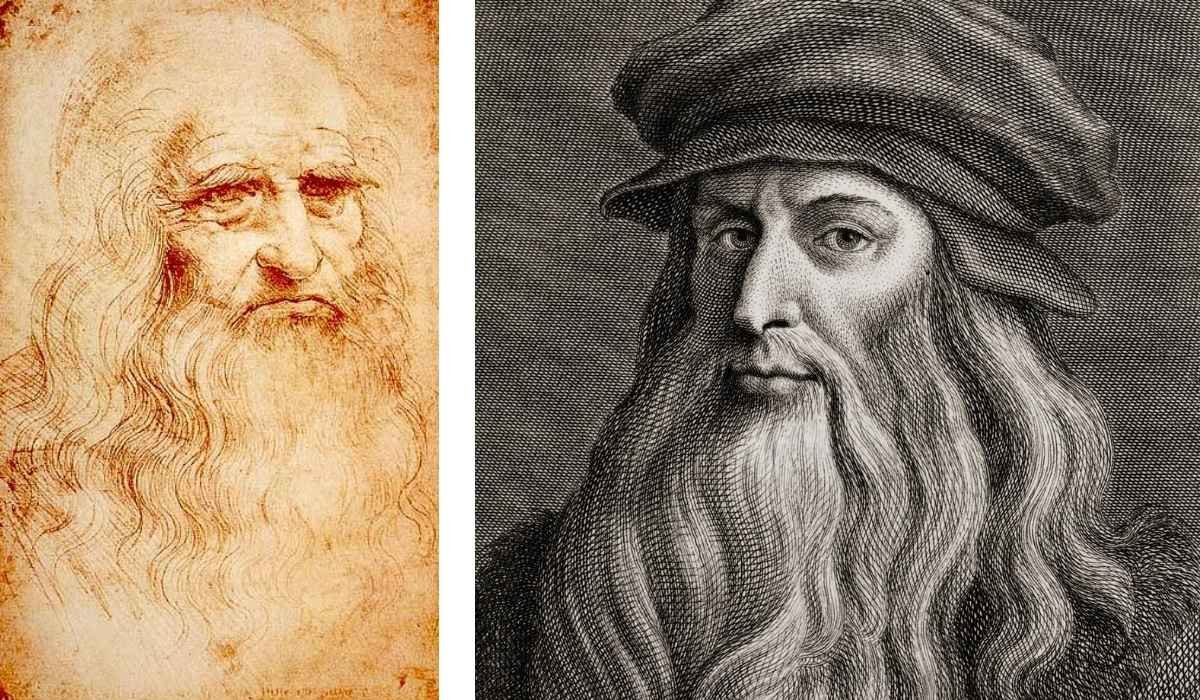
The Italian Renaissance remains one of the most transformative cultural movements in human history, giving birth to visionaries who redefined art, science, and philosophy. At the pinnacle of this extraordinary era stands a towering genius whose name instantly evokes mastery, curiosity, and boundless innovation. This polymath seamlessly bridged the gap between creative imagination and rigorous scientific inquiry, leaving behind a body of work that continues to captivate the modern world. From breathtaking masterpieces hanging in world-renowned museums to revolutionary sketches preserved in fragile notebooks, Leonardo Da Vinci forever changed how humanity perceives the universe, nature, and our own inner creative potential.
Quick Bio
| Attribute | Details |
|---|---|
| Full Name | Leonardo di ser Piero da Vinci |
| Birth Date | April 14/15, 1452 |
| Birthplace | Vinci, Republic of Florence |
| Death Date | May 2, 1519 (Aged 67) |
| Notable Works | Mona Lisa, The Last Supper, Vitruvian Man |
| Primary Fields | Painting, Anatomy, Engineering, Science |
The Early Life and Formative Years of Leonardo Da Vinci
Born in the small Tuscan hill town of Vinci, Leonardo Da Vinci began his journey as the illegitimate son of a wealthy notary and a young peasant woman. Despite lacking formal academic training in classical languages and mathematics, his prodigious intellect quickly manifested through an insatiable curiosity about the natural world. Growing up amidst the picturesque landscapes of the Italian countryside, he spent countless hours observing flora, fauna, and water currents, laying the foundational observational skills that would later fuel his artistic and scientific career. These formative rural experiences instilled in him a profound appreciation for the subtle details of light, shadow, and organic movement.
Apprenticeship in Florence Under Master Andrea del Verrocchio
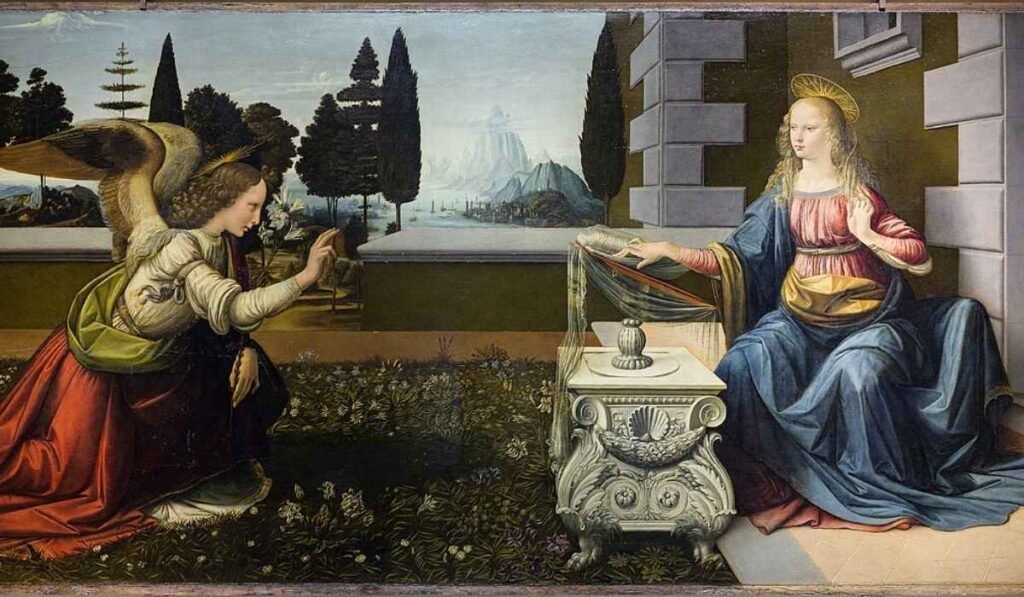
Seeking greater opportunities for artistic development, Leonardo Da Vinci moved to Florence during his adolescence to enter the bustling workshop of Andrea del Verrocchio. Verrocchio was a celebrated master painter and sculptor of the early Renaissance, providing an immersive environment where young apprentices learned diverse trades, including metallurgy, chemistry, drafting, painting, and sculpting. Working alongside other notable artists of the period, Leonardo refined his technical brushwork and developed a deep understanding of perspective and composition. His remarkable talent soon surpassed that of his master, famously culminating in an angel he painted in Verrocchio’s Baptism of Christ that reportedly left the older artist humbled.
The Artistic Mastery Behind the Iconic Mona Lisa
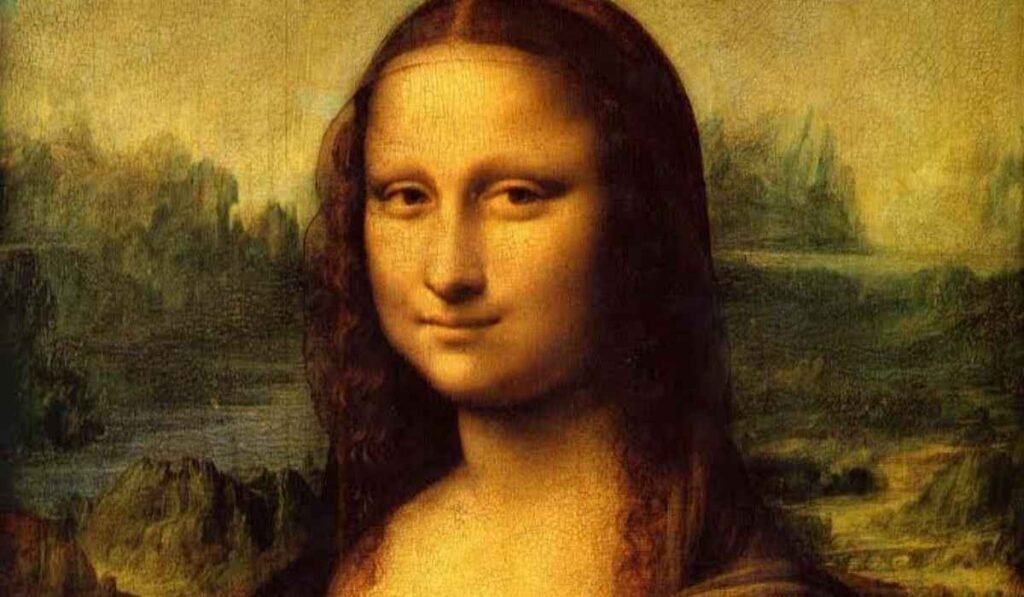
Arguably the most famous painting in global history, the Mona Lisa stands as a supreme testament to the genius of Leonardo Da Vinci. Created using oil paints on a poplar wood panel during the early sixteenth century, the portrait mesmerizes viewers with its enigmatic expression and the subtle psychological depth captured in the sitter’s gaze. Leonardo employed his signature technique of sfumato, a method of blurring sharp outlines to create soft, imperceptible transitions between colors and tones, which gives the subject an uncanny sense of lifelike presence. The intricate, hazy background landscape further demonstrates his mastery of atmospheric perspective and his ability to integrate human figures harmoniously with nature.
Exploring Spirituality and Drama in The Last Supper
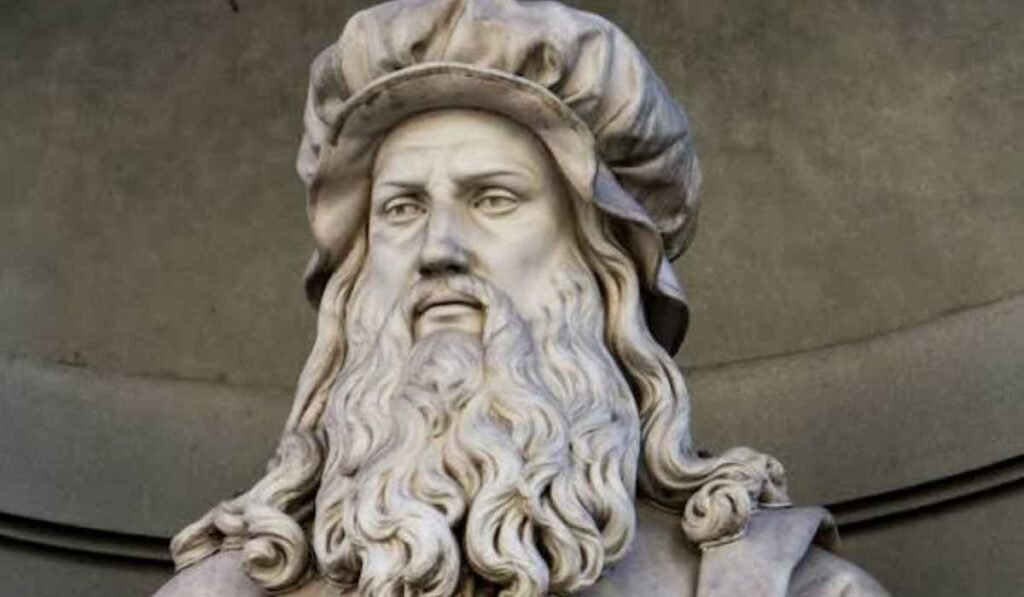
Commissioned by Ludovico Sforza, the Duke of Milan, for the refectory of the convent of Santa Maria delle Grazie, The Last Supper remains a monumental achievement in Western religious art. Leonardo Da Vinci chose to capture the dramatic psychological moment immediately after Jesus announces that one of his disciples will betray him. Through masterful arrangement of perspective lines converging behind the head of Christ, the composition draws the viewer directly into the tense, emotional space of the room. Despite experimenting with an experimental tempera-on-stone technique that caused the mural to deteriorate rapidly over the centuries, the enduring power of its narrative and composition continues to inspire awe.
The Revolutionary Notebooks and Scientific Inquiries
Beyond his celebrated career as a painter, Leonardo Da Vinci dedicated decades to documenting his relentless intellectual pursuits in thousands of surviving journal pages. Written in his famous mirror script from right to left, these voluminous notebooks cover an astonishing array of scientific disciplines, including physics, geometry, architecture, and botany. He approached nature not merely as an aesthetic subject, but as a complex machine governed by mechanical and mathematical laws that could be systematically studied, understood, and harnessed. These private writings reveal a mind centuries ahead of its time, constantly questioning established orthodoxies and relying purely on empirical observation to uncover fundamental truths.
Pioneering Anatomical Studies and Medical Discoveries
The fascination with human form and physiology led Leonardo Da Vinci to perform numerous human dissections, often working clandestinely in hospital morgues late at night. His meticulous drawings of muscles, bones, cardiovascular systems, and embryonic development shattered medieval medical misconceptions and established new standards for scientific illustration. By cross-referencing anatomical structures with mechanical principles, he sought to understand how the human body moved, functioned, and sustained life. These groundbreaking studies were so anatomically accurate and detailed that modern medical researchers still reference his diagrams today to appreciate the profound depth of his early discoveries.
Conceptualizing Flying Machines and Early Aviation
Long before the invention of modern airplanes, Leonardo Da Vinci conceptualized sophisticated flying machines inspired by the anatomy of birds, bats, and flying insects. His extensive aviation designs included ornithopters featuring flapping wings, early parachute concepts, aerial screws resembling modern helicopters, and gliding apparatuses meant to transport humans through the air. Although most of these visionary inventions could not be built or flown during his lifetime due to technological limitations and inadequate power sources, they demonstrated extraordinary foresight. His rigorous study of wind resistance, aerodynamics, and structural physics laid theoretical groundwork that modern aerospace engineers continue to respect and admire.
Engineering Marvels and Military Innovations in Milan
During his lengthy tenure in the service of the Duke of Milan, Leonardo Da Vinci worked extensively as a military engineer, designer, and architect. He conceptualized innovative fortification systems, giant crossbows, armored vehicles resembling early tanks, and rapid-fire catapults designed to secure tactical advantages on the battlefield. While many of these aggressive military contraptions were likely speculative proposals intended to impress wealthy patrons rather than practical battlefield weapons, they showcased his genius for applied mechanics. Simultaneously, he engineered sophisticated hydraulic systems, canal locks, and civil architecture projects aimed at improving urban infrastructure and agricultural irrigation throughout the region.
The Aesthetic Genius of Vitruvian Man and Proportions
One of the most recognizable cultural symbols of the Renaissance, the Vitruvian Man encapsulates Leonardo Da Vinci’s lifelong obsession with symmetry, proportion, and human geometry. Based on the architectural writings of the ancient Roman engineer Vitruvius, the drawing illustrates a male figure in two superimposed positions with his arms and legs inscribed simultaneously inside a circle and a square. Through this brilliant illustration, Leonardo explored the mathematical harmony connecting the human body to the fundamental geometry of the natural universe. This iconic sketch brilliantly bridges art and science, demonstrating that aesthetic beauty is deeply rooted in proportional balance and universal mathematical principles.
Botanical Illustrations and Ecological Observations
The keen eye of Leonardo Da Vinci extended far into the plant kingdom, where he produced some of the most accurate botanical illustrations of the early Renaissance. He meticulously documented the growth patterns, leaf arrangements, and spiral formations of various plants, recognizing underlying mathematical sequences long before they were formally categorized. His ecological insights led him to study water flow, erosion, and rock strata, allowing him to understand how geological forces shaped the landscapes he loved to paint. By treating botany and geology with the same rigorous scientific curiosity as human anatomy, he revealed a holistic worldview where every element of nature is interconnected.
Musical Talents and Performance Arts in the Renaissance Court
In addition to his prowess in visual arts and science, Leonardo Da Vinci was an accomplished musician, singer, and improvisational performer who charmed royal courts across Italy. He famously constructed a silver lyre shaped like a horse’s skull, an innovative instrument that produced exceptionally resonant tones and established his reputation as a brilliant court entertainer in Milan. Music for him was not just a pleasant pastime, but another manifestation of harmonious proportion and mathematical rhythm that paralleled his visual compositions. This multifaceted creativity allowed him to navigate elite social circles effortlessly, blending artistic performance with intellectual discourse among the prominent leaders of his era.
Architectural Visions and Urban Planning Concepts
Urban crowding and devastating plague outbreaks in fifteenth-century European cities drove Leonardo Da Vinci to conceptualize revolutionary architectural designs and multi-level city planning models. He envisioned futuristic urban centers featuring multi-tiered traffic systems, where pedestrian walkways were separated from heavy cargo transport and sanitary canals flushed waste away from residential zones. His architectural sketches included grand villas, domed churches, and modular housing units designed for efficient construction, ventilation, and structural stability. Although these visionary urban layouts were never realized in his lifetime, they anticipated modern city planning challenges and proposed sustainable solutions centuries before the industrial revolution.
The Philosophy of Saper Vedere and Empirical Observation
At the core of the intellectual worldview held by Leonardo Da Vinci was the guiding principle of saper vedere, which translates to knowing how to see. He believed that true knowledge derived directly from acute sensory perception and rigorous empirical experimentation, rejecting blind adherence to ancient scholastic dogmas. This philosophy encouraged him to question everything he encountered, testing hypotheses through observation, drawing, and physical modeling rather than philosophical speculation alone. By championing empirical science long before the formal scientific revolution took root in Europe, he established a modern mindset that values verifiable evidence above all traditional assumptions.
Later Years in Rome, France, and Final Legacy
The final chapters of Leonardo Da Vinci unfolded across Rome and ultimately in France, where he spent his twilight years as premier painter and engineer to King Francis I. Housed in the comfortable manor of Clos Lucé near the royal chateau of Amboise, he continued organizing his vast scientific papers, mentoring younger assistants, and conceptualizing royal festivities. Honored and deeply respected by French royalty, he passed away peacefully in May 1519, leaving behind an immortal legacy that would inspire generations of subsequent creators. His death marked the closing of a golden chapter in cultural history, yet his visionary ideas continue to echo powerfully across contemporary science, art, and philosophy.
Exploring Perspective, Light, and Shadow in Painting
The revolutionary artistic techniques developed by Leonardo Da Vinci transformed Renaissance painting from flat, symbolic representation into a dynamic exploration of three-dimensional space and optical reality. Through careful experimentation with chiaroscuro, the strong contrast between light and dark, he gave his subjects sculptural weight and emotional drama that drew viewers into the scene. He understood that shadows are never truly black, but rather tinted with surrounding colors, an observation that anticipated modern color theory by centuries. This profound grasp of optical physics allowed him to manipulate viewer perception, creating illusions of depth and atmospheric haze that remain breathtaking in their realism.
Master of Invention and the Spirit of Universal Curiosity
The boundless intellect of Leonardo Da Vinci earned him the enduring title of the ultimate Renaissance man, a universal genius whose curiosity knew no boundaries. Whether he was designing a theatrical stage set, calculating the trajectory of a cannonball, or mixing new oil pigments for a mural, he approached every task with intense concentration and inventive zeal. He famously filled his pockets with small notebooks to jot down stray thoughts, observe facial expressions in public marketplaces, or sketch passing clouds. This insatiable appetite for learning serves as an eternal reminder of the incredible heights human imagination and disciplined inquiry can achieve when driven by pure passion.
The Cultural Impact and Global Influence on Modern Art
The cultural footprint left by Leonardo Da Vinci extends far beyond his immediate contemporaries, shaping the trajectory of Western art, science, and popular culture for over five hundred years. Master painters of subsequent centuries studied his compositions meticulously, while modern scientists and engineers frequently draw inspiration from his visionary sketches to solve contemporary technological challenges. Exhibitions featuring his works and notebook reproductions continue to draw millions of visitors worldwide, proving that his genius transcends language, era, and geography. He remains a universal symbol of human potential, reminding us of the infinite possibilities that emerge when art and science unite in harmony.
Preservation Challenges and Restoring Historical Masterpieces
Ensuring the survival of the fragile legacy left by Leonardo Da Vinci presents extraordinary challenges for modern conservators, art historians, and scientific researchers. Because he frequently experimented with unorthodox materials, unproven paint mixtures, and experimental fresco techniques, many of his physical works began degrading even during his lifetime. Advanced technological tools, including infrared reflectography, multispectral imaging, and chemical analysis, are now routinely employed to monitor paint stability and uncover hidden preliminary sketches beneath visible layers. These painstaking preservation efforts ensure that future generations can continue to study, appreciate, and marvel at the authentic genius embedded within his surviving physical masterpieces.
Celebrating the Timeless Genius of Leonardo Da Vinci
Reflecting upon the extraordinary life and multifaceted career of Leonardo Da Vinci reveals a mind that constantly pushed the boundaries of what humanity thought possible. He combined the soul of an artist with the analytical mind of a scientist, creating a seamless bridge between subjective beauty and objective truth. His enduring masterpieces and visionary notebooks challenge us to look closer at the world around us, to question assumptions, and to cultivate a lifelong passion for learning. As humanity continues to navigate an increasingly complex technological age, the timeless spirit of curiosity embodied by this legendary polymath remains an essential guiding light for future innovators and dreamers everywhere. Leonardo Da Vinci
FAQs
- What was Leonardo Da Vinci best known for during his lifetime?
- He gained immense renown primarily as a master painter, military engineer, and court visionary in Florence and Milan.
- How many surviving paintings are attributed to Leonardo Da Vinci?
- Art historians generally attribute around fifteen to twenty finished paintings directly to his hand.
- Why did Leonardo Da Vinci write his notebooks in mirror script?
- He likely wrote backward from right to left to prevent ink smudging and to keep his private scientific theories secure.
- What is the technique of sfumato used in his paintings?
- Sfumato is an artistic method of blurring sharp outlines to create soft, seamless transitions between colors and tones.
- Where did Leonardo Da Vinci spend his final years?
- He spent his final years in France at the manor of Clos Lucé under the patronage of King Francis I.