 admin
admin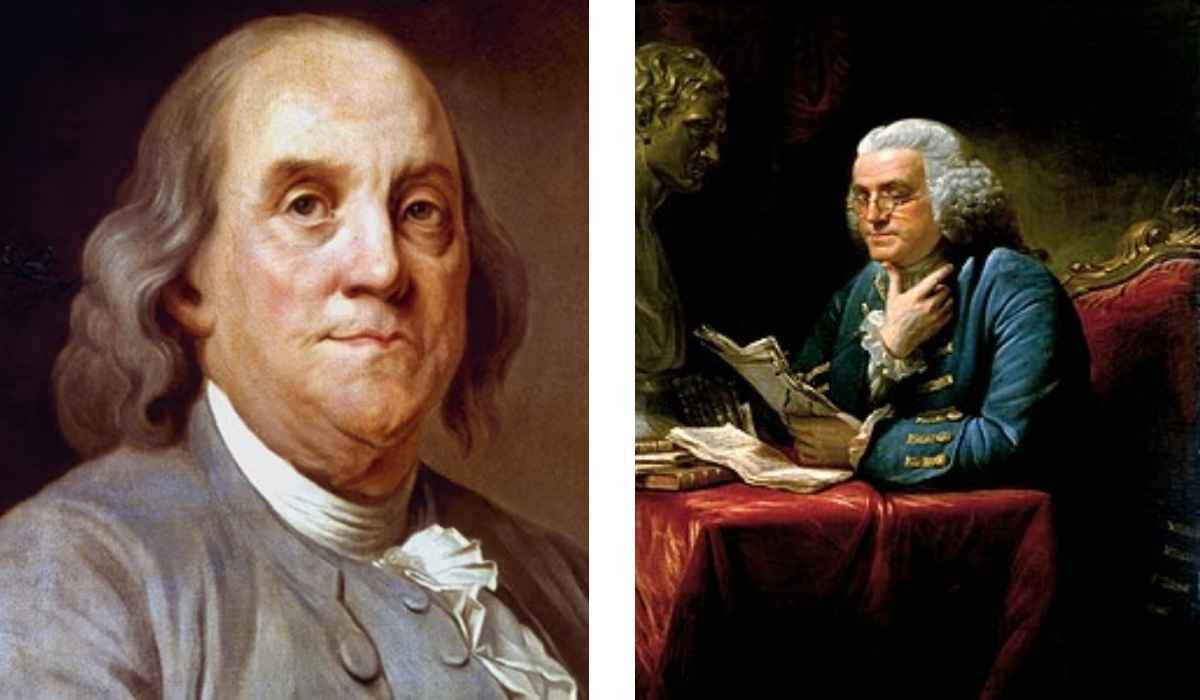
The early life of Benjamin Franklin began in the historic city of Boston where he was born into a large family. Growing up with very limited formal education, he developed an insatiable passion for reading and learning. At a young age, he began working as an apprentice in a printing shop owned by his brother. This crucial experience allowed him to master the complex trade of printing while simultaneously honing his writing skills through anonymous essays. Driven by ambition and a desire for independence, Benjamin Franklin eventually decided to leave Boston behind, seeking new personal and professional opportunities elsewhere.
Quick Bio
| Attribute | Detail |
| Born | January 17, 1706, Boston, Massachusetts |
| Died | April 17, 1790, Philadelphia, Pennsylvania |
| Profession | Printer, Author, Scientist, Politician, Diplomat |
| Key Role | Founding Father of the United States |
| Notable Inventions | Lightning rod, Bifocals, Franklin stove |
Early Beginnings in Boston
The early years shaped the character of Benjamin Franklin significantly through humble circumstances and daily hard work. Born to a candle maker, his family struggled financially, which restricted his schooling to just a couple of years. Despite these early limitations, he constantly devoured books and taught himself various subjects through sheer determination. Working long hours in his father’s shop taught him the value of manual labor and practical craftsmanship. These foundational lessons prepared Benjamin Franklin for the immense challenges he would face later in his remarkable and diverse public career.
Journey to Philadelphia
Seeking an escape from strict family confines, Benjamin Franklin traveled to Philadelphia to start completely fresh. Arriving as a weary and hungry young man, he walked through the unfamiliar streets with barely any money in his pockets. He quickly found employment at a local print shop, where his exceptional skills immediately impressed his new employers. The bustling colonial city offered a vibrant atmosphere that nurtured his growing intellectual curiosity and entrepreneurial spirit. This relocation marked a major turning point that allowed Benjamin Franklin to establish deep roots in a welcoming community.
Rise as a Master Printer
Building a successful career required immense dedication, which Benjamin Franklin demonstrated through his tireless work ethic. He soon managed to open his own printing business, which quickly gained a reputation for high quality and reliability. Through smart business strategies and publications like the Pennsylvania Gazette, he accumulated substantial wealth and local influence. His printing press became a cornerstone for local commerce and the distribution of vital civic information throughout the region. Financial independence gave Benjamin Franklin the freedom to pursue scientific experiments and public service initiatives with full vigor.
Writing Poor Richard Almanack
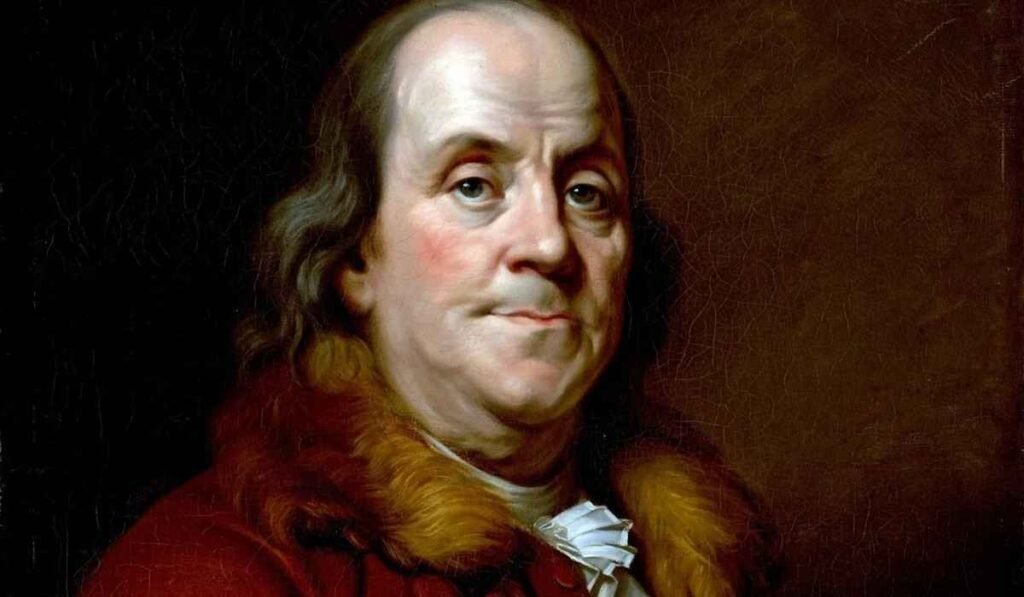
Publishing under a clever pseudonym, Benjamin Franklin entertained and educated colonial readers with timeless wit and wisdom. Poor Richard Almanack became an instant bestseller, featuring memorable aphorisms about thrift, hard work, and practical morality. The annual publication reached households across the colonies, shaping the cultural identity and economic mindset of early Americans. His engaging writing style made complex philosophical ideas accessible to ordinary citizens from all walks of life. Through these popular publications, Benjamin Franklin cemented his status as a premier literary voice in colonial society.
Founding Civic Institutions
Community improvement remained a lifelong passion for Benjamin Franklin, who established numerous organizations to benefit society directly. He helped create the first subscription library in America, giving everyday citizens access to valuable educational books. Additionally, he played a central role in organizing Philadelphia’s first volunteer fire department and local hospital infrastructure. His efforts extended to higher education through the establishment of the institution that later became the University of Pennsylvania. Every project touched by Benjamin Franklin reflected his deep commitment to collective progress and civic engagement.
Scientific Explorations and Electricity
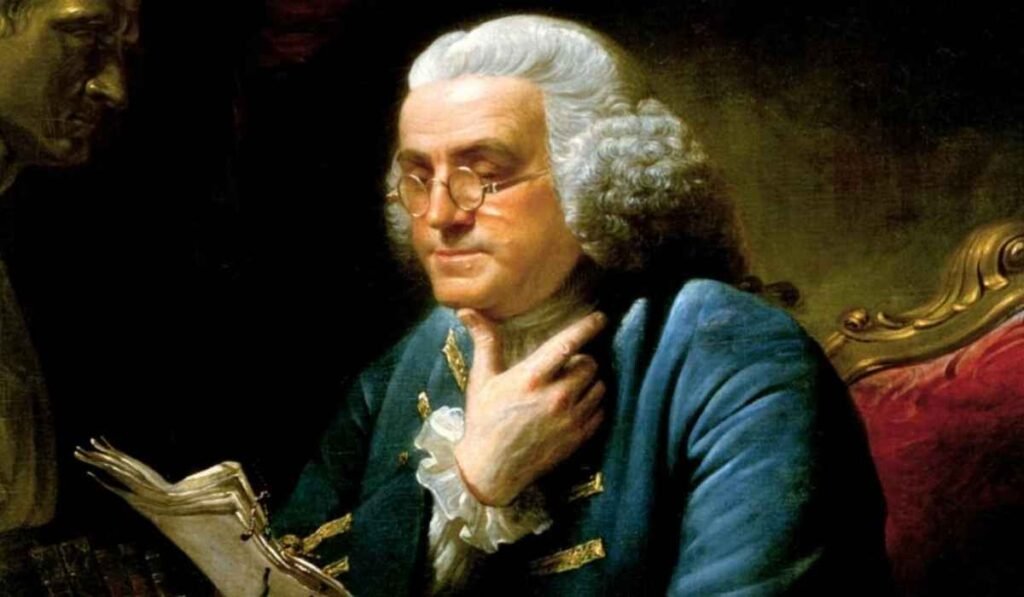
Natural philosophy captured the imagination of Benjamin Franklin, leading to groundbreaking experiments that transformed modern science. His famous kite experiment proved the electrical nature of lightning, bridging theoretical physics and practical application. He introduced fundamental scientific terms like battery, positive, and negative that are still used in physics classrooms today. International recognition followed his scientific publications, earning him prestigious honors from academic societies across Europe and America. The intellectual community greatly respected Benjamin Franklin for his rigorous empirical approach and innovative analytical mindset.
Brilliant Practical Inventions
Inventive genius defined the daily life of Benjamin Franklin, who refused to patent any of his numerous creative designs. He invented the lightning rod to protect buildings from destructive fires, along with the fuel-efficient Franklin stove. When his eyesight began to fail as he aged, he cleverly invented bifocal glasses to solve the problem. Music also interested him, resulting in the creation of the glass harmonica, which enchanted audiences throughout Europe. Every single creation by Benjamin Franklin aimed to solve everyday problems and improve the quality of human life.
Pioneering Postal Innovations
Communication across the vast American colonies improved dramatically under the administrative leadership of Benjamin Franklin. Appointed as deputy postmaster-general, he reorganized mail routes and accelerated delivery times between major northern and southern settlements. These improvements created an interconnected network that facilitated the rapid spread of revolutionary news and political ideas. He even introduced a dead-letter office system to handle unclaimed mail efficiently and fairly across the territory. Effective organization by Benjamin Franklin laid the vital logistical groundwork for a unified national postal system.
Political Activism in London
Defending colonial rights took Benjamin Franklin across the Atlantic Ocean to serve as an agent in British Parliament. He vigorously protested against unfair taxation policies, most notably spearheading the successful campaign to repeal the Stamp Act. His sharp testimony before British lawmakers showcased his diplomatic brilliance and fierce defense of colonial liberties. Although he initially hoped for a peaceful reconciliation between Britain and the colonies, political tensions continued to escalate. These experiences ultimately convinced Benjamin Franklin that total American independence was both necessary and inevitable.
Drafting the Declaration of Independence
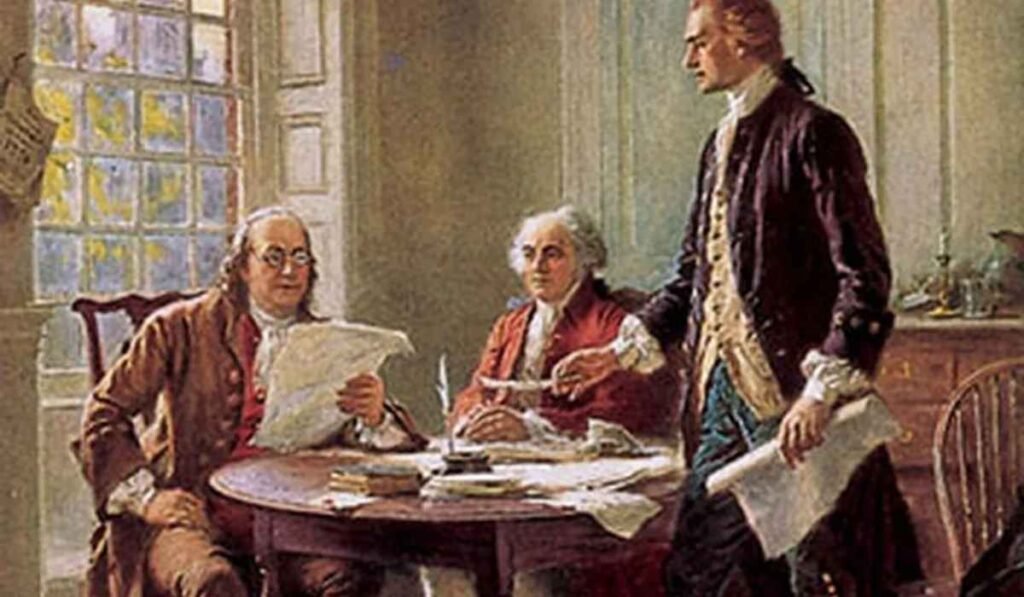
Returning home to a nation at war, Benjamin Franklin joined the Continental Congress to help build a new country. He was chosen as one of the committee members tasked with drafting the historic Declaration of Independence. Working alongside Thomas Jefferson and John Adams, he helped refine the powerful prose that announced American freedom. Signing this foundational document was a treasonous act that carried the penalty of death under British law. Courage and conviction guided Benjamin Franklin as he committed his life and fortune to the revolutionary cause.
Diplomatic Mission to France
Securing foreign military and financial alliances became the crucial mission entrusted to Benjamin Franklin during the darkest hours. Arriving in Paris, he captured the hearts of the French public and nobility through his charm and intellect. He successfully negotiated the Treaty of Alliance with France, bringing vital troops and warships to the American side. This diplomatic triumph turned the tide of the revolutionary war and ensured the survival of the young republic. International admiration for Benjamin Franklin reached legendary proportions during his historic years representing American interests abroad.
Negotiating the Treaty of Paris
Peace negotiations with Great Britain required master-level diplomacy, which Benjamin Franklin delivered with absolute precision and grace. He led the American delegation in Paris to secure formal recognition of independence and favorable territorial boundaries. His patience and strategic foresight outmaneuvered seasoned European diplomats who underestimated the young nation’s negotiating power. The resulting treaty officially ended the long and grueling Revolutionary War on terms highly advantageous to America. History remembers Benjamin Franklin as the only Founding Father to sign all four key foundational documents of the United States.
Final Years and Constitutional Convention
Returning to his beloved Philadelphia, Benjamin Franklin contributed his final public service to the drafting of the federal Constitution. Despite failing health and advanced age, he attended the heated convention debates to offer wise counsel and compromise. His famous closing speech urged delegates to accept the final document despite individual imperfections for the sake of national unity. He spent his final months advocating for the abolition of slavery and supporting humanitarian community projects. The extraordinary journey of Benjamin Franklin concluded peacefully when he passed away in the spring of 1790.
Legacy as the First American
Lasting influence defines the historical reputation of Benjamin Franklin across generations of scholars, scientists, and political leaders. Often dubbed the First American, he embodied the quintessential ideals of self-reliance, scientific inquiry, and democratic freedom. His face on the one-hundred-dollar bill serves as a daily reminder of his monumental contributions to global financial systems. Monuments, towns, and educational institutions worldwide proudly carry his name to honor his multifaceted achievements. The enduring spirit of Benjamin Franklin continues to inspire modern innovators who strive to push the boundaries of human knowledge.
Reflections on Enlightenment Philosophy
Intellectual movements across Europe deeply influenced the worldview and philosophical writings of Benjamin Franklin throughout his life. He believed firmly in religious tolerance, freedom of speech, and the power of rational human thought. Rather than focusing purely on abstract theory, he always sought practical applications that could benefit common working people. His correspondence with European philosophers established America as a rising center of enlightened thinking and scientific discovery. Future generations inherited a rich intellectual framework built largely on the intellectual foundation laid down by Benjamin Franklin.
Impact on Journalism and Publishing
Media and public discourse in the American colonies evolved rapidly under the watchful guidance of Benjamin Franklin. He utilized his printing press to promote free expression and encourage public debate on critical political matters. His essays championed ethical journalism and warned against the dangers of censorship and unchecked government authority. By training numerous apprentices who later opened their own shops, he helped shape the future of American print media. Professional standards established by Benjamin Franklin remain central tenets of modern journalism and free press principles today.
Philosophical Approach to Personal Virtue
Self-improvement was a structured daily practice for Benjamin Franklin, who meticulously tracked thirteen specific moral virtues. He created a specialized pocket notebook to monitor his daily behavior and correct personal shortcomings over time. Temperance, order, sincerity, and humility formed the core pillars of his personal code of ethical conduct. Although he openly admitted he never achieved perfection, the pursuit made him a disciplined and balanced individual. Practical wisdom from Benjamin Franklin regarding self-discipline remains popular in modern self-help literature and leadership guides.
Championing the Anti-Slavery Movement
Social reform became a major focus during the later years of Benjamin Franklin as he actively opposed human bondage. Initially participating in the economic norms of his era, he later recognized the profound moral evil of slavery. He served as president of the Pennsylvania Society for Promoting the Abolition of Slavery near the end of his life. Petitions submitted to Congress bearing his signature demanded legislative action to end the slave trade once and for all. Human rights advocacy by Benjamin Franklin demonstrated his capacity for personal growth and moral evolution.
Enduring Historical Significance
Global historical memory reserves a special place for Benjamin Franklin as a true Renaissance man of the American experiment. His ability to seamlessly transition from printing press operator to world-famous scientist and diplomat remains unmatched. He helped forge a new nation out of disparate colonies through unmatched patience, humor, and sharp intelligence. Every facet of American culture bears the subtle fingerprints of his lifelong dedication to public improvement. The extraordinary legacy of Benjamin Franklin continues to shine as a beacon of what human creativity and civic duty can achieve.
FAQs
- When was Benjamin Franklin born?
- Benjamin Franklin was born on January 17, 1706.
- What are some famous inventions by Benjamin Franklin?
- He invented the lightning rod, bifocal glasses, and the Franklin stove.
- Which key documents did Benjamin Franklin sign?
- He signed the Declaration of Independence, Treaty of Alliance with France, Treaty of Paris, and the U.S. Constitution.
- Why did Benjamin Franklin travel to France?
- He went to secure military and financial support for the American Revolution.
- What was the pen name he used for Poor Richard Almanack?
- He wrote under the pseudonym Richard Saunders.