 admin
admin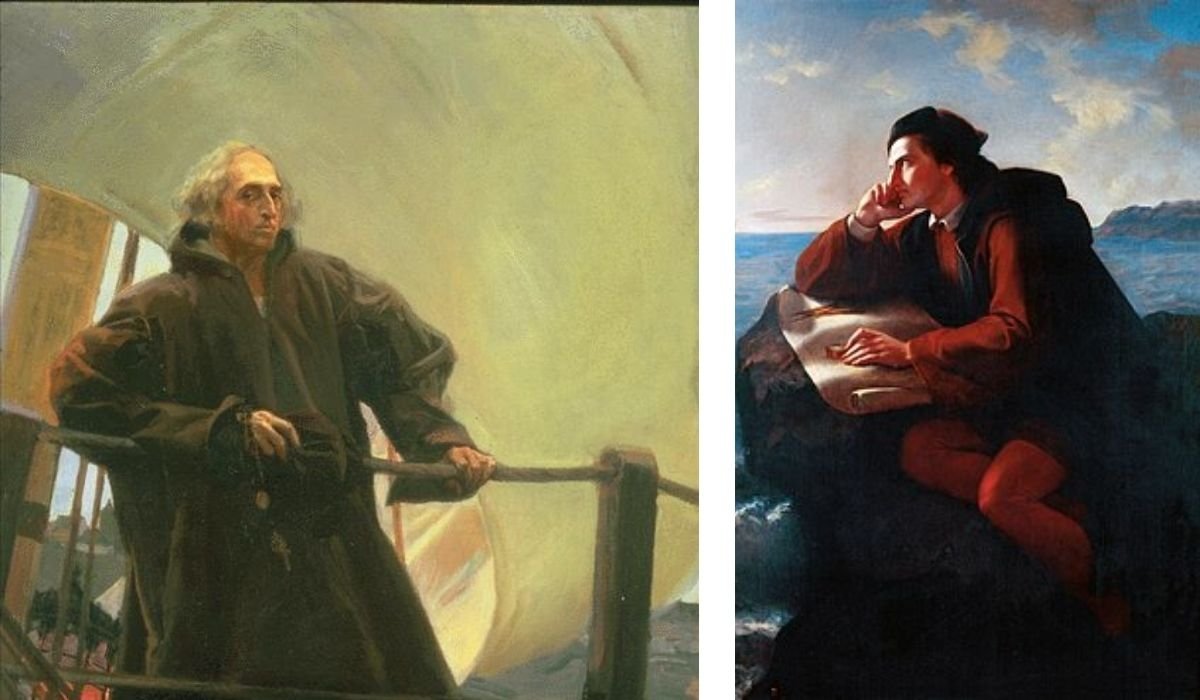
The history of global exploration changed forever when an ambitious Italian navigator named Christopher Columbus set sail across uncharted waters in search of a western passage to Asia. Driven by an unyielding vision, fierce determination, and the backing of the Spanish Catholic Monarchs, his daring 1492 voyage bridged two worlds that had remained completely isolated from each other for millennia. This accidental landfall on the shores of the Americas initiated a monumental era of transoceanic contact, sparking massive shifts in global trade, geopolitics, and cultural exchange. Although his true destination was never reached, the profound ramifications of his journeys continue to shape modern historical perspectives worldwide.
Quick Bio
| Feature | Detail |
| Full Name | Cristoforo Colombo |
| Born | 1451 in Genoa, Italy |
| Died | May 20, 1506 in Valladolid, Spain |
| Spouse | Filipa Moniz Perestrelo |
| Children | Diego and Ferdinand |
| Occupation | Explorer and Navigator |
Early Life and Maritime Beginnings in Genoa
Born in the vibrant maritime Republic of Genoa around 1451, Christopher Columbus grew up immersed in a culture defined by sea trade and commercial enterprise. His father worked as a humble wool merchant, yet the young boy found his true calling on the dynamic waters of the Mediterranean Sea rather than inside a dusty workshop. During his formative years, he took part in numerous coastal trading voyages, gaining invaluable hands-on experience in seamanship, vessel handling, and rudimentary cartography. These early maritime adventures instilled in him a lifelong passion for ocean navigation, setting the foundational stage for his later grand ambitions across vast and dangerous waters.
Apprenticeship and Expanding Horizons Across Europe
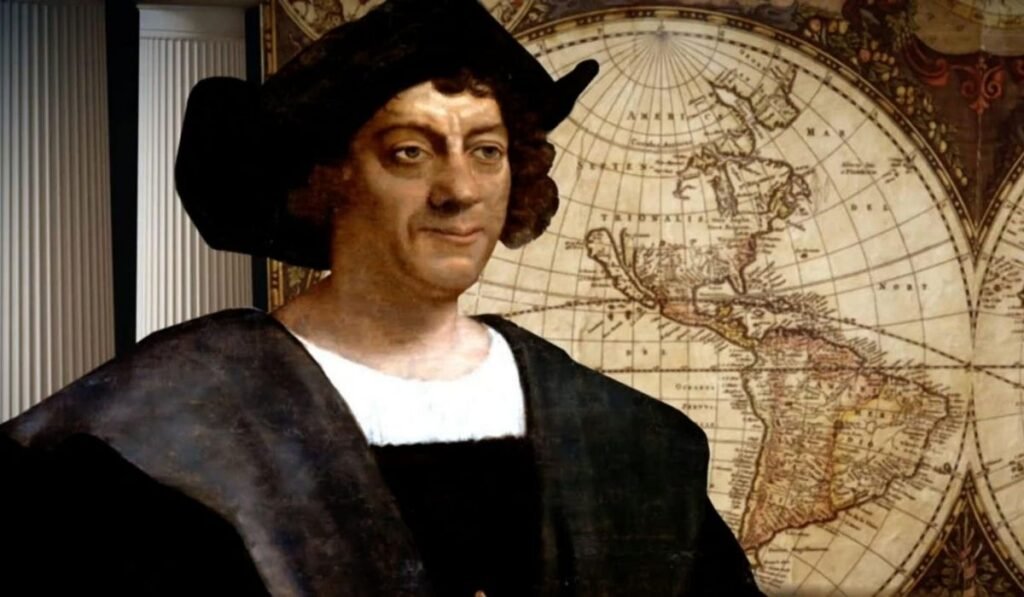
As a young adult, Christopher Columbus relocated to various trading posts, expanding his geographical knowledge by traveling extensively throughout northern and southern European waters. Records indicate he participated in commercial convoys heading toward the British Isles, Ireland, and even the distant shores of the Aegean Sea. Working variously as a shipping agent, mapmaker, and commercial traveler, he carefully studied prevailing ocean currents, wind patterns, and celestial navigation techniques. Every voyage added crucial insights into maritime logistics, helping Christopher Columbus refine the complex navigational theories that would eventually fuel his daring quest to cross the terrifying expanse of the open Atlantic Ocean.
Relocation to Lisbon and Portuguese Influences
Moving to the bustling capital of Portugal in the late 1470s marked a major turning point for Christopher Columbus as he integrated into Lisbon’s thriving nautical community. There, he married Filipa Moniz Perestrelo, a woman from a noble seafaring family whose relatives provided access to valuable maritime charts and journals. He spent hours examining logs left by his deceased father-in-law, absorbing every available detail regarding Atlantic winds and undiscovered islands. This Portuguese period allowed Christopher Columbus to network with elite mariners, scholars, and merchants, all while cementing his obsession with finding a direct, lucrative western water route to the spice-rich markets of East Asia.
Developing the Grand Enterprise and Seeking Sponsors
Obsessed with the idea of reaching Asia by sailing west, Christopher Columbus formulated a bold calculation of the Earth’s circumference that drastically underestimated the true distance to the Orient. Armed with this flawed yet hopeful data, he first petitioned King John II of Portugal for financial sponsorship, only to have royal committees reject his proposal as mathematically unfeasible. Undeterred by this initial setback, Christopher Columbus packed his belongings and traveled to Spain, determined to present his ambitious enterprise to alternative monarchs who might be willing to finance a fleet of exploratory ships across the western horizon.
The Long Struggle for Royal Patronage in Spain
Life in Spain proved exceptionally challenging for Christopher Columbus as he spent years lobbying the Catholic Monarchs, Ferdinand and Isabella, for financial and logistical backing. Royal advisors repeatedly delayed their decisions, arguing that the nation’s ongoing military campaigns against Granada required total financial commitment and left no resources for speculative maritime ventures. Living a transient existence and facing constant rejection from skeptical courts, Christopher Columbus refused to abandon his vision, utilizing influential friends within Franciscan monasteries to keep his proposal alive until the political climate in the royal Spanish court shifted favorably.
Final Approval from the Catholic Monarchs
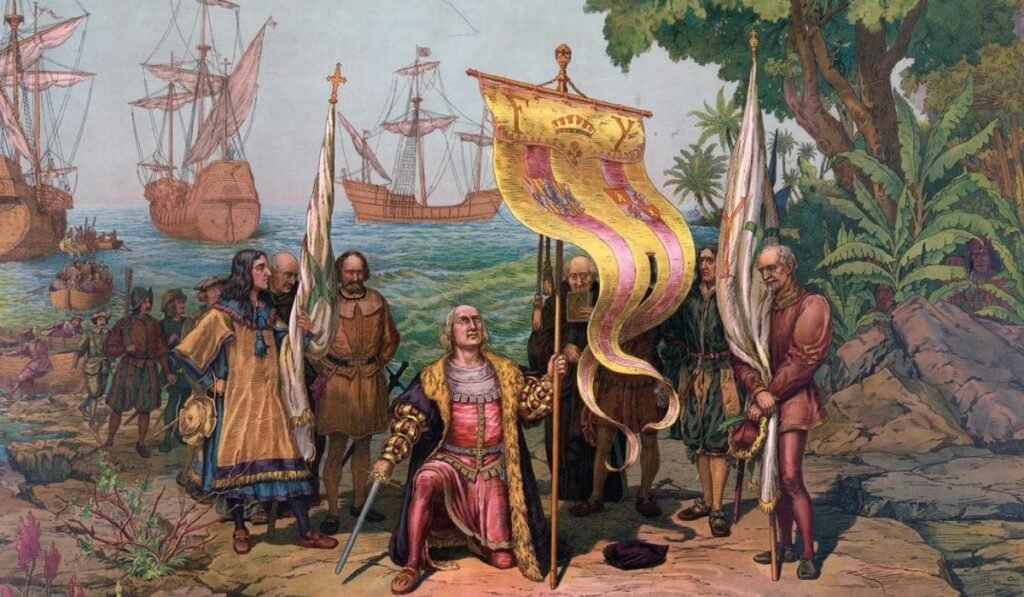
The tide finally turned when the Spanish monarchs successfully concluded their military campaigns, giving Christopher Columbus the long-awaited audience that secured royal authorization for his historic expedition. Empowered by the famous Capitulations of Santa Fe, he was granted the lofty titles of Admiral of the Ocean Sea and viceroy over any lands he might discover. With royal decrees in hand, Christopher Columbus traveled immediately to the Andalusian port of Palos to assemble his crews, acquire essential supplies, and prepare three specialized vessels for a journey into the great unknown that would soon change world history forever.
The Historic 1492 Voyage Across the Atlantic
Setting sail from Palos in August 1492, Christopher Columbus led a modest fleet consisting of the flagship Santa Maria, alongside the smaller caravels Pinta and Niña. The journey tested the psychological endurance of both officers and sailors as weeks passed with nothing in sight except endless ocean swells and terrifying moments of apparent compass variations. Despite mounting crew anxiety and threats of mutiny, Christopher Columbus maintained his course by relying on steady easterly trade winds, ultimately keeping morale just high enough to prevent a complete turnaround before reaching the threshold of the mysterious New World.
Landfall in the Bahamas and First Contact
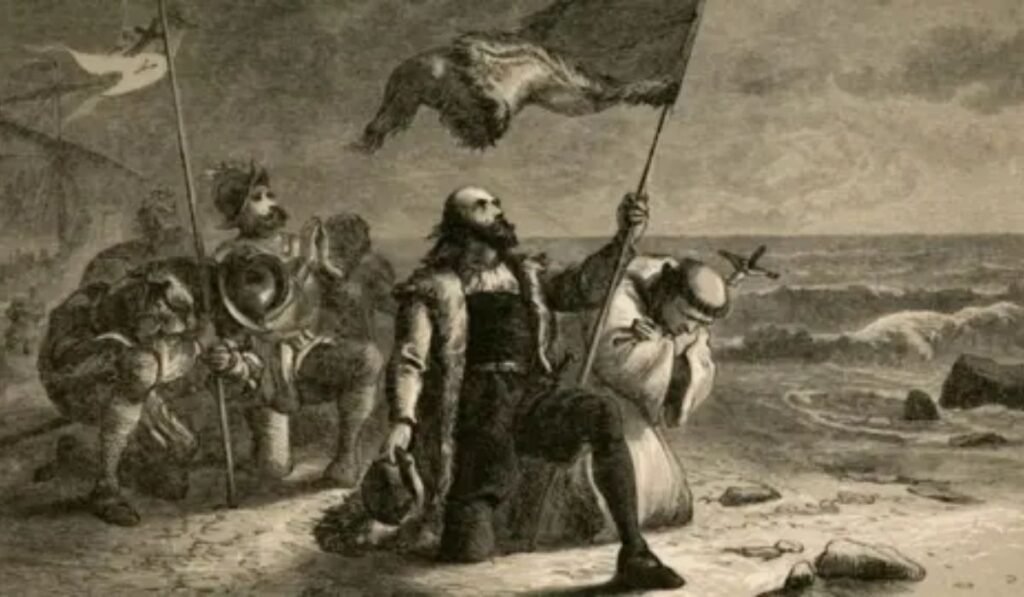
On the bright morning of October 12, 1492, a lookout aboard the Pinta sighted land, bringing Christopher Columbus and his weary crews ashore on a Bahamian island named Guanahani by its native inhabitants. Believing he had successfully reached the outer islands of the East Indies, Christopher Columbus formally claimed the territory for the Spanish Crown and named it San Salvador. Here, the expedition made its first recorded contact with the indigenous Taino people, initiating a complex, deeply consequential era of cross-cultural interaction that would forever transform the demographic and ecological makeup of the entire globe.
Exploring Cuba and Hispaniola on the First Journey
Continuing his exploratory voyage through Caribbean waters, Christopher Columbus mapped the northern coast of Cuba and subsequently sailed eastward to discover the large island of Hispaniola. He traded peacefully with local populations while continuously searching for signs of the grand courts of the Great Khan, remaining entirely convinced that these tropical islands lay just off the coast of mainland Asia. Disaster struck on Christmas Day when the Santa Maria ran aground on a coral reef, forcing Christopher Columbus to leave a small group of stranded sailors behind at a hastily constructed fort before beginning the tense voyage back to Europe.
Triumphant Return and European Reception
The return journey to Spain was fraught with severe Atlantic storms that threatened to sink the remaining caravels, yet Christopher Columbus managed to guide his battered ships safely back to European harbors in early 1493. News of his incredible discoveries spread like wildfire across the continent, instantly transforming Christopher Columbus into an international celebrity who was showered with immense honors, wealth, and prestige by the ecstatic Spanish monarchs. He presented exotic flora, colorful fauna, and native captives to the royal court, cementing widespread belief in the viability of a western route and sparking immediate preparations for a much larger follow-up expedition.
The Ambitious Second Voyage and Colonization Efforts
Equipped with a massive fleet of seventeen ships and over a thousand eager colonists, Christopher Columbus embarked on his second voyage in late 1493 to establish permanent European settlements in the Americas. Upon returning to Hispaniola, he discovered that the initial garrison left behind had been completely wiped out by local tribes following violent conflicts over resources and mistreatment. Christopher Columbus founded the new settlement of Isabella, but administrative difficulties, rampant disease, food shortages, and escalating warfare with indigenous populations quickly tarnished the initial optimism surrounding the colony’s long-term survival prospects.
Governance Challenges and Rising Tensions in Hispaniola
Administering a distant overseas colony proved far more difficult than navigating ships, as Christopher Columbus faced severe backlash from disgruntled Spanish settlers and rebellious native groups alike. His strict authoritarian rule, combined with the brutal implementation of forced labor systems such as the encomienda, generated widespread misery, economic chaos, and immense political friction across the nascent settlements. As complaints regarding mismanagement and cruelty flooded back to the European mainland, the Spanish crown felt compelled to investigate the administration of Christopher Columbus, leading to deep administrative crises and waning royal patience.
The Third Voyage and Discovery of the South American Mainland
Undeterred by mounting domestic troubles, Christopher Columbus launched his third transatlantic expedition in 1498, focusing his efforts further south to locate a suspected continental landmass. This journey finally brought Christopher Columbus to the northern coast of South America, where he sighted the mainland near the mouth of the Orinoco River in present-day Venezuela. Rather than recognizing it as a massive new continent, he theorized that this vast freshwater outflow emerged from the biblical Garden of Eden. Meanwhile, conditions on Hispaniola deteriorated drastically into outright civil anarchy during his prolonged absence from the administrative center.
Arrest, Disgrace, and Return in Chains
The worsening chaos in the Caribbean forced the Spanish monarchs to dispatch a royal commissioner named Francisco de Bobadilla to investigate the governance of Christopher Columbus. Upon arrival, Bobadilla stripped the explorer of his administrative powers, placed him under arrest, and ordered that Christopher Columbus be shipped back to Spain in iron chains alongside his brothers. Although Queen Isabella quickly ordered his release and restored a measure of his dignity upon arrival, the humiliating arrest severely damaged his political standing, permanently ending his career as a colonial governor and stripping away much of his authority.
The Final Fourth Voyage and Stranding in Jamaica
Desperate to restore his tarnished legacy, Christopher Columbus undertook a fourth and final voyage in 1502, tasked with finding a strait through the Central American landmass to the Indian Ocean. Plagued by worm-eaten ships, relentless tropical storms, and hostile native populations, Christopher Columbus and his remaining crew became stranded on the island of Jamaica for over a year with virtually no outside assistance. Rescued eventually by late-arriving relief ships, a broken and physically exhausted Christopher Columbus returned permanently to Spain in 1504, facing failing health, fading royal favor, and deep financial disappointment.
Final Years, Illness, and Death in Spain
The final years of Christopher Columbus were spent lobbying the Spanish court to restore his promised financial privileges, percentages of colonial wealth, and hereditary titles, most of which had been withheld following his disgrace. Bedridden by severe arthritis and ongoing complications from tropical infections, Christopher Columbus passed away on May 20, 1506, in the Spanish city of Valladolid. At the time of his death, he remained stubbornly convinced that he had successfully opened a shorter trade route to Asia, completely unaware that his expeditions had actually unveiled an entirely new hemisphere to European awareness.
Complex Historical Legacy and Modern Reassessment
The historical legacy of Christopher Columbus remains profoundly complex, oscillating between celebration of his unmatched navigational skill and severe condemnation of the devastating colonial impacts brought upon indigenous populations. While his voyages catalyzed the unprecedented globalization of trade, science, and cross-continental exchange, they simultaneously unleashed centuries of displacement, disease, and oppression across the Americas. Today, scholars and the public continually reevaluate the multifaceted impact of Christopher Columbus, viewing him not merely as a heroic pioneer, but as a deeply flawed historical figure whose actions irrevocably altered the trajectory of human civilization.
Lasting Cultural Impact on Global History
The echoes of the 1492 expeditions continue to reverberate across modern society, influencing everything from global dietary habits and language distributions to international geopolitical structures. The widespread exchange of plants, animals, and cultures that followed his maritime achievements reshaped ecosystems across both hemispheres, binding the Old World and the New World into a single interconnected global network. Although public commemorations and historical narratives surrounding Christopher Columbus face intense contemporary debate, his expeditions undeniably marked the definitive closing of the medieval world and the dawn of modern global history, cementing the enduring historical presence of Christopher Columbus.
FAQs
- When was Christopher Columbus born?
- Christopher Columbus was born in Genoa, Italy, between August 25 and October 31, 1451.
- What country funded his historic 1492 voyage?
- His initial and subsequent transatlantic journeys were sponsored by the Catholic Monarchs, King Ferdinand II and Queen Isabella I of Spain.
- What were the names of his three ships?
- The fleet for his first expedition consisted of the flagship Santa Maria, alongside the smaller caravels the Pinta and the Niña.
- Did he actually reach Asia during his explorations?
- No, he landed on islands in the Bahamas, Cuba, and Hispaniola, mistakenly believing until his death that he had found a western route to Asia.
- When and where did Christopher Columbus die?
- He died of severe illness on May 20, 1506, in Valladolid, Spain.