 admin
admin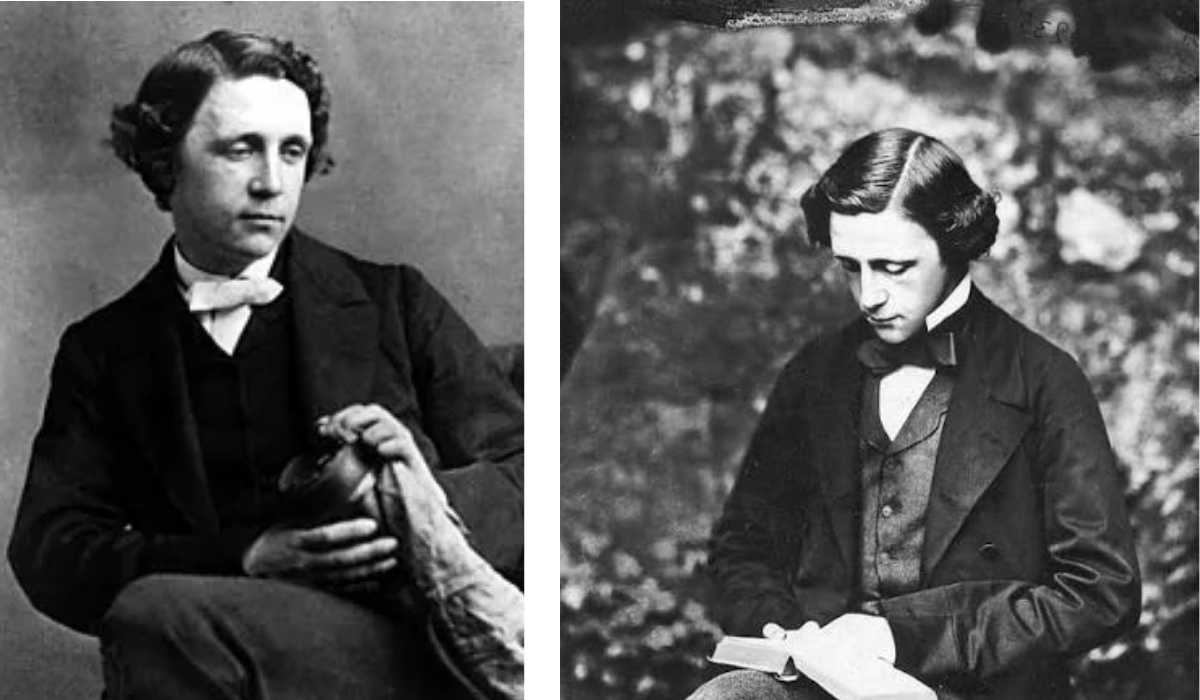
The fascinating journey of the celebrated Victorian writer known universally as Lewis Carroll continues to captivate millions of readers across the globe through whimsical storytelling, brilliant wordplay, and unmatched creative imagination that defined an entire literary era.
Quick Bio
| Attribute | Detail |
|---|---|
| Full Name | Charles Lutwidge Dodgson |
| Pen Name | Lewis Carroll |
| Born | January 27, 1832 |
| Died | January 14, 1898 |
| Profession | Author, Mathematician, Photographer |
| Famous Work | Alice’s Adventures in Wonderland |
Early Childhood Beginnings and Family Environment
Growing up in a large rural parsonage surrounded by numerous siblings allowed Lewis Carroll to develop an early aptitude for inventing clever games, home-made magazines, and entertaining puppet shows that nurtured his lifelong passion for imaginative storytelling and creative arts. Within the cozy walls of the family home, young Charles learned how to entertain himself and others using simple household items and endless creative resourcefulness. This supportive and intellectually stimulating early environment laid the firm groundwork for a lifetime dedicated to exploring the limitless boundaries of human imagination, storytelling artistry, and playful linguistic expression.
Rigorous Academic Pursuits at Oxford University
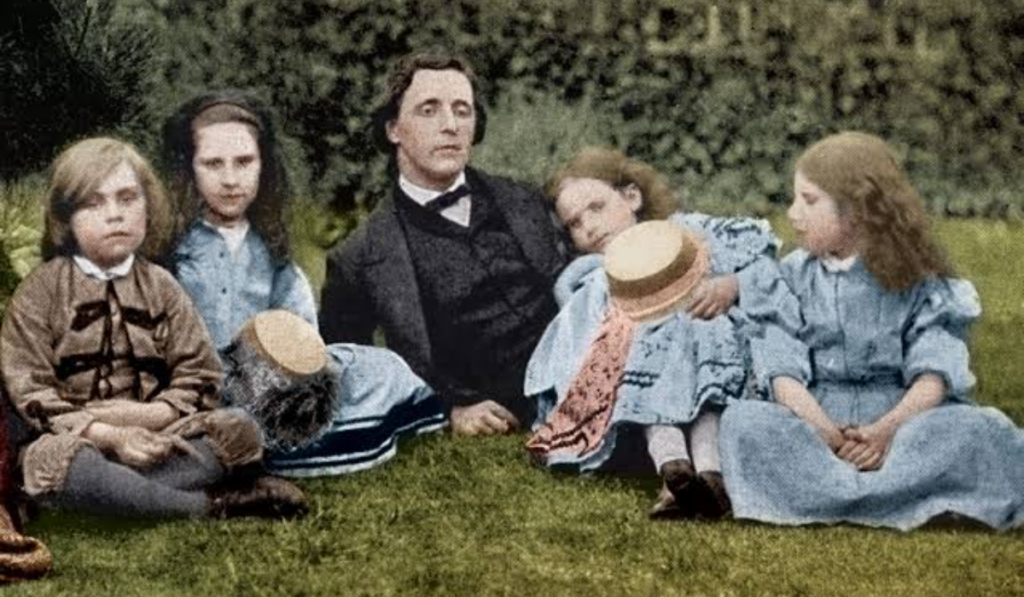
Achieving exceptional academic distinction in mathematical studies at Christ Church, Oxford, laid a robust intellectual foundation for Lewis Carroll, who subsequently secured a permanent teaching position and spent decades lecturing university students on complex mathematical theories. His time at the prestigious university was marked by intense study, dedication to scholarly excellence, and a deep appreciation for the structured rules governing numbers and geometry. Balancing these heavy academic responsibilities with his quiet personal disposition allowed him to cultivate the unique analytical mindset that would later heavily influence his famous literary creations and complex logical puzzles.
The Origin of Wonderland Through Riverboat Tales
Fascinating afternoon boating excursions with young friends provided the perfect spontaneous inspiration when Lewis Carroll first improvised the magical underground adventures that would eventually transform into a universally cherished children’s literary masterpiece. Drifting lazily down the river on sunny summer afternoons, he enchanted his eager young listeners with wild tales of a curious girl falling down a rabbit hole into a bizarre subterranean world. These improvised storytelling sessions captured the pure essence of childhood wonder, providing the creative spark and structural blueprint for one of the most enduring novels in global literature.
Publication of Alice Adventures in Wonderland
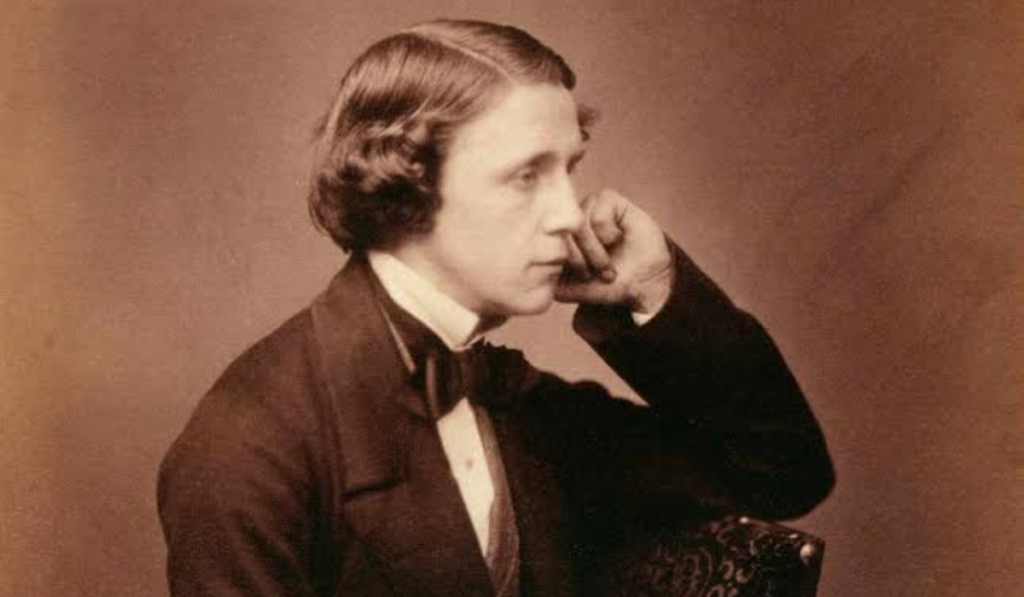
Releasing his premier fantasy novel under the famous pseudonym instantly propelled Lewis Carroll into international literary stardom, enchanting both young readers and skeptical adults with its clever satire, absurd logic, and unforgettable whimsical characters. The book broke conventional Victorian storytelling molds by prioritizing imaginative nonsense, witty wordplay, and philosophical subtext over heavy-handed moral instruction. Readers around the world quickly fell in love with the peculiar inhabitants of Wonderland, transforming the charming publication into an instant cultural phenomenon that redefined the possibilities of children’s fantasy fiction.
Exploring the Mirror Sequel and Beyond
Continuing the incredible success of his debut, Lewis Carroll crafted a brilliant sequel that ingeniously reversed the laws of logic, introducing iconic chess-themed motifs and timeless nonsense poetry that cemented his legacy as a master storyteller. This fascinating follow-up expanded the boundaries of his fictional universe by turning a domestic parlor game into an epic intellectual journey across a giant chessboard landscape. Through clever character interactions and memorable verses, the book demonstrated his exceptional ability to construct intricate narrative puzzles wrapped in delightfully accessible entertainment.
Brilliant Contributions to Symbolic Logic
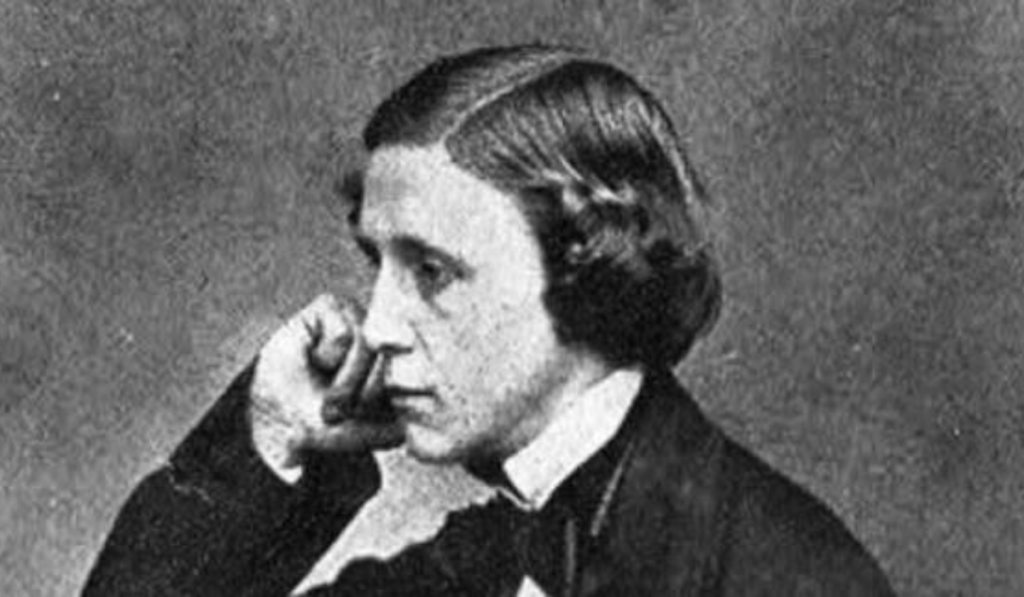
Beyond his celebrated creative writing, Lewis Carroll dedicated substantial academic effort to publishing rigorous treatises on symbolic logic, recreational mathematics, and geometry, proving his remarkable intellectual versatility across entirely different scholarly disciplines. He approached logical problems with the same playful yet precise mindset that defined his famous fiction, creating innovative diagrams and teaching tools designed to simplify complex reasoning. These scholarly endeavors showcased a brilliant mind capable of seamlessly bridging the gap between strict mathematical academia and whimsical, imaginative prose.
Pioneering Victorian Photography Enthusiast
Immersing himself deeply in the emerging art form of nineteenth-century photography, Lewis Carroll captured stunning portraits of children and prominent cultural figures, displaying an exceptional technical mastery and artistic eye behind the heavy camera lens. His private studio became a creative hub where he experimented with lighting, composition, and costume to produce remarkable visual artifacts of the Victorian era. This passionate pursuit of photography reflected his deep appreciation for capturing fleeting moments of youthful innocence and artistic beauty through modern technological innovation.
The Master of Nonsense Verse and Poetry
Crafting legendary poems filled with invented lexicon and playful linguistic structures, Lewis Carroll demonstrated an extraordinary ability to bend standard English rules into delightful phonetic harmonies that continue to amuse poetry enthusiasts everywhere. Works like Jabberwocky showcased his fearless willingness to coin new words and construct surreal mental landscapes that resonated deeply with readers of all ages. By mastering the delicate balance between strict metrical rhythm and absolute semantic nonsense, he elevated humorous verse into an enduring art form that remains celebrated worldwide.
Understanding the Complex Persona of the Author
Balancing an outwardly shy and reserved demeanor with a vibrant, animated storytelling persona when interacting with children, Lewis Carroll remained a deeply complex individual whose private life continues to intrigue biographers and literary scholars. He struggled with a stammer in everyday adult social interactions yet found complete freedom of expression through written correspondence, storytelling, and artistic collaboration. This fascinating duality between his public academic life and his private creative passions adds incredible depth to the historical legacy of the celebrated author.
The Significance of Mathematical Lecturing Duties
Fulfilling his required academic responsibilities as an Oxford mathematics lecturer provided Lewis Carroll with financial stability while simultaneously fueling his structured approach to puzzles, riddles, and logical paradoxes found throughout his fiction. Although he occasionally found the daily routine of teaching repetitive or demanding, he maintained a high standard of professional dedication throughout his lengthy tenure at the university. The rigorous mental discipline required for his mathematical lectures directly informed the intricate structural plotting and clever riddle sequences embedded within his famous imaginative works.
Cultural Impact of Iconic Literary Creations
Shaping generations of modern fantasy writers, artists, and filmmakers, the brilliant imagination of Lewis Carroll transcended Victorian boundaries to influence global pop culture, psychological analysis, and theatrical adaptations on a massive scale. The iconic motifs of falling down rabbit holes, drinking mysterious potions, and attending bizarre tea parties have become deeply ingrained in modern international consciousness. His imaginative output continues to serve as an endless wellspring of inspiration for contemporary creators seeking to explore surrealism, subtext, and fantastical world-building in their own artistic endeavors.
The Intricate World of Puzzles and Word Games
Inventing clever word ladders, cryptographic ciphers, and intricate mental challenges, Lewis Carroll constantly stimulated his own analytical mind and delighted correspondents with challenging brainteasers sent through his extensive personal letter network. He viewed language as a flexible playground where words could be manipulated, twisted, and transformed to test human intellect and provide endless amusement. These clever linguistic inventions demonstrated his unique capacity to merge mathematical problem-solving with creative writing, offering intellectual stimulation to friends, family, and devoted readers alike.
Religious Devotions and Anglican Deacon Ordination
Fulfilling the strict fellowship requirements of his era, Lewis Carroll was ordained as an Anglican deacon, maintaining a respectful relationship with church traditions while dedicating most of his creative energy to secular fiction. His faith played a quiet yet steady role in guiding his moral compass, personal relationships, and daily responsibilities within the academic community of Christ Church. While he chose not to take holy orders to become a fully ordained priest, his deep spiritual grounding remained a consistent anchor throughout his quiet and orderly adult life.
The Liddell Family Friendship Dynamics
Forming a close companionship with the daughters of a prominent Oxford dean, Lewis Carroll found vital creative inspiration within these juvenile friendships, though the eventual mysterious rupture in relations remains heavily debated today. These relationships provided him with an audience for his improvised stories and a source of emotional warmth that contrasted with his formal academic surroundings. Modern biographers continue to examine the nuances of these Victorian friendships, recognizing their profound impact on the genesis of his celebrated children’s literature and creative inspiration.
Later Works and Final Years of Writing
Publishing ambitious late-career projects such as Sylvie and Bruno occupied the final chapters of Lewis Carroll before his peaceful passing in Surrey, concluding a remarkably prolific life dedicated to education and imaginative literature. These later publications allowed him to experiment with complex narrative structures, theological themes, and social commentary on a broader canvas than his earlier children’s books. Although they achieved mixed commercial success compared to his earlier masterpieces, they showcased his unwavering commitment to exploring new creative horizons until the very end of his life.
Archival Legacy and Westminster Abbey Memorial
Securing a permanent place among Britain’s greatest literary icons, Lewis Carroll was ultimately honored with a commemorative memorial stone placed inside the prestigious Poets Corner at Westminster Abbey decades after his passing. This prestigious recognition cemented his permanent status within the pantheon of elite English writers, celebrating his immense contribution to global literature and cultural heritage. Scholars, admirers, and international tourists continue to visit this historic site to pay their respects to a brilliant mind who forever changed the landscape of imaginative fiction.
Enduring Global Translations and Editions
Translating complex puns and linguistic gymnastics into hundreds of international languages proved that the brilliant narrative constructions devised by Lewis Carroll possess a universal charm capable of transcending cultural and linguistic barriers effortlessly. Skilled translators across the globe have spent generations finding creative equivalents for his famous nonsense words and satirical verses in order to preserve their original wit and whimsy. This widespread global reach highlights the timeless appeal of his stories, proving that imagination and humor speak a truly universal language understood by all cultures.
Psychological Depth Hidden Within Children Fiction
Examining identity, growth, and existential confusion through a dreamlike looking-glass perspective allowed Lewis Carroll to embed profound philosophical inquiries underneath seemingly innocent children’s stories that entertain readers of all ages. Psychoanalysts, philosophers, and literary critics have spent decades dissecting the hidden layers of meaning, dream logic, and identity crises experienced by the protagonist during her surreal adventures. This remarkable ability to entertain young readers while simultaneously engaging mature intellects ensures that his books remain rich subjects for ongoing academic discussion and interpretation.
Modern Scholarly Reevaluation of Logical Works
Sparking renewed academic interest among twentieth-century mathematicians, the unpublished logic diagrams and foundational tree methods formulated by Lewis Carroll received widespread recognition for anticipating modern computational and analytical concepts. Contemporary researchers have marveled at how his visual approaches to syllogisms and logical sorting foreshadowed advancements in formal logic and computer science theory. This posthumous appreciation highlights the fact that his brilliant intellectual contributions extended far beyond children’s fantasy into the rigorous realms of scientific and mathematical innovation.
Final Reflections on an Immortally Creative Mind
Concluding a multifaceted career defined by rigorous numbers and boundless imagination, the extraordinary literary footprint left behind by Lewis Carroll ensures that Wonderland will remain an eternal destination for curious minds seeking intellectual adventure. His ability to find magic in everyday logic and structure transformed Victorian literature and left an indelible mark on global culture that will endure for countless generations to come. Through his timeless writings, brilliant inventions, and playful spirit, he remains an immortal figure whose creative legacy continues to inspire wonder, curiosity, and joy across the entire world. FRIENDLY
FAQs
- What was the real name of Lewis Carroll?
- The famous author legally operated under the birth name Charles Lutwidge Dodgson.
- When was Alice Adventures in Wonderland published?
- The classic fantasy novel was originally published in the year 1865.
- Did Lewis Carroll work as a mathematician?
- He served successfully as a mathematical lecturer and scholar at Christ Church, Oxford.
- Who inspired the character of Alice?
- Young companion Alice Liddell served as the primary inspiration for the fictional protagonist.
- Where is Lewis Carroll memorialized?
- A dedicated memorial stone honors his literary contributions within Poets Corner at Westminster Abbey.