 admin
admin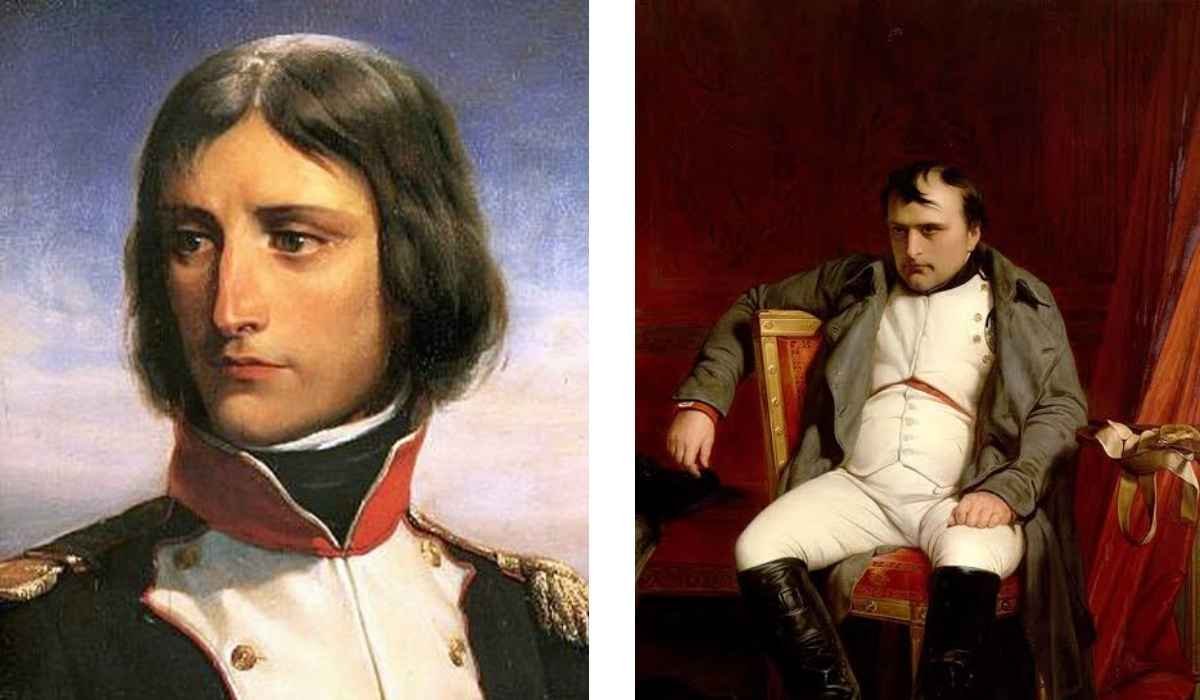
The history of modern Europe remains completely incomplete without analyzing the monumental impact left behind by Napoleon. Born on the rugged island of Corsica, this extraordinary military strategist and ambitious political leader quickly rose through the turbulent ranks during the French Revolution to reshape continental politics forever. Through sheer brilliance, unmatched tactical vision, and relentless determination, he transformed from a modest artillery officer into the revered Emperor of the French, commanding vast armies across shifting battlefields. His reign introduced transformative legal frameworks, restructured administrative systems, and redefined international relations, permanently altering the destiny of nations worldwide.
Quick Bio
| Attribute | Detail |
| Full Name | Napoleone di Buonaparte |
| Birth Date | August 15, 1769 |
| Birthplace | Ajaccio, Corsica, France |
| Death Date | May 5, 1821 |
| Profession | Military General, Statesman, Emperor |
Early Origins and Childhood Roots in Corsica
The early life of Napoleon began on the Mediterranean island of Corsica, where he spent his formative years developing a fierce independence. Born into a modest noble family with Italian roots, he experienced a strict upbringing that fostered immense resilience. Language barriers and cultural adjustments marked his early departure to mainland educational institutions, yet these challenges only sharpened his academic focus. Educators quickly recognized his profound aptitude for mathematics, history, and classical geography, setting the stage for an extraordinary career built entirely on intellect, discipline, relentless ambition, and rigorous preparation against all odds.
Moving to Mainland France for Military Academy Training
Leaving his island home at a tender age, Napoleon traveled to mainland France to pursue formal military training at specialized royal academies. Immersed in a competitive environment, he dedicated countless hours to mastering artillery tactics, fortification design, and advanced warfare strategies pioneered by legendary commanders. Despite facing social isolation from wealthier aristocratic peers, his sharp intellect and unwavering dedication earned him respect among instructors. These formative school years transformed a quiet, determined youth into a technically proficient officer ready to serve the crown, little knowing that sweeping political upheavals would soon radically alter his entire destiny.
Rise Through the Ranks During the French Revolution
The outbreak of the French Revolution provided Napoleon with unprecedented opportunities to accelerate his military advancement and showcase his natural leadership capabilities. His decisive artillery deployment during the critical Siege of Toulon broke royalist resistance and earned him immediate national recognition alongside a rapid promotion to brigadier general. Skillfully navigating the dangerous political factions of Paris, he continually demonstrated tactical brilliance while protecting the newly formed republic from internal uprisings and external threats alike. This chaotic era served as the ideal crucible for forging a legendary commander whose strategic prowess would soon command absolute attention across the entire European continent.
Command of the Army of Italy and Brilliant Victories
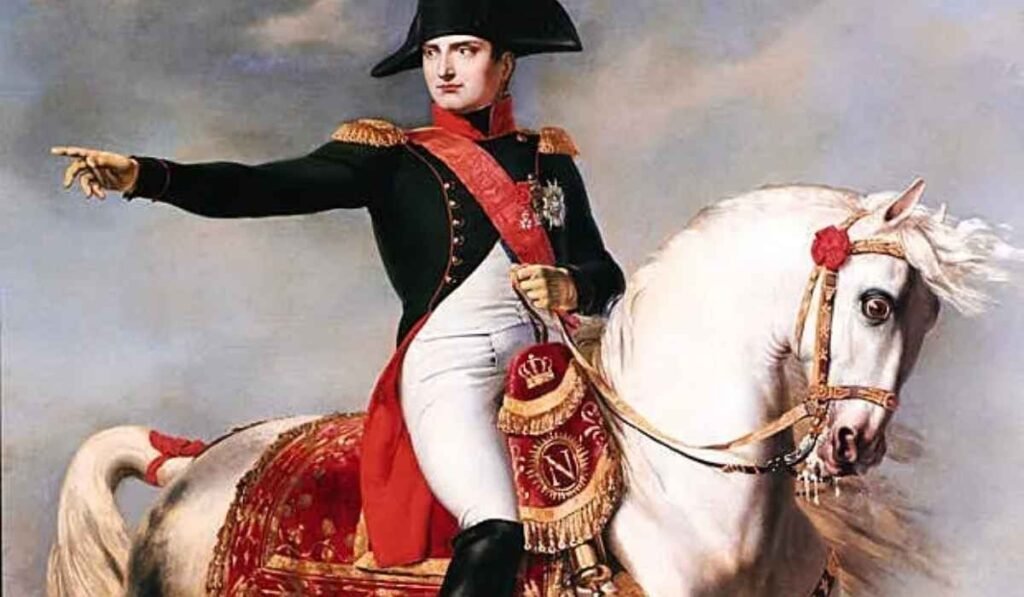
Assumption of command over the beleaguered Army of Italy marked a monumental turning point that firmly established Napoleon as a military mastermind. Transforming an underfed, demoralized force into a fiercely loyal fighting machine, he launched a dazzling campaign that repeatedly outmaneuvered superior Austrian and Sardinian armies. Through rapid troop movements, psychological warfare, and inspiring frontline leadership, he secured stunning victories at battles like Arcole and Rivoli. This Italian triumph electrified the French public, cemented his reputation as an invincible national hero, and fundamentally shifted the balance of power throughout the Mediterranean region and Western Europe.
The Egyptian Expedition and Strategic Ambitions
Seeking to disrupt vital British trade routes to India, Napoleon spearheaded a bold military expedition toward the ancient lands of Egypt and Syria. Although the campaign faced severe naval setbacks—most notably the destruction of the French fleet at the Battle of the Nile—his land victories against the Mamluks showcased tactical superiority. Beyond combat, the expedition brought scores of scientists, engineers, and scholars who systematically documented Egyptian antiquities, famously discovering the Rosetta Stone. This strategic venture ultimately bolstered his political mystique, allowing him to return to France as a romanticized savior during a deeply vulnerable national crisis.
Seizing Power Through the Coup of Brumaire
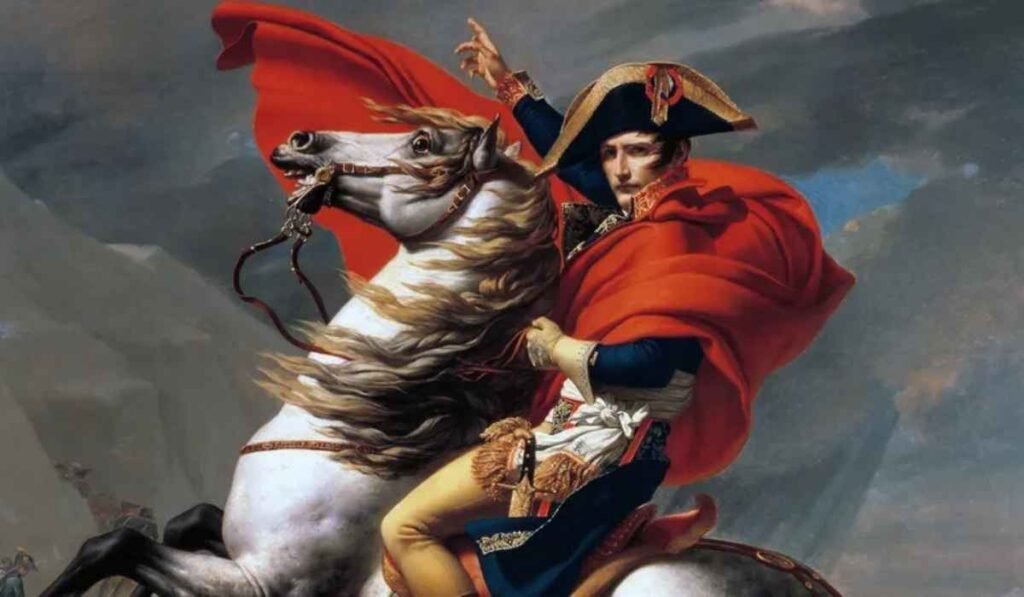
Political instability in Paris created the perfect vacuum for Napoleon to execute the decisive Coup of Brumaire, overthrowing the corrupt Directory. Supported by key political allies and fiercely loyal military units, he orchestrated a bloodless government takeover that established the Consulate, positioning himself as the First Consul. This masterstroke concentrated executive authority directly in his hands, enabling swift administrative decisions without legislative gridlock. By promising order, national unity, and the preservation of revolutionary gains, he successfully pacified a weary populace and secured undisputed political supremacy over the entire French nation.
Reforming France as First Consul and Statesman
As First Consul, Napoleon initiated sweeping administrative, financial, and educational reforms that modernized French society and stabilized the national economy. He centralized government bureaucracy, established the prestigious Bank of France, and instituted a reliable public school system designed to train competent administrators and loyal citizens. Recognizing the deep social fractures caused by religious conflicts, he also negotiated the Concordat with the Papacy, successfully restoring peace with the Catholic Church while maintaining state supremacy. These brilliant domestic achievements earned him widespread admiration, laying a solid foundation for long-term national stability and economic prosperity.
Crafting the Monumental Legal Legacy of the Napoleonic Code
Perhaps his most enduring civilian achievement was the creation and implementation of the comprehensive civil legal framework known as the Napoleonic Code. This revolutionary code replaced a chaotic patchwork of feudal laws with clear, uniform regulations that guaranteed individual liberties, legal equality for property-owning men, and religious tolerance. It systematically dismantled archaic feudal privileges, protected secular governance, and provided a rational framework for commercial contracts and family rights. Exported across conquered territories throughout Europe, this visionary legal code heavily influenced modern jurisprudence systems globally, surviving long after his empire collapsed.
Coronation as Emperor of the French in Notre Dame
The culmination of his meteoric political rise occurred when Napoleon crowned himself Emperor of the French inside the historic Notre Dame Cathedral in Paris. Rather than accepting the crown from the Pope, he dramatically placed it upon his own head to symbolize that his power derived from personal merit, military glory, and the national will. This magnificent coronation formally transformed the First French Republic into a powerful hereditary empire, stunning traditional European monarchies. Surrounded by glittering imperial court nobility, he sought to legitimize his dynasty while promising to protect the fundamental social principles won during the revolution.
Dominating Europe Through the Napoleonic Wars
The expansion of imperial authority quickly ignited a devastating series of international conflicts known globally as the Napoleonic Wars. Pitting France against successive coalitions funded and organized by rival powers like Great Britain, Austria, and Russia, he displayed breathtaking operational genius. Masterpieces of military strategy, such as the brilliant encirclement at Ulm and the crushing tactical triumph at Austerlitz, shattered enemy alliances and forced major peace treaties. Through these campaigns, he redrew the map of Europe, placing family members on foreign thrones and asserting unprecedented continental hegemony.
Implementing the Continental System Against Great Britain
Unable to challenge the dominant Royal Navy directly on the open seas, Napoleon devised the ambitious Continental System to economically strangle Great Britain. This sweeping trade embargo prohibited all allied and conquered European nations from engaging in commerce with British merchants, aiming to collapse their economy. However, enforcing this massive blockade proved exceedingly difficult, leading widespread smuggling operations and forcing French interventions in Iberia and Russia to secure compliance. Ultimately, the restrictive embargo strained European economies, fueled intense nationalist resentment, and contributed heavily to the eventual destabilization of his grand empire.
The Costly Quagmire of the Peninsular War
Military overextension became glaringly apparent during the protracted conflict known as the Peninsular War across Spain and Portugal. Seeking to enforce trade restrictions and secure the Iberian Peninsula, Napoleon installed his brother Joseph on the Spanish throne, triggering fierce national guerrilla resistance. Supported by British expeditionary forces under the Duke of Wellington, Spanish insurgents drained French military resources through relentless ambushes and protracted sieges. This draining campaign consumed hundreds of thousands of veteran soldiers, damaged French military prestige, and created a bleeding wound that severely weakened the empire’s strategic capabilities across multiple fronts.
The Disastrous Invasion and Retreat from Russia
A catastrophic turning point arrived when Napoleon led his massive multinational Grand Armée into Russia to punish Tsar Alexander I for violating trade bans. Facing a scorched-earth strategy, brutal winters, and relentless partisan attacks, the invasion dissolved into an absolute nightmare during the agonizing winter retreat from Moscow. Starvation, freezing temperatures, and disease decimated the once-invincible army, leaving only a tiny fraction of troops to stagger back across the border. This monumental military disaster shattered the aura of invincibility surrounding the emperor, encouraging emboldened European adversaries to unite in fresh coalitions against him.
Defeat at Leipzig and Forced Abdication at Elba
Following the Russian catastrophe, a revitalized coalition of European superpowers decisively defeated Napoleon’s depleted forces at the massive Battle of Leipzig. Allied armies rapidly advanced into French territory, capturing Paris and forcing the exhausted emperor to abdicate his throne unconditionally. Exiled by his victors to the small Mediterranean island of Elba, he retained a nominal royal title while plotting a dramatic return. Meanwhile, European diplomats gathered at the Congress of Vienna to redraw continental borders, completely underestimating the enduring appeal and tactical genius of the exiled French commander.
The Daring Return and the Hundred Days Campaign
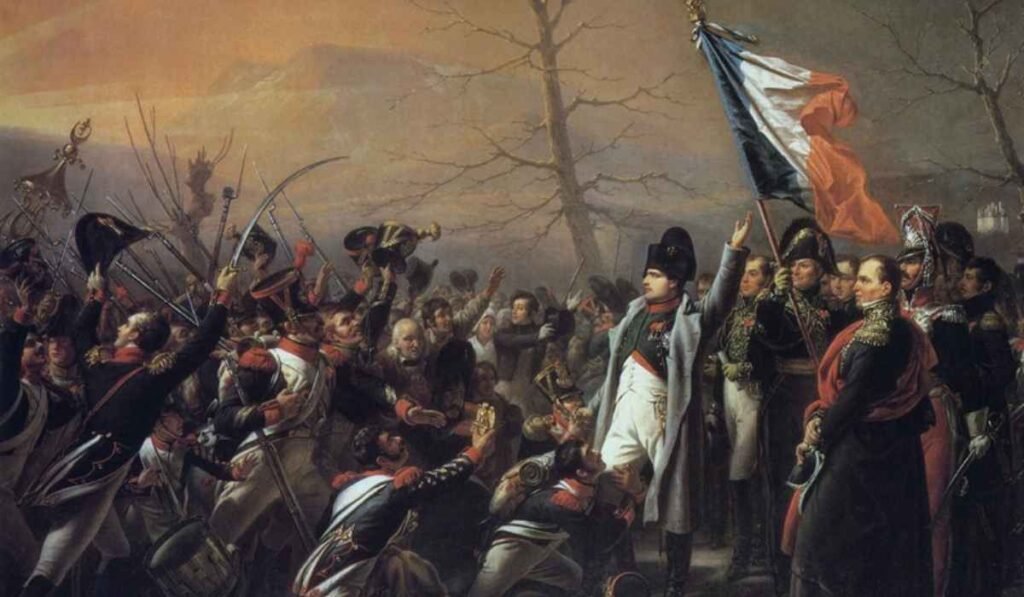
Refusing to accept permanent retirement, Napoleon engineered a breathtaking escape from Elba, landing on the French coast with a handful of loyal followers. As royal troops sent to arrest him instead rallied enthusiastically to his side, he marched triumphantly into Paris to reclaim power during the famous Hundred Days. Rapidly mobilizing a new army, he sought to preemptively strike allied forces in Belgium before their full reinforcements could arrive. This desperate gamble set the stage for one of the most famous and consequential final showdowns in the entire history of Western warfare.
Waterloo and the Final Fall from Power
The legendary career of the emperor reached its definitive end at the fateful Battle of Waterloo, where combined Anglo-Allied and Prussian forces inflicted a crushing defeat. Pounded by artillery and overwhelmed by timely Prussian reinforcements arriving under General Blücher, the seasoned French guard finally broke. Recognizing that his political and military options were completely exhausted, he abdicated for a second time and surrendered to British authorities. This decisive defeat closed the turbulent chapter of the Napoleonic era, ending decades of revolutionary conflict and permanently reshaping the geopolitical landscape of nineteenth-century Europe.
Exile and Lonely Death on Saint Helena Island
To prevent any further political comebacks, British authorities exiled Napoleon to the remote, windswept South Atlantic island of Saint Helena. Confined heavily under guard at Longwood House, he spent his final years dictating his detailed memoirs, reflecting upon his glorious campaigns, and cultivating his historical legacy. Plagued by declining health and worsening stomach ailments, he quietly passed away, marking the end of a legendary life that had thoroughly captivated the world. His remains were later repatriated to Paris with great pomp in 1840, finding a permanent resting place beneath the magnificent dome at Les Invalides.
Cultural Impact, Monuments, and Enduring Legacy
Beyond battlefield tactics, the cultural and political footprint of Napoleon endures powerfully through iconic monuments, artistic masterpieces, and foundational legal codes. Structures like the Arc de Triomphe in Paris stand as enduring tributes to the grand military campaigns executed by his elite armies. Historians continue to debate his complex character—balancing visionary modernization against autocratic control and devastating warfare. Ultimately, his monumental life story remains a subject of endless fascination, cementing his status as one of the most influential and intensely studied figures in human history.
- When was Napoleon born?
- Napoleon was born on August 15, 1769.
- What was his most famous legal achievement?
- His most famous legal achievement was the Napoleonic Code.
- Where was he finally defeated?
- He was finally defeated at the Battle of Waterloo.
- Where did he spend his final exile?
- He spent his final exile on the remote island of Saint Helena.
- What is his connection to encyclopedia references?
- Comprehensive historical details about his life are documented extensively.