 admin
admin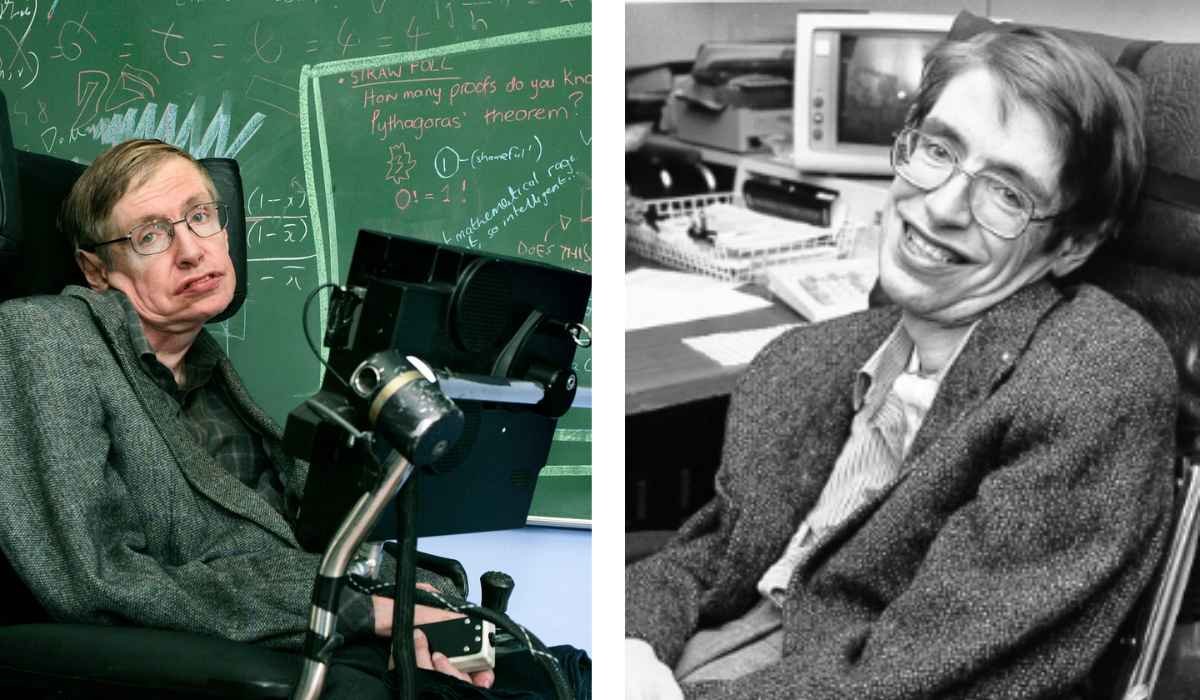
The landscape of modern theoretical physics, cosmological discovery, and global scientific communication during the twentieth and twenty-first centuries owes an immeasurable debt of gratitude to the extraordinary intellect of Stephen Hawking, whose groundbreaking research into black holes and the origin of the universe completely transformed our understanding of space and time.
During a time when astrophysics frequently felt disconnected from quantum mechanics, this remarkable scientist rose to prominence with a mind rooted in brilliant mathematical intuition, relentless curiosity, and unyielding personal perseverance. By defying a devastating motor neuron disease and publishing best-selling literature, he demonstrated that human consciousness could transcend severe physical limitations to unlock the deepest mysteries of the cosmos. His life remains a guiding light for anyone striving to master the art of scientific inquiry and intellectual resilience.
Quick Bio Snapshot
- Full Name: Stephen William Hawking
- Lifespan: January 8, 1942 – March 14, 2018
- Key Role: British theoretical physicist, cosmologist, and author
- Major Achievement: Discovered Hawking radiation and authored A Brief History of Time
Early Life and Childhood Roots of Stephen Hawking
The journey of Stephen Hawking began in Oxford, England, where he was born into a family of physicians and academics during the height of World War II. Growing up in London and St Albans with a deep fascination for board games, mechanical devices, and how things worked, he earned the affectionate nickname “Einstein” from his school friends despite starting out as an unpretentious student. These formative years planted the seeds of an inquisitive mind that questioned the very nature of existence. Studying physics at University College, Oxford, he laid a strong academic foundation that prepared him for an extraordinary career in theoretical cosmology.
Graduate Studies at Cambridge and ALS Diagnosis
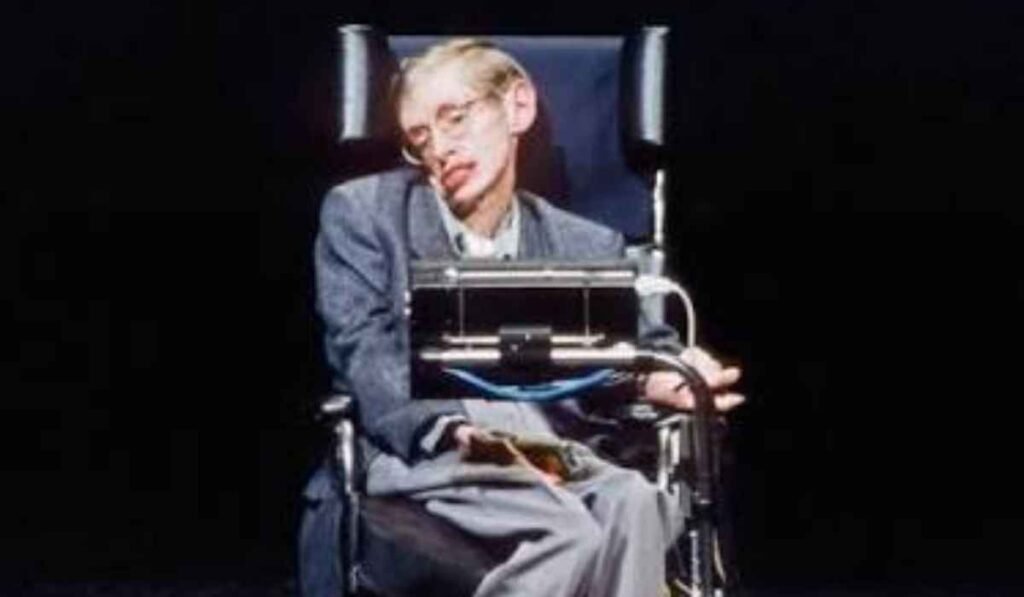
Professional development skyrocketed when Stephen Hawking moved to Trinity Hall, Cambridge, to pursue his doctorate in applied mathematics and theoretical physics. However, just as his academic career was taking off at the age of twenty-one, he received a devastating diagnosis of amyotrophic lateral sclerosis (ALS), a progressive neuromuscular disease that doctors predicted would give him only a few years to live. Rather than succumbing to despair, this personal crisis injected a fierce urgency into his research. This harrowing period of resilience proved that Stephen Hawking possessed an ironclad determination that allowed him to push forward against insurmountable odds.
The Physics of Black Holes and Space-Time Singularities
Pioneering scientific breakthroughs characterized his early academic work as Stephen Hawking focused his research on Einstein’s Theory of General Relativity and the behavior of space-time singularities. Collaborating with mathematician Roger Penrose, he proved that space-time singularities—where the laws of physics break down—were an inevitable result of massive collapsing stars and the Big Bang itself. This brilliant mathematical modeling transformed our understanding of the cosmos, establishing Stephen Hawking as a rising visionary force in global theoretical physics.
Hawking Radiation and Quantum Cosmology
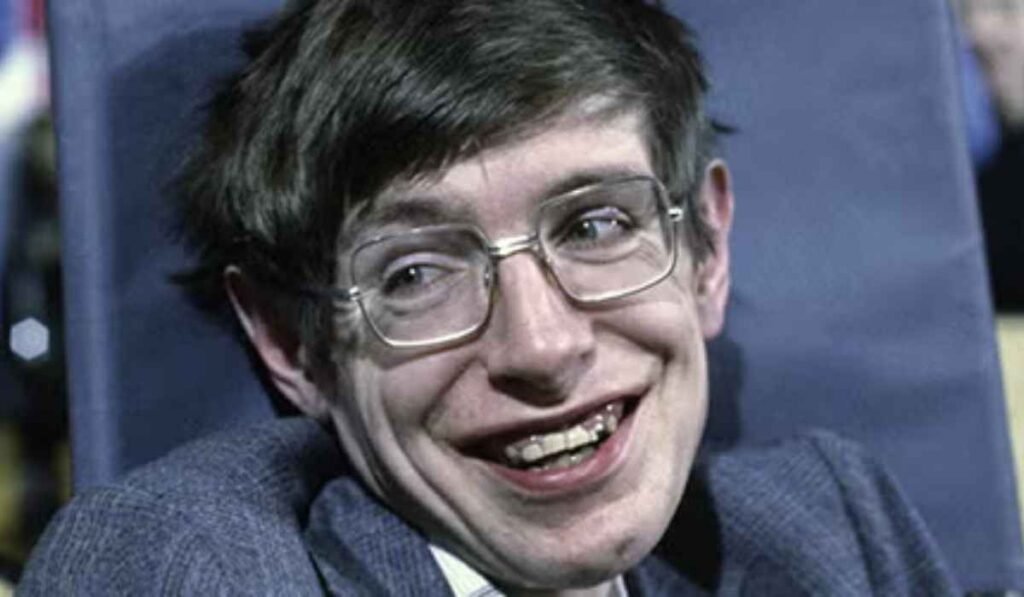
Scientific superstardom exploded when Stephen Hawking published his most revolutionary theoretical proposal in 1974: the discovery that black holes are not completely black, but actually emit subatomic particles until they eventually exhaust their energy and evaporate—a phenomenon now universally known as “Hawking radiation”. By brilliantly bridging the gap between classical general relativity and quantum mechanics, he solved complex paradoxes regarding black hole thermodynamics. This monumental intellectual triumph transformed Stephen Hawking from an esteemed Cambridge researcher into one of the most celebrated physicists in human history.
The Lucasian Professorship and Academic Excellence
Prestigious academic recognition arrived when Stephen Hawking was appointed as the Lucasian Professor of Mathematics at the University of Cambridge in 1979—a legendary post once held by Sir Isaac Newton. Holding this prestigious chair for three decades, he continued to lecture, mentor students, and publish advanced theories on quantum cosmology and the no-boundary proposal with James Hartle. Despite losing his natural voice to a tracheotomy in 1985 and communicating entirely through a computerized speech-generating device, his academic output remained prolific. This historic tenure cemented the status of Stephen Hawking as an immortal scientific titan.
Global Phenomenon with A Brief History of Time
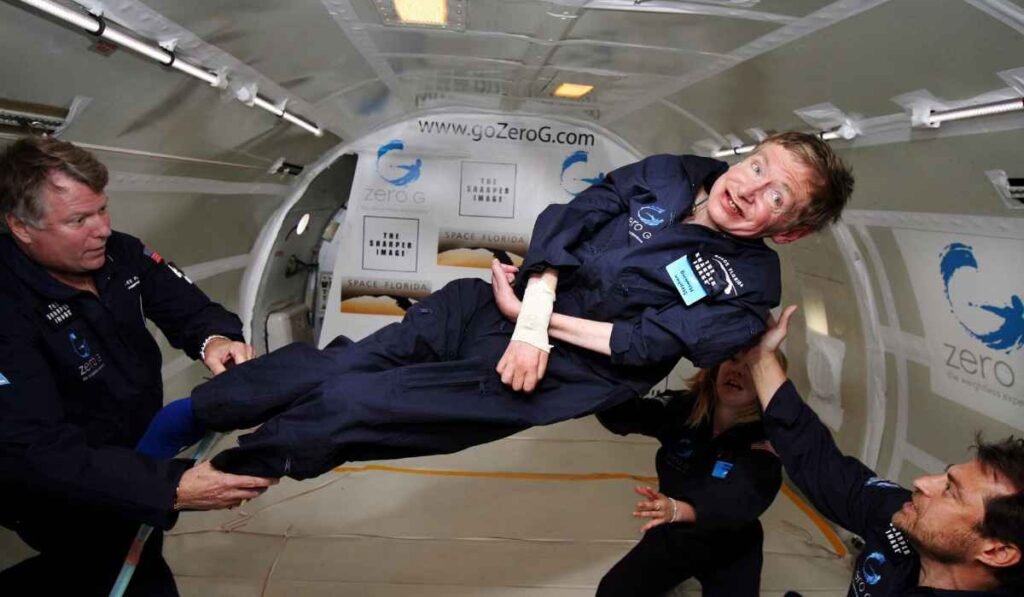
Cultural publishing triumph arrived when Stephen Hawking decided to write a popular science book that would explain complex cosmological concepts to everyday readers without heavy mathematical equations. Published in 1988, A Brief History of Time: From the Big Bang to Black Holes became an unprecedented global publishing phenomenon, staying on the Sunday Times bestseller list for a record-breaking 237 weeks and selling millions of copies worldwide. In doing so, he single-handedly popularized modern astrophysics. This monumental success cemented the status of Stephen Hawking as a globally recognized cultural icon.
Media Appearances, Pop Culture, and Public Outreach
Creative fearlessness characterized his later life as Stephen Hawking actively embraced mainstream media and popular culture, making memorable guest appearances on television shows like The Simpsons, Star Trek: The Next Generation, and The Big Bang Theory, where he playfully matched wits with fictional geniuses. He also hosted acclaimed documentary series exploring the universe and time travel. Rather than hiding from public view, Stephen Hawking used his iconic synthesized voice and sharp wit to make science accessible and exciting for millions of people across generations.
Cultural Icon Status and Global Influence
Commanding international respect through his relentless pursuit of knowledge, unmistakable synthesized voice, and legendary contributions to science, Stephen Hawking evolved into one of the most recognizable and beloved figures of the modern era. From his advisory roles on space exploration to his warnings about artificial intelligence and climate change, every public statement he made captured the world’s attention. However, his core legacy remained rooted in theoretical physics. The timeless cultural legacy of Stephen Hawking continues to inspire contemporary scientists, students, and dreamers worldwide.
Work Ethic and Rigorous Mental Visualization
Exerting exceptional levels of intellectual dedication, Stephen Hawking approached theoretical physics with a unique mental fortitude, often relying on complex visual geometry and spatial imagination rather than traditional written calculations due to his physical paralysis. His obsessive dedication to solving the universe’s greatest equations set an unmatched historical benchmark for academic perseverance. Whether debating theoretical models at international conferences or drafting research papers, Stephen Hawking viewed theoretical physics as an essential quest for human understanding, instilling a professional standard that remains a gold standard for scientists.
Global Mourning, Tributes, and Lifetime Honors
Witnessing the widespread international mourning following his passing on March 14, 2018—at the age of seventy-six—revealed the profound emotional connection that Stephen Hawking held with humanity. Receiving prestigious honors including the Presidential Medal of Freedom, the Copley Medal, and having his ashes interred in Westminster Abbey near Sir Isaac Newton, his life was celebrated across the globe. This collective global admiration demonstrated that Stephen Hawking was not just a physicist, but a globally cherished symbol of human triumph over adversity.
Cultural Impact and Global Legacy
Decades after his foundational discoveries, the cultural impact of Stephen Hawking remains vividly alive in global memory, university physics departments, and space research foundations established in his honor. Scholarships and cosmological institutes bearing his name continue to support emerging researchers worldwide. The professional blueprint left by his career changed how modern science communicates with the public, bridging the gap between esoteric mathematics and popular wonder. His enduring message reminds humanity that however difficult life may seem, there is always something you can do and succeed at.
Modern Relevance and Timeless Scientific Teachings
Contemporary astrophysicists and science educators frequently look back to the theoretical framework of Stephen Hawking for inspiration when studying black hole information, gravitational waves, and the origin of the universe. As new generations discover his books and lectures through digital media, the intellectual brilliance demonstrated by his career provides a reliable roadmap for scientific exploration. Honoring his memory requires more than nostalgic remembrance; it demands active participation in scientific literacy, supporting physics research, and defending the curiosity of the human mind just as he did throughout his extraordinary life.
Inspiring Future Generations of Global Thinkers
The ongoing realization of the scientific ideals championed by Stephen Hawking rests heavily upon the shoulders of emerging researchers, students, and science communicators across the globe. Universities and academic institutions continually introduce young minds to his theories on black holes and quantum mechanics, ensuring that the foundational values of curiosity, perseverance, and rigorous logic are passed down. Each individual who chooses scientific discovery over ignorance helps fulfill the vision once embodied by his lectures at Cambridge. The journey toward cosmic understanding is continuous, requiring constant dedication and creativity from everyone who shares his passion for truth.
Commemoration and Reflection on His Life and Science
Annual observances, science festivals, and academic lectures dedicated to the legacy of Stephen Hawking serve as important moments for international self-reflection, encouraging scholars and students to engage in scientific exploration and critical thinking. These traditions keep the spirit of cosmological inquiry alive, transforming historical remembrance into a living movement of active intellectual contribution. Through these collective efforts, his legacy transcends the history books, manifesting daily in laboratories, observatories, and global universities operating across the globe.
Conclusion: The Eternal Spirit of Cosmic Discovery
Ultimately, the profound impact of Stephen Hawking defies simple categorization, representing a permanent shift in how humanity values theoretical physics, scientific communication, and human endurance. His unwavering faith in human reason and the power of the human mind continues to inspire millions across cultural, geographic, and generational divides. As long as people look up at the stars and wonder about the universe, the visionary spirit embodied by Stephen Hawking will forever illuminate the path toward a brighter, more enlightened future for all mankind.
Frequently Asked Questions
- Where was Stephen Hawking born before building his legendary career at Cambridge?
- He was born in Oxford, England, on January 8, 1942.
- Which prestigious academic post at Cambridge did he hold for thirty years, once occupied by Isaac Newton?
- He served as the Lucasian Professor of Mathematics.
- What major theoretical discovery did he propose in 1974 regarding black holes?
- He proposed “Hawking radiation,” showing that black holes emit subatomic particles and eventually evaporate.
- What is the title of his 1988 popular science book that became a historic international bestseller?
- He authored A Brief History of Time.
- Where are his ashes laid to rest following his passing in 2018?
- His ashes were interred in Westminster Abbey in London near Isaac Newton.