 admin
admin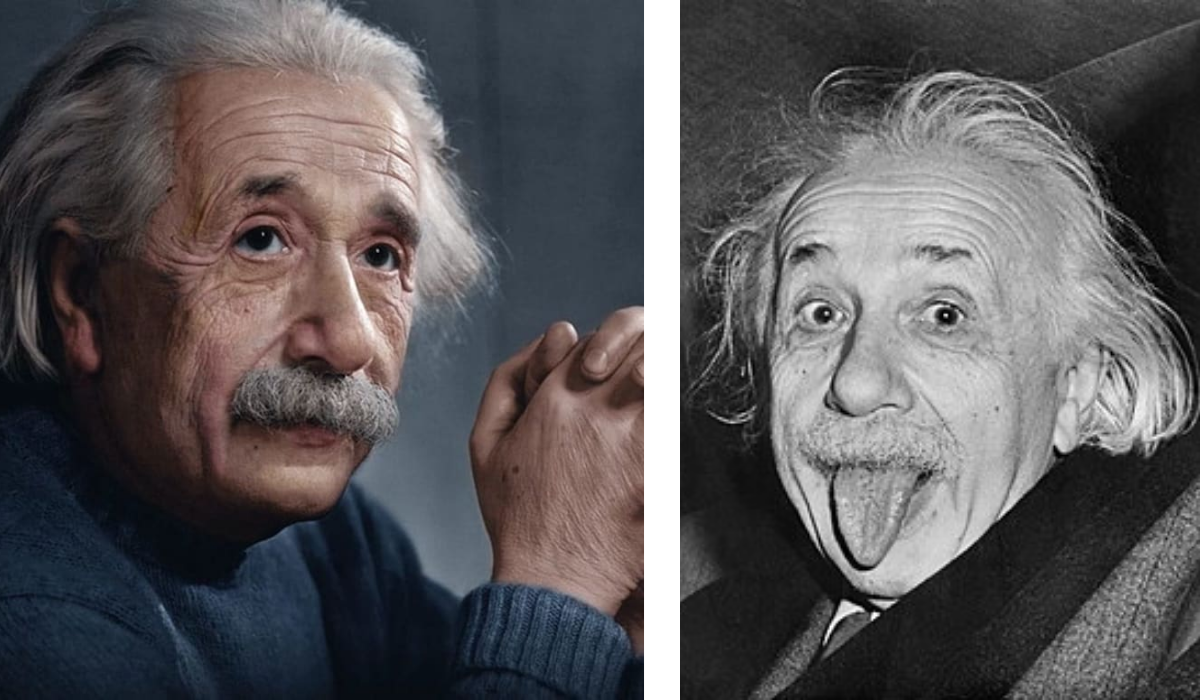
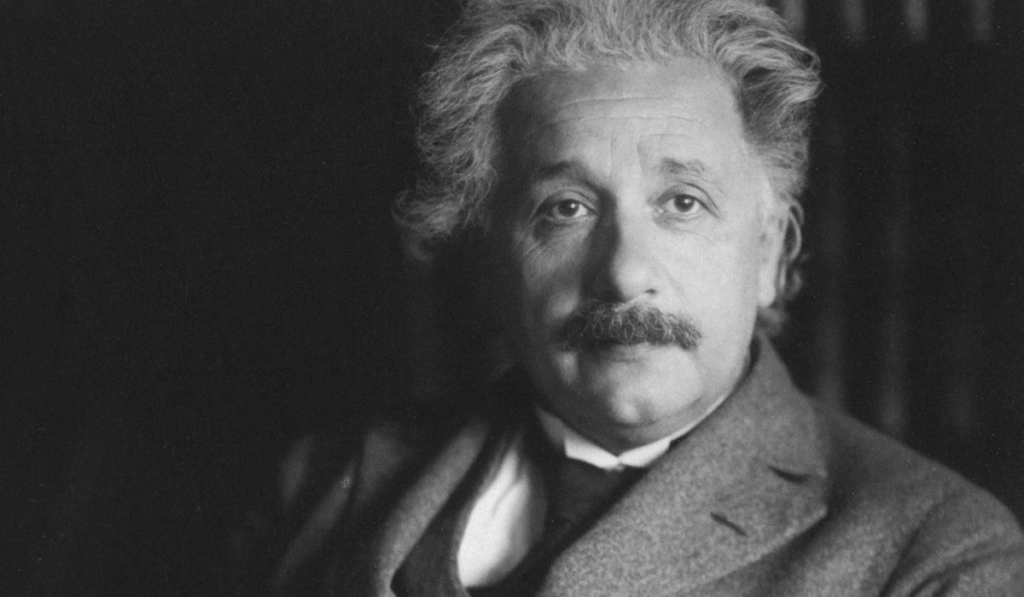
Albert Einstein remains one of the most influential and recognizable scientists in human history, shaping how we perceive space, time, and reality itself. Born in Germany in 1879, he developed the theory of relativity, which fundamentally transformed modern physics and laid the groundwork for countless technological advancements we rely on today. Beyond his groundbreaking scientific achievements, he was a passionate advocate for peace, civil rights, and international cooperation, using his global platform to speak out against injustice and promote humanitarian values throughout his remarkable lifetime.
Quick Bio
| Attribute | Details |
|---|---|
| Full Name | Albert Einstein |
| Birth Date | March 14, 1879 |
| Death Date | April 18, 1955 |
| Birthplace | Ulm, Kingdom of Württemberg, German Empire |
| Key Contributions | Theory of Relativity, Mass-Energy Equivalence, Photoelectric Effect |
| Nobel Prize | Nobel Prize in Physics (1921) |
Early Life and Childhood in Germany
Albert Einstein was born into a Jewish family in the city of Ulm in the Kingdom of Württemberg in the German Empire. During his early years, he exhibited a quiet demeanor and a deep curiosity about the natural world, often spending hours building intricate structures with blocks and showing an early aptitude for mathematics. Although popular myths suggest he struggled academically, historical records show that Albert Einstein excelled in most subjects, particularly mathematics and science, despite often clashing with the rigid and authoritarian teaching methods typical of nineteenth-century European educational institutions. His uncle introduced him to algebra and geometry, sparking a lifelong passion.
The Curiosity Sparked by a Compass
When Albert Einstein was just five years old, his father showed him a pocket compass, an ordinary object that left a profound and lasting impression on the young boy. He wondered deeply about the invisible forces that caused the needle to point consistently toward the north, realizing that something hidden in empty space must be directing the movement. This early encounter with physics planted the seeds of lifelong inquiry into the fundamental laws governing the physical universe. Throughout his career, Albert Einstein frequently recalled this childhood moment as the catalyst that inspired his relentless quest to understand invisible forces and universal fields.
Education and Academic Struggles in Switzerland
Seeking better educational opportunities, Albert Einstein moved to Switzerland as a teenager, where he eventually renounced his German citizenship to avoid mandatory military service. He enrolled at the prestigious Swiss Federal Polytechnic School in Zurich, where he studied physics and mathematics with great enthusiasm, though he frequently skipped classes to study independently. During these formative academic years, Albert Einstein developed complex theoretical ideas on his own terms, which occasionally strained relationships with his professors. After graduating, he faced significant challenges securing a traditional academic position, forcing him to take a job at the Swiss Patent Office.
The Patent Office Years and Intellectual Freedom
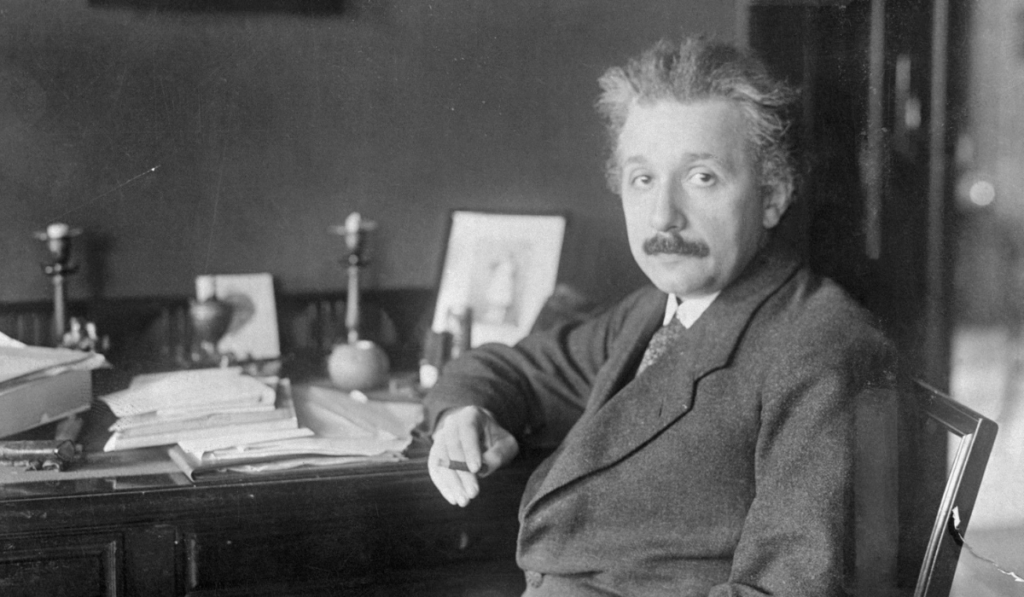
Working as a technical assistant at the Swiss Patent Office in Bern provided Albert Einstein with a unique environment that unexpectedly nurtured his genius and fueled his imagination. Evaluating patent applications for various technological inventions allowed him to complete his daily duties efficiently, leaving him ample time to contemplate theoretical physics problems in secret. During these quiet hours at his desk, Albert Einstein formulated revolutionary concepts regarding the synchronization of clocks and the nature of electromagnetism. This period of intense, independent intellectual exploration proved crucial, allowing Albert Einstein to develop thoughts completely free from academic pressure.
The Miracle Year of Physics
The year 1905 is widely celebrated by historians and scientists as the miracle year for Albert Einstein, during which he published four groundbreaking research papers in the prestigious Annalen der Physik. These revolutionary papers addressed the photoelectric effect, Brownian motion, special relativity, and the mathematical equivalence of mass and energy, forever changing our fundamental understanding of physics. Each publication challenged long-held classical assumptions established by Isaac Newton and other giants of science, introducing radical new perspectives on how the universe operates at both microscopic and cosmic scales. The scientific community initially reacted with skepticism, but Albert Einstein quickly gained widespread recognition.
Unlocking the Mysteries of the Photoelectric Effect
In his 1905 paper on the photoelectric effect, Albert Einstein proposed the revolutionary idea that light can be understood not only as a continuous wave but also as discrete packets of energy, which we now call photons. This bold hypothesis successfully explained how electrons are emitted from matter upon absorbing light, solving a major physics puzzle that classical wave theory could not resolve. For this specific contribution to theoretical physics, Albert Einstein was awarded the prestigious Nobel Prize in Physics in 1921, solidifying his status as a pioneer of quantum theory, even though he remained skeptical about quantum mechanics later in life.
Formulating the Special Theory of Relativity
The special theory of relativity, introduced by Albert Einstein in 1905, fundamentally transformed how physicists conceptualize space, time, and the motion of objects moving at constant velocities. He postulated that the laws of physics are identical for all non-accelerating observers and that the speed of light in a vacuum is an absolute constant, independent of the motion of all light sources. This framework dismantled the classical Newtonian absolute space and time, demonstrating that time dilation and length contraction occur at high speeds. Through this work, Albert Einstein proved that measurements of time and space are entirely relative to the observer.
The Most Famous Equation in History
As a direct consequence of his special theory of relativity, Albert Einstein derived the world-famous equation expressing the mathematical equivalence of mass and energy. This elegant formula revealed that mass and energy are interchangeable manifestations of the same underlying physical reality, meaning a small amount of mass can be converted into an immense amount of energy. While not immediately apparent to the general public, this theoretical insight eventually transformed global energy production, nuclear physics, and technological development. Today, the iconic formula associated with Albert Einstein remains universally recognized as a symbol of scientific genius and ultimate mathematical simplicity.
Expanding Horizons with General Relativity
Building upon his earlier work, Albert Einstein spent a decade developing the general theory of relativity, published in 1915, which extended his previous ideas to include accelerated reference frames and gravity. Instead of viewing gravity as a traditional pulling force between masses, Albert Einstein proposed that massive objects cause a curvature in the fabric of spacetime, dictating how matter and light travel through the cosmos. This revolutionary geometric concept of gravity was famously confirmed during a total solar expedition in 1919, propelling Albert Einstein to global superstardom and cementing his legacy as a titan of modern scientific history.
Achieving Global Fame and Public Adulation
Following the definitive confirmation of general relativity by British astronomers, Albert Einstein transformed from an obscure patent clerk into an international cultural icon almost overnight. Newspapers around the world covered his theories, personal life, and philosophical views with intense fascination, turning Albert Einstein into one of the very first modern celebrity scientists. Despite the overwhelming public adulation, parades, and invitations from world leaders, he remained remarkably humble, eccentric, and dedicated primarily to his theoretical research and playing the violin. His distinctive appearance, including wild hair and thoughtful expression, became a universal symbol of pure intellect.
Facing Persecution and Emigrating to America
During the rise of the Nazi regime in Germany during the early 1930s, the political climate became increasingly hostile toward Jewish intellectuals, leading to the systematic suppression of academic freedom and scientific progress. As a prominent Jewish scholar, Albert Einstein realized that returning to his homeland was no longer safe, prompting him to resign from the Prussian Academy of Sciences while traveling abroad. He decided to accept a prestigious research position at the Institute for Advanced Study in Princeton, New Jersey, where Albert Einstein spent the remainder of his distinguished career working on unified field theories and mentoring students.
The Manhattan Project and Regrets
In 1939, driven by urgent fears that Nazi Germany might successfully develop an atomic bomb, Albert Einstein co-signed a letter warning President Franklin D. Roosevelt about the military potential of uranium fission. Although this historic correspondence helped catalyze the creation of the Manhattan Project, Albert Einstein himself was not permitted to work on the secret weapons development due to security concerns regarding his pacifist political views. Later in life, after witnessing the devastating atomic bombings of Hiroshima and Nagasaki, Albert Einstein deeply regretted signing that initial letter, spending his remaining years campaigning tirelessly for nuclear disarmament and global peace.
The Quest for a Unified Field Theory
During the later decades of his life at Princeton, Albert Einstein dedicated an enormous amount of time and intellectual energy to pursuing a grand unified field theory. He passionately sought to combine gravity and electromagnetism into a single, comprehensive mathematical framework that could explain all physical forces in the universe, working largely in isolation from mainstream physics trends. While younger physicists shifted their focus toward quantum mechanics and subatomic particle interactions, Albert Einstein remained skeptical of probabilistic interpretations, famously stating that God does not play dice with the universe. Although he never completed his unified theory, his persistence inspired future generations.
Personal Life, Passions, and Eccentricities
Beyond his monumental contributions to theoretical physics, Albert Einstein was a complex individual with rich personal interests, deep friendships, and several distinct eccentricities that endeared him to the public. He was an exceptionally talented violinist who found profound solace in classical music, often noting that playing the violin helped him relax and occasionally stimulated new scientific insights during difficult calculations. He famously disliked wearing socks, preferred sailing on quiet lakes, and maintained a delightfully disheveled appearance that reflected his complete disregard for conventional social expectations. Throughout his life, Albert Einstein cherished solitude and deep intellectual contemplation above material wealth.
Humanitarian Advocacy and Civil Rights
Throughout his time in the United States, Albert Einstein used his immense global platform to champion civil rights, social justice, and humanitarian causes across a deeply divided society. He actively supported the National Association for the Advancement of Colored People, fiercely condemned racial segregation and lynching, and befriended notable African American figures like Paul Robeson and Marian Anderson. As an outspoken pacifist, Albert Einstein also advocated passionately for international governance, disarmament, and global cooperation to prevent future devastating world wars, believing that science and humanity must unite. His progressive social views frequently attracted surveillance from government agencies.
Philosophy of Science and Religion
Albert Einstein held nuanced, deeply thoughtful views on philosophy, religion, and the cosmic order, frequently expressing a profound sense of awe toward the elegant mathematical harmony of nature. He often referenced the religious views of Baruch Spinoza, identifying with a pantheistic perspective that viewed nature and the universe itself as a manifestation of divine order, rather than a personalized deity. In his philosophical writings, Albert Einstein emphasized that science and religion are not mutually exclusive when properly understood, arguing that genuine scientific research requires a deep spiritual dedication to uncovering the fundamental truths of existence. His philosophical legacy remains widely studied and debated today.
Death, Legacy, and Cultural Impact
Albert Einstein passed away on April 18, 1955, at the age of seventy-six in Princeton, New Jersey, leaving behind an unmatched intellectual legacy that continues to direct modern physics and cosmology. In accordance with his final wishes, his remains were cremated, and his ashes were scattered at an undisclosed location to prevent his grave from becoming a cultish shrine of worship. Today, the name Albert Einstein has become globally synonymous with supreme intelligence, creativity, and visionary genius, inspiring countless books, films, educational programs, and research institutions dedicated to pushing the boundaries of human knowledge forward. His profound impact on civilization remains truly timeless and monumental.
Educational Outreach and Inspiring Future Generations
To ensure that his passion for discovery endured, Albert Einstein consistently supported educational reform and encouraged young people to question established authorities and traditional dogmas with healthy skepticism. He believed that true education should foster independent thinking and imaginative problem-solving rather than rote memorization of established facts within rigid institutional frameworks. Educational foundations and scholarship programs established in his honor continue to support promising young scientists from diverse backgrounds, ensuring that the inquisitive spirit of Albert Einstein lives on. Teachers worldwide continue to use his fascinating life story and revolutionary theories to ignite a lifelong love for science.
The Enduring Influence of Modern Physics
The modern world is deeply indebted to the foundational theories established by Albert Einstein, whose visionary ideas underpin modern GPS navigation, laser technology, and contemporary astrophysics. Phenomena such as gravitational waves, black holes, and the expanding universe, all predicted or explained by his equations, continue to be observed and studied by astronomers using advanced technology. The theoretical framework built by Albert Einstein remains the gold standard for describing the large-scale structure of the cosmos, guiding researchers as they unlock further secrets of space and time. To learn more about his life and achievements, you can read the comprehensive overview.
Frequently Asked Questions
- When was Albert Einstein born?
- Albert Einstein was born on March 14, 1879.
- What is Albert Einstein most famous for?
- He is most famous for developing the theory of relativity.
- When did Albert Einstein win the Nobel Prize?
- He won the Nobel Prize in Physics in 1921.
- What was Albert Einstein’s famous equation?
- His most famous equation is E=mc2.
- When did Albert Einstein pass away?
- He passed away on April 18, 1955.