 Khizar Seo
Snacking is no longer limited to something customers eat between breakfast, lunch and dinner.
For many Canadians, snacks are increasingly becoming part of the meal itself.
Restaurants Canada research found that approximately 65% of Canadians replaced a traditional meal with a snack at least once a month in 2025, with younger consumers such as Gen Z and millennials particularly likely to embrace the behaviour.
For restaurants, cafés, workplace foodservice, grocery retailers and convenience stores, this shift creates an important sales opportunity.
Customers may want something quick on their commute, a protein-rich afternoon snack, an affordable alternative to a full meal, an indulgent treat, or something they can eat while travelling.
The challenge is choosing the right assortment.
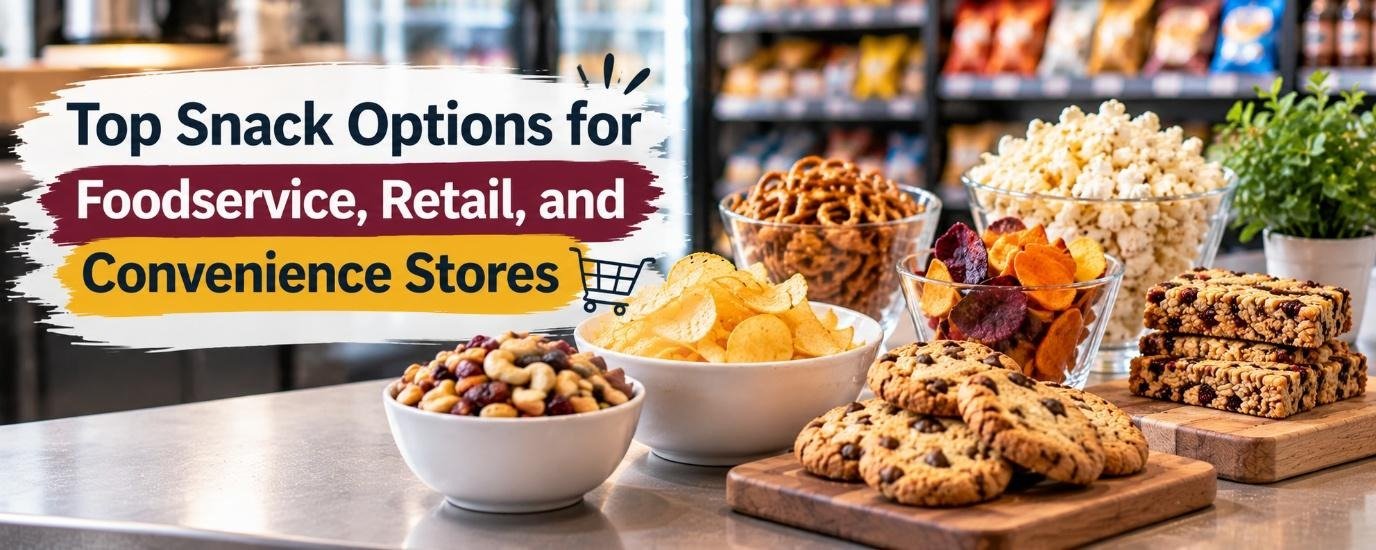
From chips and baked goods to nuts, protein snacks and grab-and-go foods, here are some of the top snack options for foodservice, retail, and convenience stores in Canada—and how operators can merchandise them effectively.
Why Snacking Matters More Than Ever
The way Canadians structure meals is changing.
Busy schedules, hybrid work, commuting, affordability concerns and demand for convenience are contributing to more flexible eating occasions.
Jo-Ann McArthur, President of Nourish Food Marketing, describes this shift as “snackification”—the practice of combining smaller foods or snacks in place of a traditional meal.
For businesses selling food, that creates opportunities beyond the traditional three-meal schedule.
A customer might purchase:
- Coffee and a protein bar in the morning
- Yogurt and fruit for breakfast
- Chips alongside a sandwich
- Nuts during an afternoon break
- Jerky while travelling
- A cookie with coffee
- Several smaller snacks instead of lunch
The definition of a snack is becoming broader.
Retailers and foodservice operators should consider both traditional snack foods and smaller meal-like options when developing their assortment.
1. Chips and Salty Snacks
Chips remain one of the most recognizable convenience snack categories.
Options can include:
- Potato chips
- Tortilla chips
- Corn snacks
- Pretzels
- Puffed snacks
- Crackers
- Popcorn
- Snack mixes
Convenience Store News Canada reported in 2026 that Canada’s savoury snack market was estimated at approximately $6.6 billion, with salty snacks representing about $3.6 billion of the category.
Innovation is also expanding beyond familiar flavours.
Bold seasonings, spicy flavours, sweet-and-savoury combinations and globally inspired flavours are creating new choices for customers.
For retailers, a balanced salty-snack assortment can combine recognizable favourites with a smaller selection of newer products.
The goal is not to carry every flavour available.
It is to provide enough variety to encourage discovery without creating unnecessary inventory.
2. Protein Snacks
Protein has become one of the most visible trends across the food and beverage industry.
Canadian consumers can now find protein positioned in categories ranging from yogurt and snack bars to meat snacks and even traditionally indulgent snack formats.
Agriculture and Agri-Food Canada reports that Canadian packaged foods marketed as high in protein generated approximately $1.9 billion in retail sales in 2025.
High-protein snacks represented approximately $498 million, making them the second-largest high-protein packaged-food category after dairy products and alternatives. Meat snacks and snack bars were particularly important within the segment.
Potential protein snack options include:
- Protein bars
- Meat sticks
- Jerky
- Cheese snacks
- Yogurt
- Nuts
- Roasted chickpeas
- Protein-enhanced snacks
For convenience stores, gyms, university foodservice, workplaces and travel locations, these products can help serve customers looking for portable foods that fit into busy schedules.
3. Nuts and Trail Mix
Nuts are naturally suited to grab-and-go merchandising.
Popular options include:
- Almonds
- Cashews
- Peanuts
- Pistachios
- Mixed nuts
- Trail mix
- Fruit-and-nut mixes
- Flavoured nuts
Different package sizes can address different shopping missions.
A single-serving package may suit a commuter.
A resealable pouch might appeal to customers purchasing snacks for several days.
Larger packages can serve retail shoppers looking for value.
Nuts can also complement other categories. In cafés and foodservice settings, small packages can be merchandised alongside beverages, sandwiches and grab-and-go meals.
Be aware that tree nuts and peanuts are priority allergens in Canada. Appropriate product labelling and allergen procedures remain essential.
4. Snack Bars
Few products match the portability of a snack bar.
Customers can put one in a backpack, desk drawer, lunch bag, gym bag or vehicle.
The category itself has also become diverse.
Operators may encounter:
- Granola bars
- Protein bars
- Nut bars
- Fruit bars
- Cereal bars
- Energy bars
- Fibre-focused products
Instead of stocking many products that fulfil essentially the same need, consider building the assortment around different customer occasions.
For example:
Everyday value
Higher protein
Premium ingredients
Plant-based
Kids’ snacks
Indulgent
Clear segmentation can make a crowded category easier for customers to navigate.
5. Popcorn
Popcorn offers considerable versatility.
Traditional salted and butter-style products remain familiar, while the category now includes flavours ranging from cheese and caramel to spicy, sweet-and-savoury and globally inspired combinations.
Better-for-you positioning has also become increasingly visible within the category.
For foodservice operations, popcorn can work as:
- A packaged grab-and-go snack
- A bar snack
- An event concession item
- A catering snack
- A shareable menu item
For convenience and retail, multiple package sizes can help address individual consumption, sharing and take-home occasions.
6. Meat Snacks and Jerky
Jerky and meat sticks fit particularly well into the growing interest in portable protein.
Products can include:
- Beef jerky
- Turkey jerky
- Meat sticks
- Sausage snacks
- Mini meat snacks
Convenience Store News Canada has identified meat snacks as an important protein-rich convenience category, while Agriculture and Agri-Food Canada reports strong demand for high-protein meat snacks within Canada’s protein-focused packaged-food market.
Their portability can make them particularly relevant to convenience stores, travel locations and other grab-and-go environments.
Retailers should consider package size and price point alongside flavour.
Not every customer looking for a quick snack wants a large premium bag.
7. Cookies, Brownies and Baked Snacks
Health-oriented snacking may be expanding, but indulgence remains an important reason people snack.
Cookies, brownies and other baked snacks can work across foodservice and retail.
Options might include:
- Chocolate chip cookies
- Oatmeal cookies
- Brownies
- Rice crispy treats
- Mini cakes
- Muffins
- Pastries
- Dessert bars
In cafés and restaurants, bakery products can also increase beverage attachment.
Think:
Coffee + cookie
Tea + pastry
Cold beverage + brownie
A bakery item does not always need to be purchased as a standalone snack.
Its value may come from increasing the total transaction.
8. Fresh Fruit
Fresh fruit can provide a simple grab-and-go option.
Depending on the operation, choices might include:
- Bananas
- Apples
- Oranges
- Grapes
- Prepared fruit cups
Fruit can be particularly relevant in workplace cafeterias, schools, healthcare foodservice, hotels and locations where customers expect a broader mix of fresh and packaged choices.
The operational challenge is shelf life.
Unlike chips or snack bars, fresh fruit requires careful inventory management.
Track sell-through and waste rather than overstocking simply to make a display appear full.
9. Yogurt and Refrigerated Snacks
The refrigerated case can extend the snack assortment beyond shelf-stable products.
Options can include:
- Yogurt
- Greek-style yogurt
- High-protein yogurt
- Cheese
- Fruit cups
- Hummus
- Vegetable-and-dip packs
- Snack packs
These products can help stores serve customers looking for something more substantial than traditional chips or confectionery.
They also require more operational discipline.
Monitor:
- Refrigeration temperatures
- Product dates
- Inventory rotation
- Sell-through
- Waste
A refrigerated snack program works best when demand is sufficient to keep products moving.
10. Cheese Snacks
Cheese provides another portable option for customers looking for something savoury.
Possible formats include:
- Cheese sticks
- Cheese portions
- Cheese-and-cracker packs
- Snack trays
Cheese can also work in combination with nuts, fruit or crackers to create more meal-like snack occasions.
For operators exploring snackification, combinations can be particularly useful because customers increasingly view several smaller foods as an alternative to one traditional meal.
11. Hummus and Dip-Based Snacks
Hummus and other refrigerated dips can help broaden the grab-and-go assortment.
Common combinations include:
- Hummus and crackers
- Hummus and vegetables
- Guacamole and chips
- Salsa and tortilla chips
- Cheese dip and crackers
These formats provide different flavours and textures while giving customers another alternative to conventional packaged snacks.
For foodservice operations, dips can also be portioned as sides or included in snack boxes.
Proper refrigeration and food-handling procedures are essential.
12. Plant-Based Snacks
Plant-based snacking extends well beyond fresh fruit and vegetables.
Products can include:
- Roasted chickpeas
- Bean snacks
- Lentil snacks
- Nuts and seeds
- Plant-based protein bars
- Vegetable chips
- Popcorn
- Plant-based jerky alternatives
These products may appeal to vegan and vegetarian customers, but the potential audience is broader.
Flexitarian consumers may also select plant-based snacks without following a fully plant-based diet.
Avoid assuming that “plant-based” automatically means healthier. Evaluate each product based on its actual nutrition, ingredients, customer demand and positioning.
13. Confectionery and Chocolate
Not every snack purchase is driven by nutrition.
Sometimes customers simply want a treat.
Chocolate, gummies, candy and other confectionery products remain important impulse categories.
Convenience Store News Canada’s reporting from the 2025 Sweets & Snacks Expo identified several trends shaping candy and snacks, including bold flavours, limited-time products, seasonal offerings and different package sizes for different occasions.
For retailers, confectionery can benefit from strategic placement near:
- Checkout
- Coffee
- Beverages
- Promotional displays
- Seasonal areas
Limited-time products can also create urgency and encourage customers to try something different.
14. Better-for-You Snacks
Canadian convenience shoppers are paying increasing attention to health and wellness.
The 2025 C-store IQ National Shopper Study, which surveyed more than 2,000 Canadians, found that 64% of convenience shoppers considered themselves health-conscious, up from 2024.
Perhaps more importantly for retailers, 48% said they were willing to pay more for healthy and better-for-you items.
Among Gen Z, that figure reached 57%, while 55% of millennials said the same.
Depending on the customer base, better-for-you options might include products positioned around:
- Protein
- Fibre
- Whole grains
- Portion control
- Lower sugar
- Simple ingredient lists
Operators should avoid vague health claims and rely on accurate packaging and nutrition information when communicating product attributes.
15. Global and International Snacks
Canada’s multicultural population creates opportunities for snack flavours and formats from around the world.
The 2026 Canadian convenience-store landscape provides an interesting signal: Intouch Insight research reported that 60% of surveyed consumers were interested in buying international or culturally diverse food profiles from convenience stores.
Depending on local demand, retailers can explore:
- Asian snacks
- South Asian snacks
- Latin American flavours
- Middle Eastern products
- European confectionery
- International chips
- Global bakery products
This can be particularly valuable in neighbourhood stores serving diverse communities.
Know the local customer rather than building an international assortment solely around online trends.
Bold Flavours Are Creating New Snack Experiences
Traditional flavours remain important, but customers are also encountering more adventurous combinations.
Industry reporting points to growing interest in:
- Spicy flavours
- Sweet-and-salty combinations
- Global seasonings
- Flavour mash-ups
- Unusual textures
Ipsos Canada has also observed that salty—and particularly spicy—snacks have been gaining share of Canadian snack occasions.
This does not mean replacing familiar flavours.
Core products often provide dependable sales.
Instead, operators can reserve part of the assortment for innovation.
A practical mix might include:
Core favourites + emerging flavours + limited-time products
This allows experimentation without turning the entire snack aisle into a test.
Don’t Ignore Portion Size
The right snack assortment needs different sizes.
Customers may be looking for:
- A small individual snack
- A more substantial snack
- A multipack
- A shareable bag
- A take-home package
Affordability makes this especially important.
Smaller portions can provide accessible price points, while larger packages can communicate value for sharing or multiple occasions.
The appropriate mix depends on location.
A commuter-focused convenience store may sell differently from a grocery store, campus outlet or workplace cafeteria.
Snacks and Beverages Should Work Together
Snack merchandising should not happen in isolation.
Customers frequently consume snacks with beverages.
Potential pairings include:
Coffee + pastry
Soft drink + chips
Water + protein bar
Tea + cookie
Juice + fruit snack
Energy drink + jerky
Cross-merchandising complementary products can make purchasing easier and potentially increase basket size.
Canadian convenience-store research also shows beverages are becoming increasingly important destination products. Intouch Insight reported in 2026 that 75% of surveyed consumers had visited a convenience store primarily to purchase a beverage at least once in the previous 39 days.
That traffic creates a natural opportunity for snack attachment.
Use Checkout Space Carefully
Checkout remains valuable territory for impulse purchases.
But filling every available centimetre with products can create clutter.
Choose items that are:
- Easy to understand
- Appropriately priced
- Conveniently packaged
- Quick to pick up
- Relevant to the customer
Rotate seasonal or limited-time products periodically to maintain interest.
For digital ordering, the same principle applies.
A customer buying a sandwich might receive a relevant prompt for chips or a cookie.
A customer ordering coffee might see a pastry.
Relevant recommendations can help.
Random upselling creates friction.
Build a Mix of Health and Indulgence
One of the most important lessons from current Canadian convenience research is that consumers can want seemingly contradictory things.
Ipsos Canada describes this as a tension between health and hedonism.
A customer might purchase a high-protein yogurt in the morning and chocolate in the afternoon.
Someone who normally chooses nuts may still want chips on Friday night.
A strong snack assortment therefore does not need to choose between “healthy” and “indulgent.”
It can provide both.
Watch Price and Value
Snack innovation matters, but so does affordability.
Restaurants Canada’s 2025 Foodservice Facts report found that 75% of Canadians were eating out less often because of the rising cost of living, increasing to 81% among people aged 18 to 34.
Research analyst Sara Hamdy summarized the challenge:
“Canadians still want to dine out or order in, but they are looking for more value for their dollar when they do.”
That value mindset can also influence snack purchasing.
Operators should therefore consider:
- Entry-level price points
- Premium options
- Multipacks
- Bundles
- Promotions
- Loyalty offers
Premium innovation can coexist with value products.
Track What Actually Sells
Trends can help determine what to test.
Sales data should determine what stays.
Monitor snack performance using metrics such as:
Units sold
Sales dollars
Gross margin
Inventory turnover
Waste
Basket attachment
Sales by daypart
Sales by location
A viral snack may generate enormous interest for several weeks and then disappear.
A familiar bag of chips might quietly generate dependable sales throughout the year.
Both can have a place.
They simply play different roles.
Tailor the Snack Mix to the Business
There is no universal perfect snack assortment.
For Convenience Stores
Prioritize portability, impulse purchases, beverages, grab-and-go food and a mix of familiar and innovative products.
For Grocery and Retail
Consider broader package sizes, multipacks, take-home options, family formats and stronger category variety.
For Restaurants and Cafés
Focus on snacks that complement beverages, meals and quieter dayparts.
For Workplace Foodservice
Consider portable options, protein snacks, fruit, yogurt, bars and products suited to morning and afternoon breaks.
For Hotels
Think about lobby retail, minibars, breakfast, late-night demand and products that travellers can easily carry.
For Schools and Universities
Consider the needs of the specific age group, institutional nutrition requirements, affordability and portable formats.
The best-selling product in one channel may perform poorly in another.
A Snack Assortment Checklist
Before adding a new product, ask:
Demand: Are our customers likely to buy it?
Price: Does it fit their budget?
Margin: What does each sale contribute?
Shelf life: How quickly must it sell?
Portability: Is it easy to consume on the go?
Placement: Where will customers discover it?
Daypart: When are they most likely to buy it?
Pairing: Can it complement another product?
Differentiation: Does it add something new to the assortment?
Turnover: Is inventory moving quickly enough?
Waste: Are unsold products eroding the margin?
These questions help turn snack selection from guesswork into category management.
The Best Snack Strategy Is About Choice, Convenience and Occasion
Snacking habits in Canada are evolving.
Restaurants Canada research indicates that nearly two-thirds of Canadians replaced a traditional meal with a snack at least monthly in 2025, while convenience research shows simultaneous demand for protein, better-for-you products, indulgence, global flavours and affordable choices.
That diversity is the opportunity.
A strong snack assortment does not depend on one trend.
It provides options for different people and different moments.
Stock dependable favourites. Test protein-forward products. Offer convenient grab-and-go choices. Leave room for indulgence. Explore international flavours where they fit the customer base. Pair snacks with beverages. Use multiple price points. And measure what sells.
For foodservice operators, retailers and convenience stores, the goal is not simply to stock more snacks.
It is to have the right snack, at the right price, for the right customer and the right occasion.